

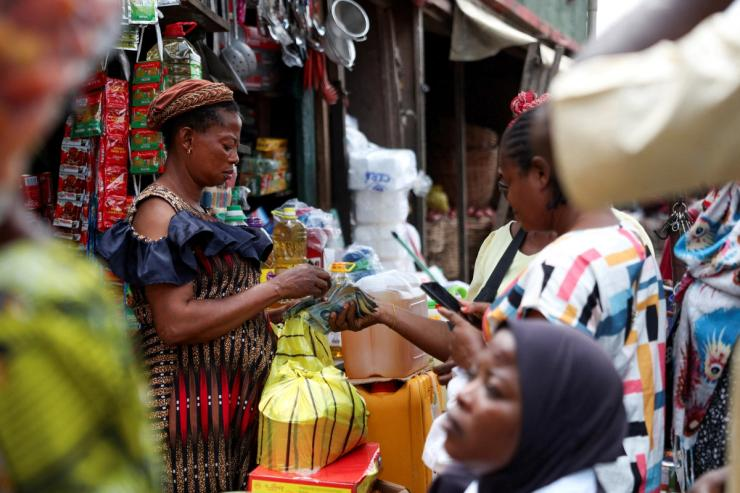
Sub-Saharan Africa entered 2026 with its fastest economic growth in a decade but that momentum has been upended by the disruption in fuel supply caused by the US and Israeli war with Iran.
Last week the International Monetary Fund trimmed its 2026 outlook for Africa to 4.3%, 30 basis points down from its earlier forecast. The downgrade is modest on paper but the sharper signal lies in the risks: In a prolonged conflict scenario, the Fund warned that output could contract by twice as much across the region, as the “lag effect” of higher energy, fertilizer, and shipping costs ripple through already fragile economies.
“I think the GDP impact could be deeper as the war becomes protracted,” Standard Chartered Bank’s Africa CEO Dalu Ajene told me. He’s concerned that the drag on growth could worsen and hit unevenly across countries if the war persists.
The varying impact of what he calls “imported inflation” is already visible: Oil exporters may enjoy a temporary windfall, but most African economies, still heavily reliant on imported fuel, are reeling.
African finance ministers in Washington last week for the IMF and World Bank meetings were scrambling to secure financing as conditions tightened. In Ethiopia, Prime Minister Abiy Ahmed has urged citizens to ration fuel, an early sign of how quickly the shock is feeding into domestic economies.
South Africa’s President Cyril Ramaphosa has called on the international community to “redouble efforts” toward restraint and adherence to international law, diplomatic phrasing that masks deeper economic anxiety.
The gains of 2025 were real and “hard won,” as the IMF noted. But what this moment reminds us is how quickly external shocks can overwhelm domestic progress. For sub-Saharan Africa, resilience is no longer just a policy goal — like with the COVID-19 pandemic and the fallout from Russia’s ongoing war in Ukraine, it is once again an urgent test.

