

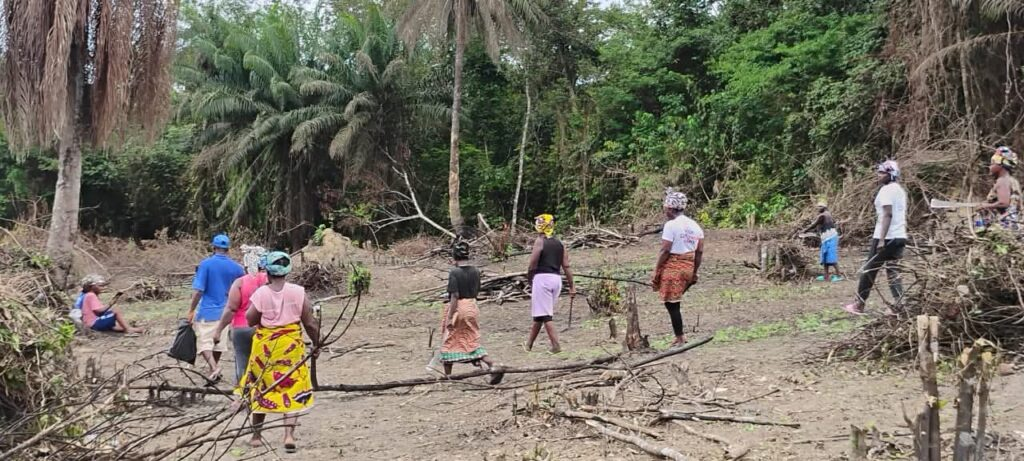
A women-led farming cooperative in Allasala Town, Bomi County, is calling for urgent financial and material support to expand its growing agricultural efforts and strengthen community livelihoods. The women made the plea on April 21, 2026, when the spoke with reporters in Bomi.
The Human Initiative Agriculture Multi-Purpose Cooperative Society of Liberia, made up of 35 determined women, says additional backing will help sustain its current operations and unlock broader opportunities in food production and agribusiness.
Formed in response to long-standing cultural barriers, the cooperative is working to overturn stereotypes that have often labeled women in the county as unproductive. Chairlady Zoe Johnson says the group was born out of a shared desire to prove otherwise.
“We want to show that women here are capable of feeding our families, educating our children, and contributing meaningfully to the economy,” she said.
Members are already taking action. They are clearing farmland to cultivate rice in lowland areas and peanuts on higher ground, with plans to expand into cocoa production in the near future. The cooperative’s vision centers on self-sufficiency, increased yields, and long-term income generation.
Fellow member Sando Coorper is encouraging more women to organize into similar groups and make use of the county’s fertile soil. She believes scaling production will not only boost household incomes but also ease economic pressure across communities.
Despite limited government support, the cooperative remains committed. Chairperson Josiah Varney explains that the group was initially registered to venture into multiple agricultural activities, including vegetables and cocoa, and is already operating across four zones: Allasala, Sensee, Brown, and Tehr.
“Our goal goes beyond farming,” Varney noted. “We are working to transform lives through sustainable agriculture and community driven development.”
The group’s appeal is directed at government agencies, NGOs, and private sector partners to invest in women-led agriculture. They argue that empowering rural women farmers is key to improving food security, expanding educational opportunities for children, and strengthening family welfare.
As the cooperative pushes forward, its members say timely support could make the difference between subsistence and scale, turning a local initiative into a model for rural transformation.
By Ernest Kpehe Moibah/ Rural Reporters News Network

