

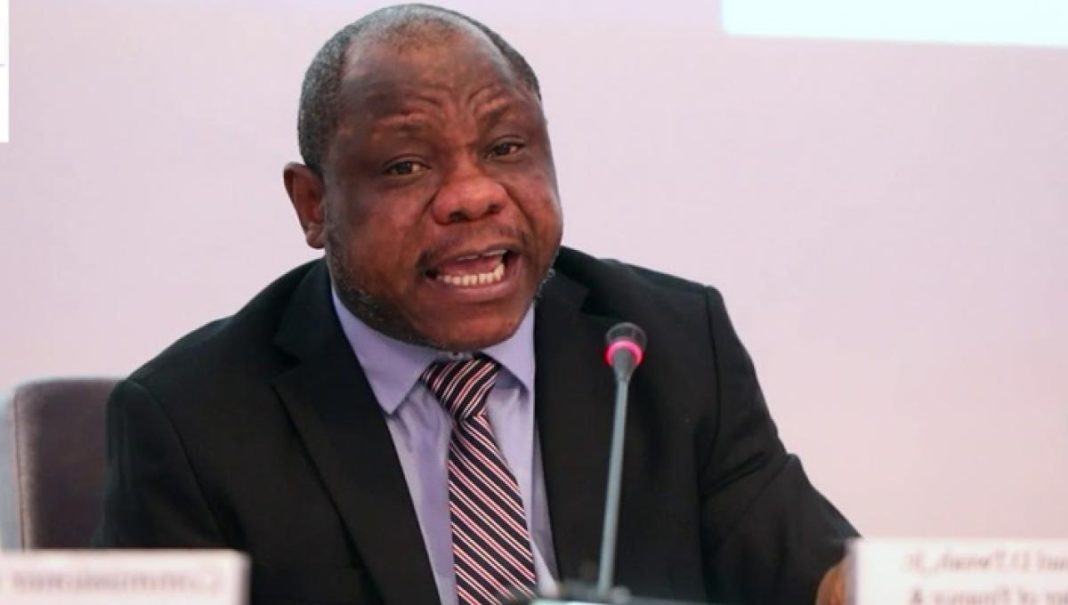
The Liberian government has opened a fresh investigation into former Finance Minister Samuel Tweah alleging that more than $20.5 million in rice subsidies were diverted for personal gain — a move that comes five days after jurors found him not guilty on all five counts in a separate $6.2 million corruption case.
The Assets Recovery and Property Retrieval Task Force (AREPT) said in a May 13 letter, which Tweah shared on Facebook that it is probing allegations of theft of property, economic sabotage, criminal conspiracy and criminal facilitation related to a rice subsidy program carried out between September 2021 and October 2022.
Investigators allege funds meant to lower retail rice prices did not reach importers and had no demonstrable effect on market prices.
Tweah, who was acquitted last week in a case involving $6.2 million, denied wrongdoing in a public post and said the subsidies were paid lawfully after approval by President George Manneh Weah, the National Legislature and in consultation with the International Monetary Fund.
He said he will appear for questioning on May 19 at AREPT headquarters in Paynesville at 11:00 a.m. accompanied by his lawyer, and plans to address the nation later that day.
“This is a bogus investigation into the legal fulfillment of my responsibilities as Minister of Finance and Development Planning,” Tweah wrote, promising to respond formally to AREPT’s letter and calling the probe another example of a politically motivated campaign against him.
Government statements and prior Weah-era Information Ministry releases show the rice subsidy program was intended to keep a 25kg bag of rice priced at $13.50–$14.00 amid rising global shipping and commodity costs.
The special 2021 and 2022 budgets allocated $5.5 million and $11 million respectively; ministry of commerce records indicate roughly $14 million had been disbursed to importers by late 2022.
Despite the payments, shipments were delayed by port restrictions and retailers faced shortages and price pressures, prompting a later retail price revision to about $17.50.
The subsidy approach was discontinued in 2024 by the subsequent administration of President Joseph Boakai, which moved to negotiate rice imports through tax waivers with India.
_ Festus Poquie

