

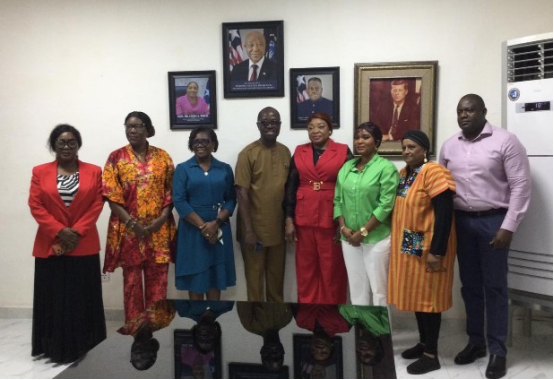
Monrovia was electrified this week as the West African College of Physicians (WACP) stormed into the capital with a mission that could redefine the nation’s healthcare future. In a whirlwind two-day accreditation blitz, three heavyweight professors descended on the Liberia College of Physicians and Surgeons (LCPS) to scrutinize its Community Health residency program — and the verdict could catapult Liberia into a new era of medical excellence.
The delegation, spearheaded by the formidable Professor Hadiza Agbo, WACP’s Accrediting Officer, touched down on June 17, 2026, at the invitation of the John F. Kennedy Medical Center (JFKMC). Their task? To determine whether Liberia’s flagship residency program had made the leap from promising to fully accredited since its last review in 2023. The stakes could not be higher: accreditation means recognition across West Africa, a badge of honor that signals Liberia’s readiness to train world-class specialists.
The program, currently anchored at Redemption Hospital in New Kru Town, is the beating heart of Liberia’s push to rebuild its shattered healthcare system. With JFKMC — the nation’s premier teaching and referral institution — standing as its guardian, the residency program has become a symbol of resilience and ambition.
From the moment Professor Agbo and her team stepped into JFKMC’s halls, the atmosphere was charged. Meetings with administrators and faculty quickly turned into high-stakes discussions about standards, resources, and the future of Liberia’s medical workforce. The delegation toured critical facilities — the Chest Clinic, Pediatric Ward, Maternal Ward, and Vaccination Unit — leaving no stone unturned. Even the state-of-the-art simulation lab at JFKMC came under their sharp gaze.
In a dramatic session with LCPS leadership, led by President Professor John K. Mulbah, the delegation unveiled its preliminary findings. Professor Agbo praised Liberia’s strides in expanding institutional capacity and strengthening specialist training, but she didn’t shy away from issuing a challenge: more investment, more resources, and more opportunities for hands-on training. Her message was clear — Liberia is on the cusp of greatness, but the final push is essential.
Professor Mulbah, visibly energized, responded with gratitude and determination. “We are grateful to the West African College of Physicians for its enduring partnership,” he declared. “These recommendations will sharpen our programs and ensure we produce specialists capable of meeting the healthcare needs of our people.” His words echoed like a rallying cry for Liberia’s medical community.
The numbers tell a story of transformation. In 2013, Liberia had a mere 15 specialist physicians. Today, thanks to LCPS, that figure has skyrocketed to 155 specialists across multiple disciplines. And the momentum is far from slowing: the College is gearing up for its 10th Convocation Ceremony in September 2026, where another wave of specialists will graduate, marking yet another milestone in Liberia’s march toward healthcare self-sufficiency.
This accreditation mission is more than a bureaucratic exercise — it’s a symbol of Liberia’s rebirth. A nation once crippled by shortages of skilled doctors is now positioning itself as a regional hub for medical excellence. With strong partnerships, relentless institutional development, and a growing army of specialists, Liberia is rewriting its healthcare narrative.
The drama of accreditation may have unfolded over just two days, but its impact will reverberate for decades. As the WACP delegation departs, Liberia stands at the threshold of a medical revolution — one that promises to deliver not just doctors, but hope, resilience, and a healthier future for generations to come.

