

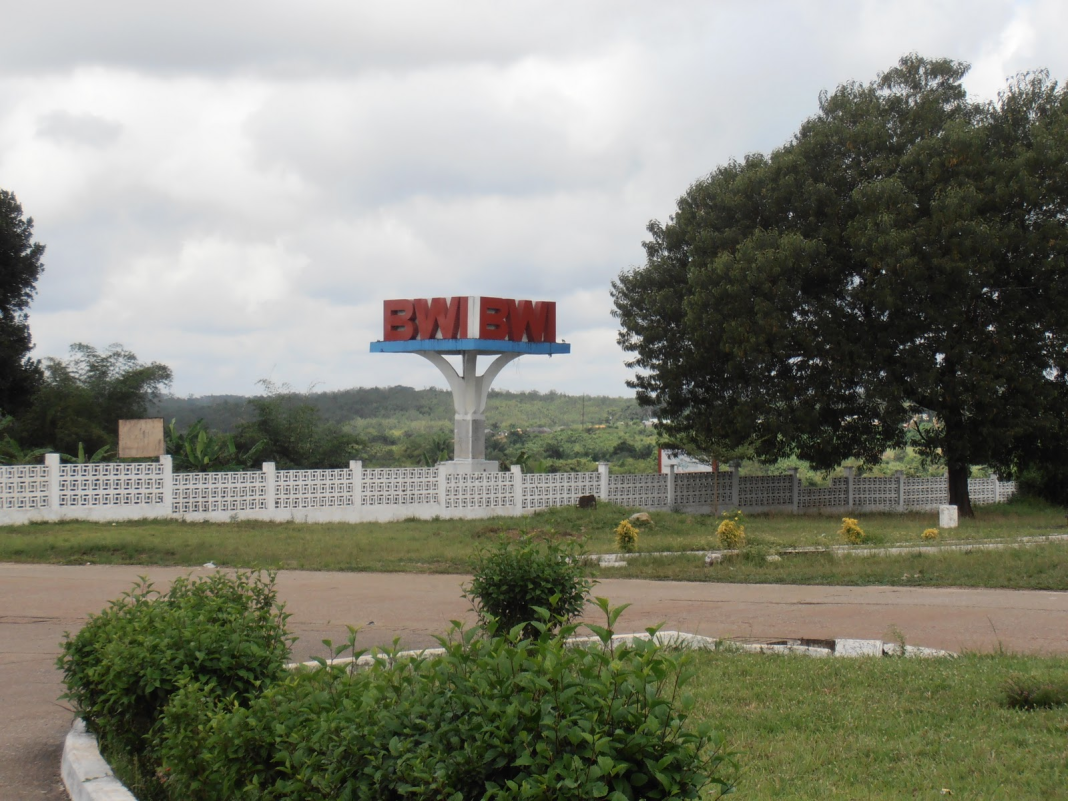
FIXAARS, a digital marketplace designed to transform technical and vocational education and training into jobs, businesses, and measurable economic opportunity, will officially launch on Friday, August 7, 2026, at 12:00 noon at the Booker Washington Institute in Kakata, Margibi County.
Developed over three years by Liberian born founders, FIXAARS is more than an application for finding a plumber, electrician, carpenter, mason, painter, air-conditioning technician, appliance repairer, cleaner, or other skilled professional. It is market infrastructure for Liberia’s TVET economy.
The platform is designed to connect verified skilled workers and service businesses with households, companies, government agencies, development organizations, property owners, and institutions that need dependable technical services.
Through FIXAARS, customers will be able to discover service providers, review their profiles, request services, track assignments, document performance, and securely pay for completed work. Skilled professionals will gain greater visibility, access to customers, a digital record of their work, and an opportunity to build sustainable businesses based on performance and trust.
“Liberia does not merely need more training programs. Liberia needs a functioning market around the training,” FIXAARS said in announcing the launch. “Training gives people skills. A market gives those skills customers, income, business ownership, dignity, and economic value. FIXAARS is being built to connect the two.”
From Training to Transactions
For decades, governments and international development partners have invested in TVET because technical skills can create pathways out of poverty. But training alone does not guarantee employment.
A graduate may complete a plumbing, electrical, carpentry, masonry, automotive, refrigeration, construction, or hospitality program and still struggle to find customers. At the same time, households and institutions may struggle to identify technicians they can trust.
That is the market failure FIXAARS intends to address.
The platform creates a structured bridge between:
- TVET institutions and the labor market;
- skilled professionals and paying customers;
- technicians and potential business owners;
- training credentials and verified performance;
- diaspora capital and Liberian enterprise;
- public investment in skills and measurable employment outcomes.
The World Bank has repeatedly emphasized that Liberia’s skills programs must be connected to private-sector demand. Its work in Liberia has specifically supported “job-oriented and demand-driven skills development” linked to employers, small businesses, employment, and productivity.
Recent World Bank data also show the urgency of the challenge. Approximately 87% of Liberian workers are engaged in smallholder farming or unregistered microenterprises, while about 14.8% of Liberians between the ages of 15 and 24 are neither employed nor participating in education or training.
FIXAARS responds to that reality by helping convert informal technical work into visible, organized, accountable, and potentially scalable economic activity.
A Technician Can Become More Than a Worker
FIXAARS is designed not only to help people find individual assignments but also to help skilled Liberians become entrepreneurs.
A qualified technician should be able to progress from completing small jobs to managing customer relationships, assembling teams, winning institutional assignments, building a recognizable brand, and eventually employing other TVET graduates.
A carpenter should be able to build a furniture and property-maintenance company.
An electrician should be able to build an electrical installation and maintenance business.
A plumber should be able to employ apprentices and serve homes, offices, hotels, hospitals, schools, and government facilities.
A refrigeration technician should be able to create a company serving supermarkets, restaurants, clinics, hotels, and commercial buildings.
The objective is not simply to help thousands of Liberians find occasional work. The larger ambition is to help create thousands of locally owned service businesses capable of employing many more Liberians.
“FIXAARS is not building a digital waiting room where technicians sit and hope for a telephone call,” the company said. “We are building an economic engine through which skill can become income, income can become enterprise, and enterprise can create additional jobs.”
A Direct Invitation to the Liberian Diaspora
FIXAARS is also inviting Liberians living in the United States, Europe, Canada, Australia, and elsewhere to look at TVET differently.
You do not have to be a plumber to own and manage a plumbing company.
You do not have to be an electrician to invest in an electrical-services business.
You do not have to repair air-conditioning systems personally to build a company that hires qualified refrigeration and air-conditioning technicians.
Business ownership and technical qualification are different responsibilities. The owner supplies capital, governance, technology, customer acquisition, financial controls, equipment, insurance, and management. Qualified technicians supply the licensed or certified technical capability required to perform the work safely and professionally.
A Liberian living in Philadelphia, Providence, Atlanta, Minneapolis, London, or Brussels could establish a service company in Liberia, recruit qualified BWI or other TVET graduates, purchase tools and equipment, supervise operations through technology, and serve households and institutions—subject to applicable Liberian registration, tax, labor, licensing, and professional requirements.
The diaspora already sends money to repair homes, maintain family properties, support businesses, and complete construction projects in Liberia. Yet distance often creates problems involving trust, documentation, supervision, cost, and accountability.
FIXAARS is designed to reduce that distance.
The vision is that a property owner abroad should be able to request a service in Kakata or Monrovia, select a verified provider, understand the assignment, monitor progress, document completion, make a secure payment, and review performance without relying entirely on informal personal relationships.
This is how remittances can move beyond consumption and become capital for productive Liberian businesses.
The World’s Investors Have Already Recognized the Value of Skilled Trades
The global economy is rediscovering something ordinary families have always known: when the electricity fails, the roof leaks, the plumbing breaks, or the air-conditioning stops working, technical skill is not optional.
Artificial intelligence may improve scheduling, diagnosis, customer service, and business administration, but it cannot eliminate the need for trained people to install, repair, maintain, and construct physical systems.
Large investors have therefore moved aggressively into plumbing, electrical, heating, air-conditioning, building maintenance, landscaping, roofing, restoration, and other essential service industries.
In the United States, Alpine Investors built Apex Service Partners into a national platform for plumbing, electrical, and heating and air-conditioning businesses. In 2025, Alpine announced a US$3.4 billion continuation transaction involving Apex, which reported more than 8,000 employees nationwide. In May 2026, funds affiliated with Apollo agreed to acquire a minority interest in Apex, subject to closing conditions.
Apex also demonstrates that a person does not have to begin as a technician to lead a major skilled-services enterprise. Its chief executive, AJ Brown, came from finance and corporate leadership, including work as a chief financial officer. His role is to organize capital, people, systems, acquisitions, and growth around qualified technical service companies.
The skilled-trades economy has also generated major personal fortunes. Diane Hendricks co-founded ABC Supply, which serves roofing and building contractors across North America. Forbes estimated her fortune at approximately US$21.7 billion in July 2026. John Menard Jr., who began with a construction business before building the Menards home-improvement chain, was estimated by Forbes to be worth approximately US$16.2 billion.
The lesson is not that every technician will become a billionaire. The lesson is that skilled trades are not a consolation prize for people who could not attend university. They are the foundation of valuable companies, essential infrastructure, stable employment, and serious wealth creation.
What private equity firms are consolidating for billions of dollars in the United States should not remain fragmented, invisible, and unsupported in Liberia.
Why Booker Washington Institute
Launching FIXAARS at Booker Washington Institute is deliberate.
BWI represents Liberia’s long tradition of technical education, practical competence, disciplined training, and national service. It is an appropriate place to begin connecting the classroom, the workshop, the customer, and the market.
The launch will bring together representatives of government, education, labor, youth development, the private sector, TVET institutions, development partners, skilled professionals, students, entrepreneurs, and members of the Liberian diaspora.
The pilot will begin in Liberia in collaboration with BWI and interested government agencies and partners. FIXAARS is being introduced in selected markets, with Kumasi, Ghana, planned as the next launch location.
Liberia was selected first because the founders are Liberian born and believe that a platform created to expand African opportunity should begin by demonstrating its value at home.
What FIXAARS Can Mean for Government and Development Partners
For policymakers and development organizations, FIXAARS offers more than a marketplace.
As adoption grows, the platform can help produce better information about:
- which technical skills are in demand;
- where service providers are located;
- which TVET graduates are finding work;
- what services customers request most frequently;
- where technical labor shortages exist;
- how women and young people are participating;
- how quickly trained workers transition into paid assignments;
- which providers consistently deliver quality work;
- and where additional training or business support may be required.
This information can help government and development partners move from counting the number of people trained to measuring what ultimately matters: employment, income, enterprise formation, service quality, and economic productivity.
A certificate is evidence that a person completed training. A functioning marketplace provides evidence that the training has economic value.
Trust Must Be Built Into the Market
Liberia’s informal service economy depends heavily on personal referrals. While referrals remain valuable, they are not sufficient to support a modern and scalable market.
FIXAARS is designed to strengthen trust through provider verification, clearer service requests, documented transactions, customer feedback, performance histories, assignment tracking, and secure payment processes.
The platform cannot promise that every assignment will be perfect. No credible marketplace can. It can, however, create stronger visibility, records, incentives, and accountability than an undocumented cash transaction between strangers.
Reliable providers should earn stronger reputations and greater access to opportunity. Repeated nonperformance should have consequences. Customers should have clearer information before making a selection, and skilled professionals should have a fair opportunity to build their reputations through demonstrated results.
A National Call to Build
The FIXAARS launch is an invitation to every part of the Liberian economy.
To TVET students: your skill can become a livelihood.
To technicians: your reputation can become a business.
To entrepreneurs: you can build companies around qualified technical teams.
To the diaspora: your capital, management experience, and networks can create jobs at home.
To government: FIXAARS can help connect workforce policy to actual market outcomes.
To development partners: FIXAARS offers a platform through which skills investment can be linked to demand, income, enterprise, and measurable impact.
To businesses and institutions: Liberian technical talent can help maintain the buildings, equipment, utilities, and infrastructure on which economic activity depends.
To households: trusted technical services should become easier to find, monitor, and pay for.
Liberia will not create enough jobs by waiting for a small number of large employers. It must also build thousands of small, disciplined, technology-enabled businesses capable of employing two people, five people, ten people, fifty people, and eventually hundreds.
That is the economic transformation FIXAARS seeks to support.
Launch Details
Event: Official Launch of FIXAARS
Date: Friday, August 7, 2026
Time: 12:00 noon prompt
Venue: Booker Washington Institute
Location: Kakata, Margibi County, Liberia
Government representatives, TVET institutions, skilled professionals, students, entrepreneurs, businesses, international development partners, media organizations, and members of the Liberian diaspora are invited to participate in this historic launch.

