

By George K. Warner (former education minister)
Sometimes, history announces itself quietly.
Not with speeches. Not with declarations. Not with headlines.
Sometimes, it reveals itself in something as ordinary as who is sitting in the room.
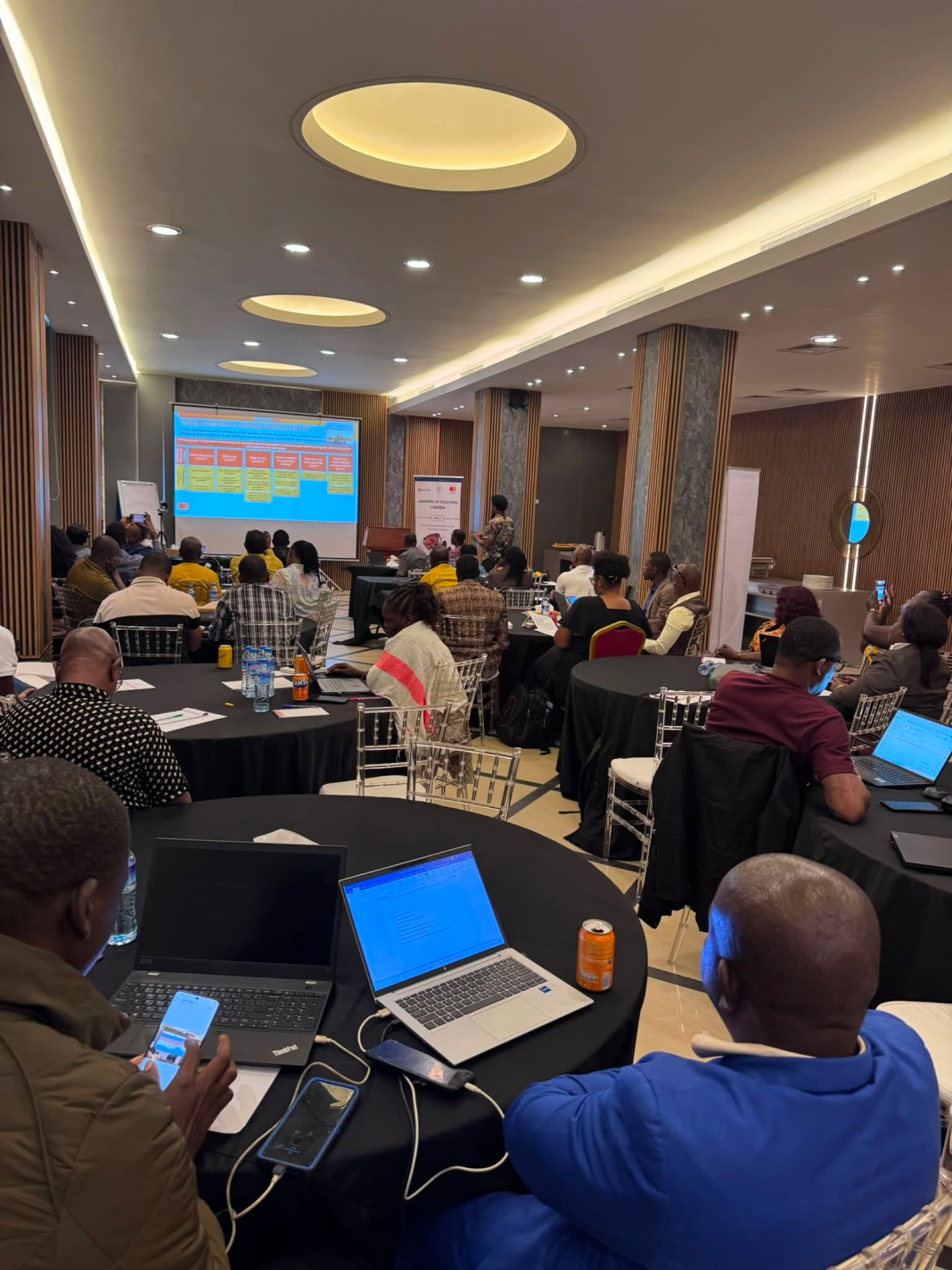
Recently, we convened a two-day stakeholder meeting on the newly renovated ground floor of the Royal Hotel in Monrovia. There were about sixty participants representing more than ten organizations working to improve education in Liberia.
On the surface, it was another education meeting. We discussed teachers, school leaders, curriculum, skills, systems, partnerships, and the future of secondary education.
But as I looked around the room, I realized I was witnessing something much bigger than the agenda before us.
Every year, Liberia welcomes roughly 120,000 new babies into the world. Nigeria adds nearly six million. Across Africa, hundreds of millions of young people are moving toward adulthood on a continent that is projected to account for nearly half of the world’s working-age population by the end of this century.
At the very moment that Europe is aging and many countries in Asia are confronting shrinking populations, Africa is becoming the world’s youngest continent.
This demographic reality will shape the global economy for generations.
But it also forces us to confront an uncomfortable truth.
Most of Africa’s young people will never attend university.
The overwhelming majority of tomorrow’s workforce will leave school after secondary education or earlier.
If that is true—and it is—then perhaps we have been asking the wrong educational question.
For decades we have focused on how many students get into university.
Perhaps we should instead be asking whether our secondary schools are preparing every young person for dignified, fulfilling, and productive work.
Are students graduating with the ability to solve problems?
Can they communicate effectively?
Can they work in teams?
Can they use technology confidently?
Can they think critically, adapt to change, and create opportunities instead of waiting for them?
If the answer to these questions is uncertain, then our challenge is not simply expanding education.
It is repurposing secondary education itself.
Schools must prepare young people not only to pass examinations, but to navigate life, contribute to society, and thrive in rapidly changing economies.
That means helping the people who help young people.
Teachers.
School leaders.
Teacher training institutions.
Communities.
Governments.
Faith-based organizations.
Civil society.
Parents.
When we strengthen those who shape young lives, we strengthen the future workforce of an entire continent.
That was why we gathered.
Yet something else struck me even more deeply.
I looked around the room.
Every participant was African.
Liberians.
Ghanaians.
Nigerians.
Sierra Leoneans.
Ugandans.
Rwandans.
Kenyans.
Twenty years ago, a meeting like this would probably have looked very different. The room might have been filled with foreign consultants, international implementing agencies, expatriate project managers, and donor representatives, while Africans occupied only a handful of seats.
This time, Africans filled every chair.
African educators.
African practitioners.
African policymakers.
African organizations.
People from across the continent bringing different experiences but wrestling with the same questions and searching for practical solutions rooted in African realities.
That does not diminish the importance of international partnerships. Africa will continue to benefit from collaboration, just as the world benefits from Africa.
But the center of gravity is shifting.
Increasingly, African organizations are designing programs.
African institutions are implementing them.
African experts are generating evidence.
African governments are setting priorities.
The era in which Africans primarily implemented ideas conceived elsewhere is gradually giving way to one in which Africans are defining the agenda themselves.
The same transformation is visible elsewhere.
The Church across Africa is increasingly led by African bishops, priests, pastors, religious sisters, brothers, and lay leaders. The missionary era-built institutions for which we remain profoundly grateful, but today’s Church is increasingly sustained and guided by local leadership.
The same is true of government. The age of direct colonial rule is long gone. Liberia also moved beyond the political dominance of the Americo-Liberian elite through profound democratic change. Today’s questions are no longer about who governs us from outside, but about how well we govern ourselves.
History has handed Africans the pen.
We are writing our own chapters.
That is both liberating and demanding.
It means we cannot continue to outsource either our successes or our failures.
If our schools do not prepare young people, they are our schools.
If our institutions succeed, they are our institutions.
If our governments fail, they are our governments.
If Africa’s demographic dividend is realized, it will be because Africans built systems worthy of the generations that followed.
As the meeting concluded, I found myself thinking less about the presentations and more about the people around the tables.
The room itself had become a symbol.
Not because everyone agreed.
Not because every challenge had been solved.
But because the conversation belonged to Africans.
The future of Africa will certainly be shaped by partnerships with the rest of the world.
But it will increasingly be imagined by Africans, designed by Africans, implemented by Africans, and ultimately judged by Africans.
That is not merely a change in who occupies the seats around the table.
It is a change in who owns the future.

