

By George K. Warner (former education minister)
A Public Health Warning for Liberia
Last week, I lost a close friend to cancer.
Like so many people who have watched someone they love to battle this disease, I have spent the past few days reflecting on the conversations we had. As often happens when cancer enters a family or circle of friends, we searched for answers. We spoke about treatment, hope, faith, and possible causes. One question surfaced repeatedly: could years of breathing generator smoke have contributed to his illness?
I do not know.
No one can answer that question with certainty, and I would never suggest otherwise. Cancer is a complex disease caused by a combination of factors, including age, genetics, infections, lifestyle, occupational hazards, and environmental exposures.
But that conversation forced me to confront a question that extends far beyond my friend.
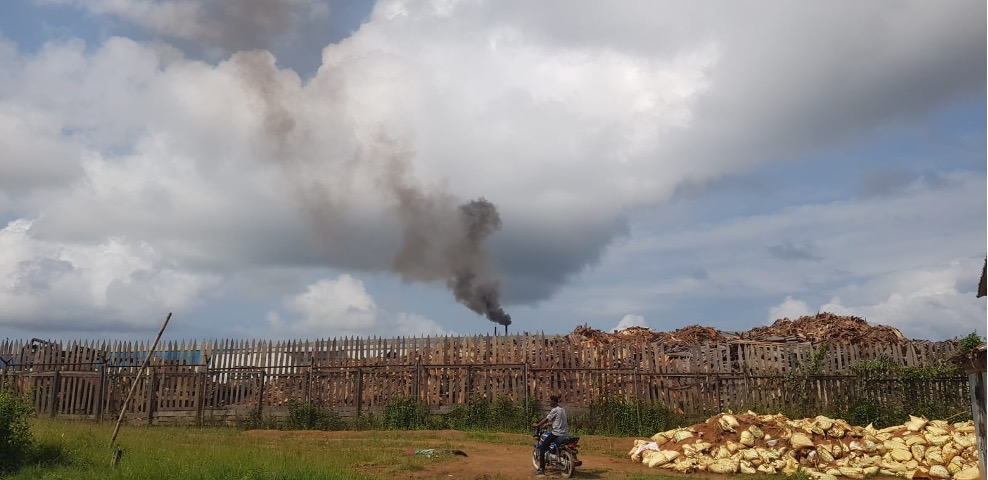
Have we, as a nation, become too comfortable living in the smoke we breathe every day?
Following Liberia’s civil war, generators became symbols of survival. They kept hospitals operating, businesses open, schools functioning, and families connected when the national electricity grid could not meet demand. Nearly two decades later, they remain an indispensable part of everyday life. Across Monrovia and much of the country, the sound of generators has become the soundtrack of our resilience.
Yet resilience should never require us to ignore risk.
According to the World Health Organization, cancer is the second leading cause of death globally, responsible for nearly one in every six deaths. In 2022 alone, an estimated 9.7 million people died from cancer worldwide.
Liberia is not immune to this growing burden. The International Agency for Research on Cancer’s Global Cancer Observatory estimated approximately 3,873 new cancer cases and 2,730 cancer deaths in Liberia in 2022. Whether driven by population growth, an aging population, improved diagnosis, infections, lifestyle changes, or environmental factors, cancer has become an increasingly visible reality for Liberian families.
At the same time, there is another public health issue hiding in plain sight.
The air we breathe.
For years, my friend Prince worked on Broad Street, where generators run from morning until night. Anyone familiar with that part of Monrovia knows the scene. Shops, banks, offices, pharmacies, restaurants, and street vendors all depend on generators because reliable electricity remains elusive. Exhaust fumes hang in the air throughout the day as thousands of workers and pedestrians inhale them without giving it much thought.
That environment is not unique to Broad Street.
It exists across Sinkor, Duala, Red Light, Waterside, Paynesville, Buchanan, Gbarnga, Ganta, Kakata, and countless other communities where generators have become the primary source of electricity.
Nor is the problem confined to businesses.
Across Liberia, generators are routinely placed beside kitchens, beneath bedroom windows, inside poorly ventilated garages, on back porches, and just outside living rooms. Families cook, eat, sleep, and raise children only a few feet from generator exhaust. Many security guards spend entire nights beside running generators. Market women, mechanics, fuel attendants, and shopkeepers spend years working in environments filled with exhaust fumes.
We have become so accustomed to the smell that we rarely notice it anymore.
Science tells us we should.
In 2012, the International Agency for Research on Cancer (IARC), the specialized cancer agency of the World Health Organization, classified diesel engine exhaust as a Group 1 carcinogen—meaning there is sufficient evidence that it causes cancer in humans, particularly lung cancer. Diesel and gasoline generators also emit fine particulate matter (PM2.5), carbon monoxide, nitrogen oxides, benzene, formaldehyde, and other pollutants that are associated with respiratory disease, cardiovascular disease, and adverse health outcomes.
This does not mean every person exposed to generator smoke will develop cancer.
It does mean that repeated and prolonged exposure to generator exhaust is a health risk that deserves far greater public attention than it currently receives.
Public health is not only about treating disease after it appears.
It is also about preventing unnecessary exposure to known hazards.
There are simple steps that every Liberian household can take immediately.
Never operate a generator inside a house, garage, or enclosed space.
Keep generators as far away from bedrooms, kitchens, and living areas as possible.
Ensure exhaust is directed away from windows, doors, and ventilation openings.
Do not allow children to play near running generators.
Maintain generators regularly to reduce emissions.
Businesses should also think carefully about employees who spend years working beside generator exhaust and consider ways to reduce prolonged exposure.
But individual action alone is not enough.
Reliable electricity is not merely an infrastructure project.
It is a public health intervention.
Every additional community connected to dependable electricity means fewer generators running outside homes, schools, clinics, and businesses. Every investment in cleaner energy is an investment in cleaner air. Every reduction in air pollution is an investment in healthier Liberians.
Liberia should also strengthen environmental monitoring, occupational health protections, and cancer surveillance. A robust national cancer registry, better air-quality monitoring, and more research into occupational and environmental exposures would allow policymakers to make decisions based on evidence rather than assumptions.
I cannot say what caused Prince’s cancer.
Perhaps no one ever will.
But I do know this.
No Liberian should spend years breathing generator exhaust without understanding the risks.
The hum of the generator has become the soundtrack of our resilience.
Let us ensure it does not become the soundtrack of an avoidable public health crisis.
Sometimes the greatest dangers are not the ones that arrive suddenly.
They are the ones that become so ordinary that we stop seeing them.
It is time Liberia noticed the smoke.
References
- World Health Organization (WHO). Cancer – Key Facts. WHO reports that cancer is the second leading cause of death globally, accounting for approximately 9.7 million deaths in 2022.
- International Agency for Research on Cancer (IARC). Diesel Engine Exhaust Carcinogenic (2012). IARC classified diesel engine exhaust as a Group 1 carcinogen based on sufficient evidence that it causes lung cancer in humans.
- International Agency for Research on Cancer (IARC), Global Cancer Observatory (GLOBOCAN 2022). Liberia Fact Sheet. Estimated 3,873 new cancer cases and 2,730 cancer deaths in Liberia in 2022.
- World Health Organization (WHO). Ambient (Outdoor) Air Pollution. WHO identifies air pollution as a major contributor to cardiovascular disease, chronic respiratory disease, and lung cancer.
- United States Environmental Protection Agency (EPA). Health Assessment for Diesel Engine Exhaust. Documents the health effects of long-term exposure to diesel particulate matter and exhaust emissions.

