

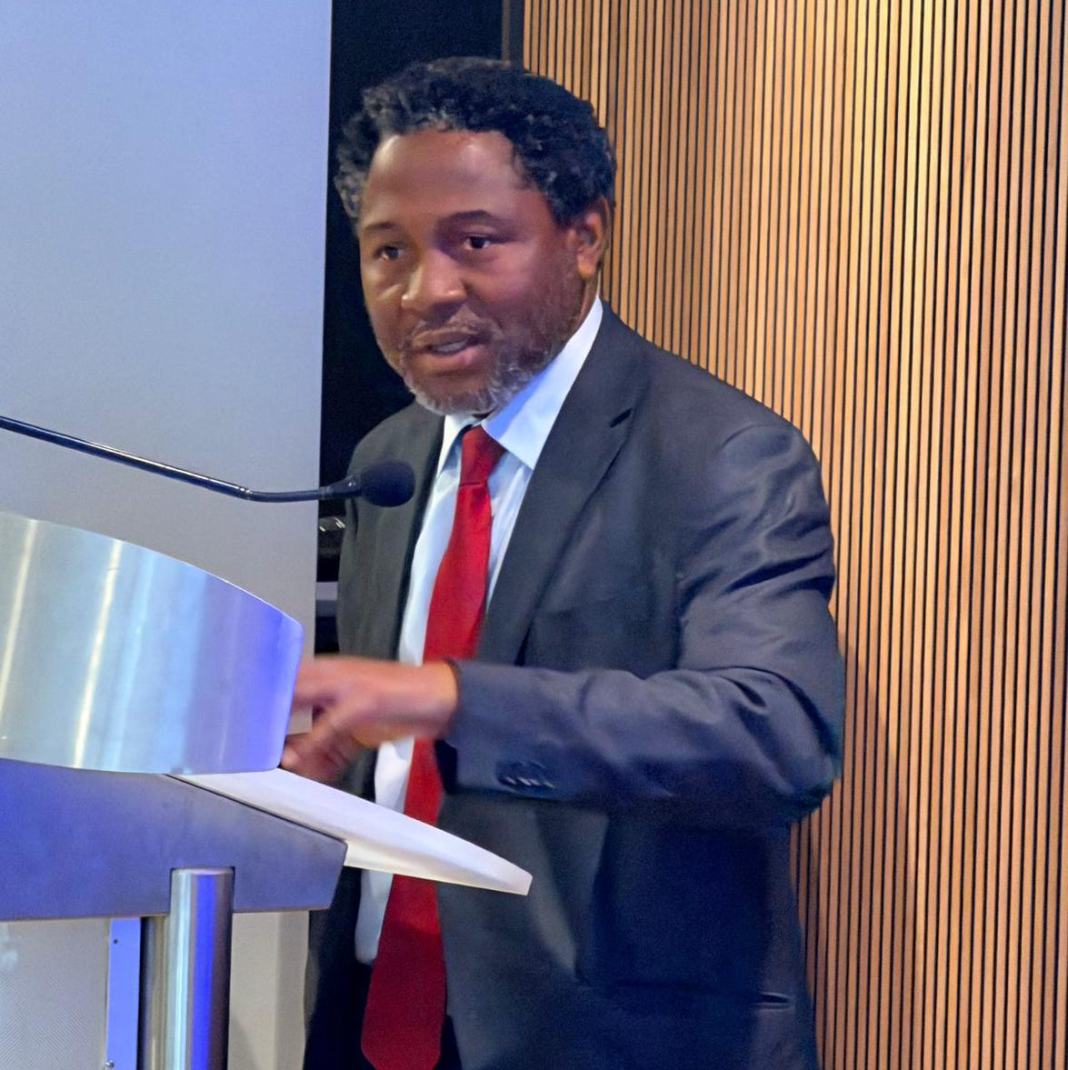
By Ibrahim Nyei
Liberia’s post-conflict journey has entered a new phase. Following two decades of post-war reconstruction and state-building, the Government of President Joseph Nyuma Boakai has rebranded and reposition Liberia in the international community. This new phase is about projecting Liberian agency and contributing more to multilateralism.
This is remarkable for a country which few years ago was a subject of international sanctions, pity, and foreign aid. The evidence of peacebuilding in Liberia abounds and stands in the face of those who spread misconceptions and pessimism about fragile, and conflict-affected states.
Two decades ago, Liberia was a country in ruins—shattered by war. By the time the civil war ended in 2003, an estimated 250,000 people had lost their lives; hundreds of thousands were still in refugee camps; and the evidence of trauma and ruins was ubiquitous across the country.
What remained of Africa’s first, and once glowing, republic was a broken state. Outside observers described our country using labels such as a ‘pariah state’, a ‘damned nation’, and a ‘failed state’. But our resilience and courage defied the doomed predictions.
In 2003 Liberian political actors, facilitated by the international community (ECOWAS; AU; EU; UN; and friendly nations), made a conscious decision to choose peace over violent conflict when they signed the Comprehensive Peace Agreement. The United Nations was instrumental in this effort and deployed a peacekeeping mission (United Nations Mission in Liberia, UNMIL) that was active in the country from 2003 to 2018.
By the time UNMIL closed in 2018, Liberia had become a viable and stable democracy in Africa. Our human rights, good governance, and security and safety ratings had improved (and continue to improve) in major global indices. To our credit today are four peaceful presidential elections, and two seamless transitions of power.
Though Liberia is yet to achieve the long envisioned middle-income status, our government, under the leadership of President Joseph Nyuma Boakai, is determined and deliberate about addressing prevailing socio-economic challenges and laying the necessary macroeconomic foundations. President Boakai has overseen dramatic improvements in service delivery, infrastructural development and macroeconomic stability since taking office in January 2024.
We are also returning to prominence in the international sphere. In January, we commenced our two-year tenure (2026-27) as a non-permanent member of the United Nations Security Council, following our election by a majority of the UN General Assembly, on June 3, 2025. For Liberians, this is a reaffirmation of our postwar recovery and renewed trust in our country, as well as our agency, to contribute to global dialogues and decisions on international peace and security at the highest level.
When Liberia’s Foreign Minister Sara Beysolow Nyanti spoke (on behalf of President Boakai) at a high-level UN event commemorating the 20th anniversary of the UN Peacebuilding Fund, on June 25, she informed her audience that Liberia’s post-conflict story of recovery presents enormous lessons and experiences that the international community could draw on in supporting peacebuilding and recovery efforts in conflict-affected states.
The lessons she referred to were in the powers of multilateral cooperation, interdependence, national dialogues, national leadership and ownership of peacebuilding programs backed by international facilitation and solidarity. The Minister also commended the international community for standing by Liberia during its recovery from war to peace.
Indeed, Liberia’s membership in multilateral organizations – the UN, African Union, and ECOWAS and partnerships with other countries became the insurance policy we fell back on to help us out of our troubles.
Like our peace process, our prosperity, too, will not be fully realized without our participation in various multilateral cooperation frameworks on trade (WTO; AfCFTA), human rights (UDHR), climate change and environment (UNFCCC), and regional development, peace and security (ECOWAS; MRU).
President Joseph Nyuma Boakai’s agenda for development is bold and deliberate: we aim to improve our economy and deliver prosperity on the domestic front; and seek to defend and uphold the multilateral system that helped us out of our troubles on the international front. This enduring confidence in the strength of multilateralism drives our intention to work with all actors to mobilize resources and political will to save the multilateral order in the face of the ongoing threats against multilateralism.
Liberia intends to use its tenure on the United Nations Security Council (2026-27) to advocate for reforms of multilateral institutions with the aim of making them more participatory, inclusive, and efficient in delivering on their mandates, particularly in addressing peace and security challenges. We are also committed to working together for a more prosperous world.
Lessons from eighty years of building multilateral institutions and fostering cooperation have taught us that global prosperity is linked to global cooperation and stability. For regions that were left behind on the prosperity indicators, multilateral efforts in the next decade must be committed to raising them up.
This is a proposition Liberia continues to promote at the UNSC, the AU, ECOWAS as well as in the g7+ Group, an alliance of post-conflict developing and conflict-affected countries (Liberia currently holds the vice presidency of the group.)
With Liberia having a more prominent place in the international community, the campaign for a more effective and inclusive multilateral order will continue to echo louder.

