


By Festus Poquie
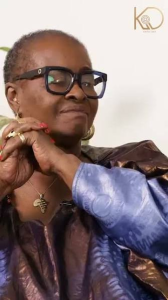
Miatta Fahnbulleh, the acclaimed Liberian singer and longtime Unity Party supporter, has revived a long-running dispute over the 2017 presidential election, saying former President Ellen Johnson Sirleaf effectively “forced” George Weah on the country and helped shape his rise to power.
In comments made during a podcast interview with a Ghanaian journalist this week, Fahnbulleh said Sirleaf imposed Weah as her successor under the banner of generational change, leaving opponents with little ability to stop the political transition.
“Madam Sirleaf thought it would be interesting under the guise of generational change. He would not have entered the political class, but Madam Sirleaf forced him on us,” Fahnbulleh said.
“She literally held up his hands as the successor and there was nothing we could have done.”
“We didn’t have the capability of printing extra ballots and those little things that happens in African politics. But he was a disaster for the country.
“I know his limitation. He had absolutely no interest in governance. He was just happy to be president enjoying himself.
She went further, saying Sirleaf’s legacy would be defined by bringing Weah into national politics.
“Her lasting legacy will be that she unleashed George Weah on us,” she said.
Ms. Fahnbulleh’s remarks have triggered sharp reactions online in Liberia, where the 2017 election remains a sensitive political memory.
Weah, then the candidate of the Coalition for Democratic Change, won more than 60% of the vote in a runoff against Unity Party candidate Joseph Boakai, ending Sirleaf’s party’s 12-year hold on power. The Unity Party returned to office in 2023 under Boakai.
Sirleaf has long said her role in the 2017 vote was to ensure a level playing field and a free and fair process that reflected the will of Liberians.
Fahnbulleh’s comments appear to suggest that Sirleaf either weakened the Unity Party’s ability to manipulate the vote or created conditions that favored Weah’s victory.
That interpretation has angered some supporters of the former president and drawn criticism from political figures.
Musa Hassan Bility, leader of the Citizen Movement for Change, condemned the remarks, saying they showed disregard for ordinary Liberians who elected Weah.
“While I’m not surprised at her statement, I feel it shows her disdain for the ordinary people who made their decision,” Bility said. “It is actually shameful and abhorrent.”
Supporters of the Unity Party, meanwhile, have defended Fahnbulleh’s comments online, underscoring how the 2017 election still shapes Liberia’s political discourse nearly a decade later.
Sirleaf, Liberia’s first female president, is credited with helping steer the country through postwar reconstruction and strengthening public institutions. But the latest controversy shows that debate over her political legacy — and Weah’s rise remains far from settled.

