

By Philip Z. Ireland, MD, MPH, FWACP, FACP
“Two mothers do not limit the love for a child.”
—Kpelle Proverb
Dr. Kettehkumuehn E. Murray, my teacher, has rendered an important service by refusing to make enemies of the Huberichist and Robertsian traditions. I agree with his central reconciliation: 1822 and 1847 answer different questions and need not compete for possession of Liberia’s historical soul.
Yet I would carry the argument one step further.
The first question is: When did Liberia begin?
The second is: When did Liberia declare itself sovereign?
But there is a third—and perhaps more urgent—question:
When did Liberia acquire the practical capacity to exercise the independence it declared?
That third question takes us beyond the calendar and into the philosophy of sovereignty.
- Settlement Was Formation, Not Yet Full Independence
The Huberichist case is powerful because nations do not suddenly emerge from the ink of a declaration. Long before 26 July 1847, there existed on the Liberian coast an organised political community possessing settlements, institutions, laws, courts, taxation, defence arrangements and an increasingly distinct political consciousness.
The modern settlement process at Cape Mesurado occurred through several related events between December 1821 and April 1822.¹ The Declaration of 1847 did not, therefore, summon Liberia out of emptiness. It gave constitutional voice to something that had already been developing for approximately a quarter-century.
In that sense, 1822 represents the beginning of the modern Liberian political experiment. The settlers brought not merely their possessions but memory, trauma, aspiration and an uncompromising desire to prove that Black people were capable of self-government.
But settlement must not be confused automatically with independence.
The American Colonization Society’s status as a private organisation did not necessarily make its governed territories sovereign. A private corporation may exercise political authority over a dependent settlement without itself being a sovereign state. The decisive question is not whether the ACS was a government, but whether the settlers possessed the final and unanswerable authority to govern themselves.
Before the transfer of authority and the republican declaration, that answer remained uncertain.
Thus, 1822 may properly be described as Liberia’s sociological beginning, but not yet its complete juridical independence.
- We Must Also Ask: What Existed Before 1822?
There is another difficulty with treating 1822 as the birth of Liberia without qualification.
The land was not empty. The Kpelle, Bassa, Dei, Vai, Kru, Grebo, Gola, Mano, Gio, Lorma, Kissi, Mandingo, Krahn and Liberia’s other indigenous peoples did not begin to exist when settlers arrived at Cape Mesurado. They possessed communities, systems of authority, laws, commerce, diplomacy, spiritual traditions and relationships with the land long before the modern Liberian state appeared.
Therefore, 1822 cannot be described as the beginning of civilisation or human society in the territory now called Liberia. It was the beginning of a particular political project that would eventually expand, incorporate—and frequently dominate—older African societies.
This distinction is indispensable to national reconciliation.
The history of the Liberian state and the history of the Liberian people do not begin on the same day.
If we honour 1822, we must do so without erasing those who were already here. Otherwise, our national narrative risks turning the arrival of one group into the disappearance of all others.
III. The Declaration Constituted Juridical Majority
The Robertsian tradition stands on firmer ground when the specific question is: When did Liberia become a sovereign republic under constitutional and international law?
The answer remains 26 July 1847.
A settlement may administer itself extensively without possessing the full legal personality of a state. It may make local rules, collect revenue and defend its inhabitants, yet remain uncertain in its capacity to enter treaties, regulate foreign commerce and demand recognition as an equal member of the international community.
The transition, however, should be stated with historical precision. The Declaration of Independence records that the American Colonization Society, through resolutions adopted in January 1846, had already dissolved its political connection with the people, returned its delegated authority and left them to govern themselves.²
The Constitutional Convention of 1847 did not claim that it was dissolving that connection for the first time. Rather, it solemnly affirmed the consequences of the earlier transfer and proclaimed:
“The people of the Republic of Liberia, then, are of right, and in fact, a free, sovereign and independent State, possessed of all the rights, powers and functions of government.”
The Declaration therefore transformed an evolving and substantially self-governing political community into a self-conscious constitutional republic. It announced to the international community that the people of Liberia now claimed and intended to exercise all the rights and responsibilities of sovereign statehood.
Recognition by Britain, France, the United States and other states did not manufacture Liberia’s independence. Recognition confirmed that other sovereigns accepted Liberia’s claim to participate in international relations as their juridical equal.
Modern international law rightly recognises that a state does not exist solely because outsiders approve of it. Nevertheless, in the nineteenth-century world of commerce, tariffs, territorial rivalry and imperial expansion, recognition was of enormous practical importance.
Thus:
- 1822 supplied an organised community;
- 1839 supplied an increasingly structured Commonwealth;
- 1846 completed the formal transfer of the ACS’s delegated political authority;
- 1847 supplied republican declaration, constitutional form and an unequivocal claim to international legal personality.
A child may receive the love of two mothers, but the law must still record a birthday. For the Republic of Liberia, that constitutional birthday is 26 July 1847.
- Yet Legal Independence Is Not the End of the Argument
Here we must distinguish between juridical sovereignty and effective sovereignty.
Liberia is unquestionably an independent country. It possesses a recognised territory, permanent population, constitutional government and capacity to conduct foreign relations. No foreign sovereign lawfully appoints Liberia’s President, Legislature or Judiciary. Liberia is neither colony, protectorate nor occupied territory.
But legal independence does not automatically produce economic autonomy.
A country may possess a flag and still lack control over the commanding heights of its economy. It may have a central bank while depending predominantly upon another country’s currency. It may own mineral deposits in law while lacking the capital, technology and negotiating strength required to convert those resources into broad national prosperity.
It may draft a national budget while depending upon donors to finance essential health, education and development programmes. It may possess legislative authority over concessions while foreign corporations exercise greater technical, financial and informational power during negotiations.
In such circumstances, independence is real—but thin.
Liberia is therefore politically and juridically independent, yet economically dependent, monetarily constrained and institutionally under-sovereign.
That does not mean Liberia is secretly a colony. It means that sovereignty exists in degrees of practical effectiveness.
There is a profound difference between possessing the legal right to make a decision and possessing the institutional capacity to implement that decision.
A government that is legally free to choose, but financially unable to carry out most of its choices, possesses sovereignty in title while suffering an autonomy deficit in practice.
- Liberia’s Three Independence Moments
I therefore propose that Liberia’s history be understood through three interconnected moments:
- Independence of Formation—1822¹
This was the establishment of the modern settlement and the beginning of the political community that would eventually become the Republic.
It should be remembered—but within an inclusive account that acknowledges the indigenous nations and societies that preceded it.
- Independence of Declaration—1847²
This was Liberia’s juridical coming of age: the conscious assertion of republican sovereignty and acceptance of the responsibilities of statehood.
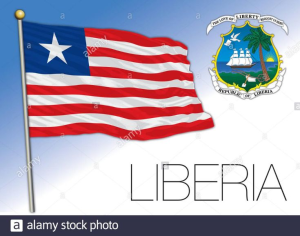
Although the ACS had formally relinquished its delegated political authority in 1846, it was the Constitutional Convention and Declaration of 1847 that gave the new republic its definitive constitutional identity and announced its sovereign status to the world.
This remains the proper foundation of Independence Day.
- Independence of Capacity—Still Unfinished
This is the continuing struggle to make sovereignty materially meaningful.
It requires:
- productive control and transformation of natural resources;
- domestic food, energy and industrial security;
- stronger monetary and fiscal institutions;
- reduced dependence on external financing for essential public services;
- concession agreements that produce value addition and intergenerational benefit;
- institutions capable of resisting corruption, elite capture and foreign manipulation;
- and a state whose protection and opportunities reach every Liberian, irrespective of ethnicity, county, class or political affiliation.
This third independence cannot be declared in a single document. It must be constructed through disciplined leadership, competent institutions and sustained national purpose.
- From Independence as Memory to Independence as Responsibility
The question is therefore not whether Liberia is independent. Under law and within the international community, it decidedly is.
The more searching question is whether we have converted that independence into national capability.
Have we transformed legal ownership of our resources into prosperity for our people?
Have we transformed electoral sovereignty into accountable government?
Have we transformed political freedom into freedom from preventable disease, illiteracy, hunger and degrading poverty?
Have we transformed the right to make national decisions into the capacity to finance and implement them?
If not, the failure does not invalidate 1847. It reveals the unfinished obligations created by 1847.
Our ancestors declared that Liberia was free. Our generation must demonstrate what Liberian freedom can accomplish.
Conclusion: Two Mothers—and an Unfinished Adulthood
Murray is correct that the Huberichist and Robertsian traditions should not be treated as mortal enemies.
1822 tells us how the modern Liberian political community began.
1847 tells us when that community proclaimed itself a sovereign constitutional republic.
But the present must tell future generations whether sovereignty became more than a constitutional inheritance.
The settlement gave Liberia a body.
The Declaration gave Liberia a voice.
Our responsibility is to give Liberia the institutional muscle, economic intelligence and moral character required to stand securely upon its own feet.
We should therefore honour 1822 as formation and uphold 1847 as independence. Yet we must recognise that neither commemoration alone completes the national project.
Liberia has won the right to govern itself. Its unfinished task is to acquire the capacity to exercise that right fully.
The next Liberian independence will not require the lowering of another nation’s flag. It will require the defeat of dependency, corruption, institutional weakness, extractive economics and the poverty of national ambition.
That independence will not be announced merely by declaration.
It will be demonstrated by achievement.
Philip Z. Ireland, MD, MPH, MASt FWACP, FLCPS FACP
Zee-ma-neen.
Ju-aà-naan.
Historical Notations
¹ The Cape Mesurado chronology
The date 21 December 1822 should not be treated as the single, settled date on which the first settlers arrived at Cape Mesurado. The principal events occurred in stages:
- 15 December 1821: The agreement for the acquisition of land at Cape Mesurado was concluded.
- 7 January 1822: The settlers reached and occupied Providence Island at the mouth of the Mesurado River.
- 25 April 1822: The surviving settlers from the earlier Sherbro Island venture established themselves on the Cape Mesurado mainland.
The apparent differences among historical accounts generally arise from whether an author is referring to the land agreement, arrival at Providence Island or establishment of the mainland settlement. For this reason, “1822” is historically safer when referring generally to the beginning of the modern settlement.
Sources: Library of Congress Liberia Resource Guide; Library of Congress Historical Timeline.
² Dissolution of the ACS political connection
The words concerning dissolution of the political connection should not be presented as though the Constitutional Convention itself first dissolved that connection on 26 July 1847.
The Declaration records that the American Colonization Society had already adopted resolutions in January 1846 dissolving its political connection, returning its delegated authority and leaving the people to govern themselves.
The Convention’s decisive act in 1847 was to affirm that, as a consequence, the people of Liberia were “of right, and in fact, a free, sovereign and independent State,” and to establish the constitutional Republic of Liberia.
Accordingly:
- 1846 represented the formal relinquishment of the ACS’s delegated political authority;
- 1847 represented Liberia’s definitive constitutional declaration and public assertion of republican sovereignty.
This clarification strengthens rather than diminishes the importance of 26 July 1847 as Liberia’s Independence Day.

