

Abstract
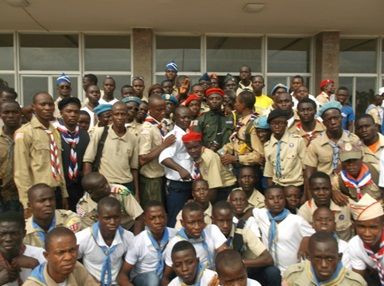
The Boy Scout movement has historically served as an important institution for youth development, character formation, leadership training, civic responsibility, community service, discipline, and nation-building. In Liberia, the Scout movement has a long institutional history and has periodically received national recognition for its contribution to youth development and citizenship.
In 2015, the Government of Liberia formally declared Scout Week and described the movement’s objectives in terms of leadership, good citizenship, patriotism, volunteerism, and service to the community and state.
More recently, Liberia hosted the 12th West Africa Scout Youth Forum and 16th West Africa Scout Zonal Conference in April 2026, where governance, youth leadership, safeguarding, peace, resilience, and sustainable development were identified as important priorities.
This article argues that Liberia should strategically reawaken, modernize, and expand the operational scope of the Liberia Scout Association, particularly through structured partnerships with the Liberia National Police (LNP), Liberia National Fire Service, Liberia National Commission on Disabilities, Liberia Immigration Service, Liberia Drug Enforcement Agency, Liberia National Red Cross Society, schools, local authorities, civil society organizations, and communities. Such cooperation should not transform Scouts into police officers or auxiliary law-enforcement personnel.
Rather, it should establish Scouts as a civilian youth-development and community-service partner capable of supporting crime-prevention education, road and pedestrian safety awareness, emergency preparedness, disaster-risk reduction, environmental protection, anti-drug education, child protection, conflict prevention, peacebuilding, and responsible citizenship.
The article applies community policing, social disorganization, social capital, procedural justice, positive youth development, and problem-oriented policing perspectives to examine how a revitalized Scout movement could contribute to Liberia’s public-safety architecture.
It also identifies institutional safeguards necessary to prevent abuse, political manipulation, vigilantism, profiling, unauthorized law-enforcement activity, and the exploitation of children. The article concludes with a proposed Liberia Scout–Law Enforcement Community Partnership Framework, including training, governance, safeguarding, communication, community service, monitoring and evaluation.
Keywords: Liberia Boy Scouts, Liberia Scout Association, law enforcement, community policing, youth development, crime prevention, civic education, public safety, peacebuilding, child protection, community partnership, Liberia National Police.
Introduction
Youth constitute one of the most important assets of every nation. A country’s future security, political stability, economic development, social cohesion, and democratic culture are strongly influenced by the values, skills, education, and opportunities provided to its young population.
Liberia is a particularly important case for examining the relationship between youth development and public safety. UNICEF describes Liberia as a youthful country, reporting that children under 15 constitute approximately 42 percent of the population and that approximately 63 percent of the population is under 25. At the same time, Liberian children and adolescents face challenges involving poverty, violence, exploitation, educational limitations, and other forms of vulnerability.
These realities demonstrate that public safety cannot be understood exclusively as the responsibility of police officers, prosecutors, courts, correctional institutions, or other formal security agencies. Modern law enforcement increasingly recognizes that sustainable crime prevention requires cooperation between government institutions and communities.
This is the central premise of this article: Liberia’s public-safety architecture can benefit from a stronger, better organized, professionally supervised and modernized Scout movement.
The argument does not suggest that Scouts should become a substitute for the police. Nor does it suggest that children should be placed in dangerous security situations.
Instead, the proposition is that the Scout movement can provide a structured environment through which young people learn discipline, responsibility, leadership, first aid, emergency preparedness, environmental stewardship, conflict resolution, civic responsibility, and respect for law.
The Liberia National Police itself traces the development of organized policing in Liberia through several historical stages, including the creation of the first Constabulary Police Force in 1925 and the establishment of the Liberia National Police as a legal institution in 1956. The evolution of policing demonstrates that maintaining public order has always required institutions capable of responding to changing social conditions.
Contemporary policing requires more than responding to crime after it occurs. It requires prevention, partnership, trust, communication, community intelligence, youth engagement and problem-solving.
This is where a revitalized Scout movement can make a meaningful contribution.
Reframing the Concept of Scouting in Liberia: The term “Boy Scouts” may sometimes create the impression of an organization concerned primarily with camping, uniforms, hiking, marching, knots and outdoor activities. Although these activities remain valuable, modern Scouting is considerably broader.
The World Organization of the Scout Movement (WOSM) emphasizes youth engagement, active citizenship, leadership, peacebuilding, life skills, volunteering and community development. The Africa Scout Region’s 2025–2028 strategic framework emphasizes relevant education, diversity and inclusion, safeguarding, volunteering, organizational development, partnerships and societal
impact. Therefore, the question for Liberia should not simply be:
“How can Liberia increase the number of Scouts?”
A more important question is: “How can Liberia use Scouting as a structured platform for developing responsible, disciplined, service-oriented and community-minded young citizens?”
This distinction is fundamental. A modern Scout movement should prepare young people not merely to follow instructions but to understand responsibility.
A Scout should understand: respect for the law; respect for human dignity; respect for diversity; peaceful conflict resolution; community responsibility; environmental protection; emergency preparedness; first aid; personal discipline; leadership; teamwork; volunteerism; responsible use of technology; protection of children; prevention of violence; rejection of drugs and substance abuse; rejection of vigilantism; and respect for democratic institutions.
This vision would place Scouting within Liberia’s broader human-security and community-development framework.
Historical Foundation of Scouting in Liberia
Liberia’s Scout movement has a significant historical foundation. In 2015, the Government of Liberia declared May 24–30 as Scout Week and recognized May 30 as the 92nd anniversary of the Liberia Scout Association. The proclamation called upon the Ministry of Youth and Sports, Ministry of Education, local government officials, community leaders, citizens and registered Scouts to participate in programs promoting the spirit and mission of Scouting.
The significance of this recognition is important.
The government did not describe Scouting simply as recreational activity. It associated Scouting with leadership; good citizenship; patriotism; volunteerism; youth empowerment; good governance; service to the community; and service to the state.
These objectives remain highly relevant to Liberia’s contemporary circumstances.
The movement therefore possesses an institutional foundation upon which a modern national program can be constructed.
Rather than creating a completely new youth institution, Liberia can strengthen an existing tradition.
The Law of the Boy Scouts of Liberia
The foundational statute is: An Act Incorporating the Boy Scouts of Liberia and Granting Them the Right and Power to Protect Their Insignia Badge.”
It was enacted as Private Act No. 18 on January 26, 1923, by the Liberian Legislature.
The Act established the organization as a “body politic and corporate” under the name Boy Scouts of Liberia. It also gave the organization legal capacity to sue and be sued and to participate in proceedings before competent Liberian courts.
Importantly, this statute did not make the Boy Scouts a police force. Its legal foundation was organizational and protective—it incorporated the association and protected its Scout identity and insignia. The Act should therefore not be interpreted as giving Scouts ordinary police powers such as arrest, criminal investigation, search, seizure, or law-enforcement authority.
The Liberia Scout Association’s published history further states that the name “Boy Scouts of Liberia” was changed to “Liberia Scout Association” in June 2005 by the National Legislature.
The Liberia Scout Association operates within the constitutional order of the Republic of Liberia. The Constitution is the supreme legal framework governing the exercise of public authority and the rights and responsibilities of persons and institutions within Liberia.
Accordingly, Scout activities must respect fundamental principles including: equality before the law; human dignity; freedom of association; freedom from unlawful discrimination; protection of children; due process; peaceful civic participation; respect for private property; and respect for lawful governmental authority.
The Association should therefore avoid practices that could place Scouts in conflict with constitutional rights.
For example, Scouts should not be instructed to punish suspected criminals, conduct unauthorized searches, detain persons, seize property, interrogate suspects, or use force against members of the public.
Those functions belong to properly authorized state institutions operating under Liberian law
The Contemporary Security Environment: Liberia’s security environment has changed considerably over the past several decades.
Traditional approaches to security frequently focused on armed threats, political instability, organized crime and conventional policing. Contemporary security challenges are more complex.
They include: youth violence; drug and substance abuse; gender-based violence; sexual exploitation; child abuse; cybercrime; misinformation; communal conflict;
road accidents; environmental emergencies; disaster risks; trafficking; unemployment;
school violence; organized criminal activity; domestic violence; mob violence; and social tensions.
UNICEF has emphasized that violence against children in Liberia requires a comprehensive response involving government, communities and civil society. It specifically highlights the importance of community-based protection and response mechanisms.
This reinforces an important principle: The prevention of crime and violence begins before a police officer arrives at the scene. It begins in the family., It begins at school. It begins in the community. It begins through social institutions that teach young people how to resolve conflicts, respect others and accept responsibility.
Scouting can be one of those institutions.
Community Policing and the Scout Movement: Community policing provides one of the strongest theoretical foundations for expanding the role of Scouts.
Community policing moves away from a model in which the police are viewed simply as an institution that responds to crime. Instead, it emphasizes partnership, trust, problem-solving and community participation.
Research on community policing in Liberia has found that community-policing programs can involve community members in addressing public-safety challenges and strengthening the relationship between communities and law enforcement.
This has significant implications for Scouting.
Scouts can become a bridge between: Young people ↔️ Families ↔️ Schools ↔️ Communities ↔️ Public institutions.
The relationship should be based on trust rather than authority.
For example, Scouts could participate in community programs involving: road-safety campaigns; anti-drug campaigns; school safety awareness; environmental sanitation; emergency preparedness; first-aid education; fire-safety education; disaster preparedness; anti-bullying campaigns; violence-prevention programs; peacebuilding; community clean-up exercises; and civic education.
The Scout does not arrest anyone. The Scout does not conduct criminal investigations. The Scout does not carry weapons. The Scout does not interrogate suspects. The Scout does not enforce criminal law. Instead, the Scout educates, serves, observes responsibly, communicates through approved channels and promotes positive behavior. That distinction is essential.
Proposed Operational Scope of Liberia Scouts: A revitalized Liberia Scout Association could operate through several specialized program areas. Civic Education and Good Citizenship
The first responsibility should be citizenship. Scouts should understand Liberia’s Constitution, national symbols, civic responsibilities, democratic values, rule of law and peaceful participation.
Civic education should include: constitutional principles; rights and responsibilities; respect for public institutions; peaceful political participation; tolerance; national unity;
respect for diversity; community responsibility; and volunteerism. The objective is to develop citizens who understand that patriotism is demonstrated through service rather than political hostility.
Scouts Are Not a Law-Enforcement Agency
One of the most important legal principles governing the modern Scout movement should be the clear separation between Scouting and policing.
The Liberia National Police and other authorized security institutions possess responsibilities established by Liberian law. Scouts, by contrast, are primarily members of a youth-development and civic-education organization.
Therefore, membership in the Liberia Scout Association should not be interpreted as conferring: police powers; arrest authority; search-and-seizure authority; criminal investigative powers;
authority to carry out police interrogations; authority to establish checkpoints; authority to enforce criminal penalties; authority to use coercive force against civilians; or authority to act as an unofficial security force. This limitation is not a weakness. Rather, it protects both the public and the integrity of Scouting.
A modern Scout can support law enforcement without becoming a police officer.
Although Scouts should not perform police functions, there is substantial room for structured cooperation between the Liberia Scout Association and law-enforcement agencies.
Liberia’s experience with community policing demonstrates the importance of relationships between communities and police. Research on Liberia has found that community policing can strengthen trust between police and communities, facilitate communication, and contribute to collaborative approaches to public safety.
Political Neutrality
The Liberia Scout Association’s published organizational description characterizes Scouting as a voluntary and non-political educational movement.
This principle should remain central to the legal and institutional identity of the Association.
Scouts should be encouraged to understand democracy, citizenship, constitutional government, elections, human rights, and civic responsibility. However, the Association itself should not become an instrument for partisan political mobilization.
The distinction is critical: Political education is not the same as partisan political activity.
A Scout may learn how government works without being instructed to support a particular political party or candidate. A Scout organization that becomes politically partisan risks losing public confidence and undermining the principle of national unity.
Relationship with Government: Because the Scout movement has historically received legislative recognition, government institutions may appropriately cooperate with the Association in areas of common public interest.
Such cooperation can include: youth-development programs; civic education; disaster preparedness; environmental initiatives; public-health education; road-safety programs;
national service activities; peacebuilding;
leadership development; and community-development projects.
The Liberian government has previously recognized Scouting’s contribution to volunteerism, youth empowerment, patriotism, leadership, good citizenship, and community development.
For example, the Government declared a national Scout Week in 2015 and encouraged government ministries, local authorities, communities, citizens, and registered Scouts to participate in Scout activities. Government cooperation, however, should not transform the Scout Association into a government security agency. Institutional independence and the voluntary nature of Scouting should remain protected.
Scouts, National Security and Public Safety
The distinction between national security and law enforcement is important.
National security involves the protection of the state and population from serious threats. Law enforcement involves enforcing criminal and other applicable laws. Scouting operates primarily in the field of human development and community resilience.
Nevertheless, youth development can contribute indirectly to national security.
A young person who develops: discipline; respect for law; leadership;
teamwork; responsibility; tolerance; conflict-resolution skills;
emergency preparedness; and commitment to community service
may become a more responsible citizen. Consequently, Scouting can be understood as part of Liberia’s broader preventive security architecture, but not as an armed or coercive component of that architecture.
Proposed Legal Principle for Law-Enforcement Cooperation: For purposes of modern policy, the following principle could guide cooperation between the Liberia Scout Association and law-enforcement institutions: The Liberia Scout Association shall cooperate with competent law-enforcement and public-safety institutions in the promotion of lawful conduct, crime prevention, civic education, community safety, emergency preparedness and youth development, but no Scout membership, appointment, uniform or rank shall confer police, military or other coercive governmental authority unless expressly provided by law. This principle would create a clear boundary between community service and law enforcement.
It would also allow the Liberia Scout Association to become a valuable partner in community policing without compromising its identity as a voluntary youth organization.
Conclusion
The time has come to reconsider the role of Scouting in Liberia.
The Scout movement should not be viewed simply as a youth organization concerned with uniforms, camping and recreational activities. Properly organized and professionally managed, it can become a significant platform for leadership development, civic education, volunteerism, peacebuilding, public-safety education and community development.
Liberia already possesses an important historical foundation for such a transformation. The Government’s 2015 recognition of Scout Week emphasized leadership, good citizenship, patriotism, volunteerism and youth empowerment. In April 2026, Liberia again demonstrated the country’s relevance to the continental Scout movement by hosting major West African Scout gatherings focused on youth leadership, governance, safeguarding, peace, resilience and sustainable development. The opportunity is therefore not to create Scouting from nothing.
The opportunity is to reawaken it.
From a law-enforcement perspective, the most valuable Scout is not the young person attempting to behave like a police officer. The most valuable Scout is the young citizen who understands the law, respects human dignity, rejects violence, refuses drugs, protects the environment, helps vulnerable people, resolves conflicts peacefully and knows when and how to seek assistance from legitimate authorities.
This approach is consistent with modern community-policing principles. Research on Liberia indicates that community policing can strengthen the rule of law by developing cooperation between police and communities and by expanding community participation in public safety.
The Scout movement can therefore become part of Liberia’s broader preventive-security architecture. But this transformation must be carefully managed.
Scouts must not become police officers.
Scouts must not become political activists.
Scouts must not become vigilantes.
Scouts must not be exposed to unnecessary danger.
Instead: Scouts should become disciplined young citizens trained to serve, protect, educate, lead and build peace within the limits of their age, training and legal authority.
Liberia’s future security cannot be built only through stronger police institutions. It must also be built through stronger families, schools, communities and youth institutions.
A revitalized Scout movement can contribute to that national project.
The ultimate objective should therefore be the development of a modern, professional, inclusive, non-partisan and safeguarding-centered Liberia Scout Association that works in partnership with communities and law-enforcement institutions while maintaining its independent civilian youth-development identity.
Such a movement would not merely produce better Scouts.
It could help produce better citizens, better leaders and a safer Liberia.
About the Author
Apostle Dr. Tarpeh Lasanah U-sayee Jr. is a Liberian law-enforcement professional, criminal justice scholar, university professor, security and executive-protection trainer, researcher, minister of the Gospel, and international relations practitioner. His professional career brings together law enforcement, criminal justice education, security administration, leadership, theology, and public service. Publicly available profiles also identify him as a trainer with Liberia’s law-enforcement institutions and a Criminal Justice professor.
Dr. U-sayee has a multidisciplinary academic background, including:
Doctoral Degree in Church Growth and Ministry — T-Net International/Teleo University, USA, conferred January 17, 2026.
Master of Divinity (MDiv).
Master of Foreign Service Leadership in International Relations.
Bachelor’s Degree in Criminal Justice.
Bachelor’s Degree in Sociology.
Associate Degree in Management.
His educational background combines criminal justice, sociology, international relations, management, theology, and church growth, giving him an interdisciplinary foundation for his work in education, security, governance, and ministry.
References
African Scout Region. (2025). Africa Regional Triennial Plan 2025–2028. World Organization of the Scout Movement.
Government of Liberia, Ministry of Foreign Affairs. (2015). President Johnson Sirleaf Declares May 24–30, 2015 Scout Week. Government of Liberia.
Liberia National Police. (n.d.). History of the Liberia National Police. Government of Liberia.
Morse, B. S. (2025). Strengthening the rule of law through community policing: Evidence from Liberia. Comparative Political Studies, 58(3). https://doi.org/10.1177/00104140241252090
UNICEF Liberia. (2026). Child Protection. UNICEF Liberia.
UNICEF Liberia. (2026). Situation Analysis of Adolescent Girls in Liberia. UNICEF Liberia.
UNICEF Liberia. (2026). Government of Liberia and UNICEF Align Priorities to Accelerate Results for Children. UNICEF Liberia.
World Organization of the Scout Movement. (2018). Creating a Safe Environment for Young People in Scouting. World Scouting.
World Organization of the Scout Movement. (2018). The Scout Youth Forum: A Safe Space for Youth Involvement. World Scouting.
World Organization of the Scout Movement. (2021). UNICEF and Scouts Innovate Adolescent and Youth Engagement During COVID-19 Pandemic. World Scouting.
World Organization of the Scout Movement. (2026). Liberia Hosts Milestone 12th West Africa Scout Youth Forum and 16th Zonal Conference. World Scouting.
World Organization of the Scout Movement. (2026). Strengthening Safe from Harm in Scouting across Southern Africa. World Scouting.

