

Liberia must move beyond repeatedly rebuilding its health system after crises and instead invest in a resilient, equitable and sustainable system capable of withstanding future shocks, health experts and policymakers have been told.
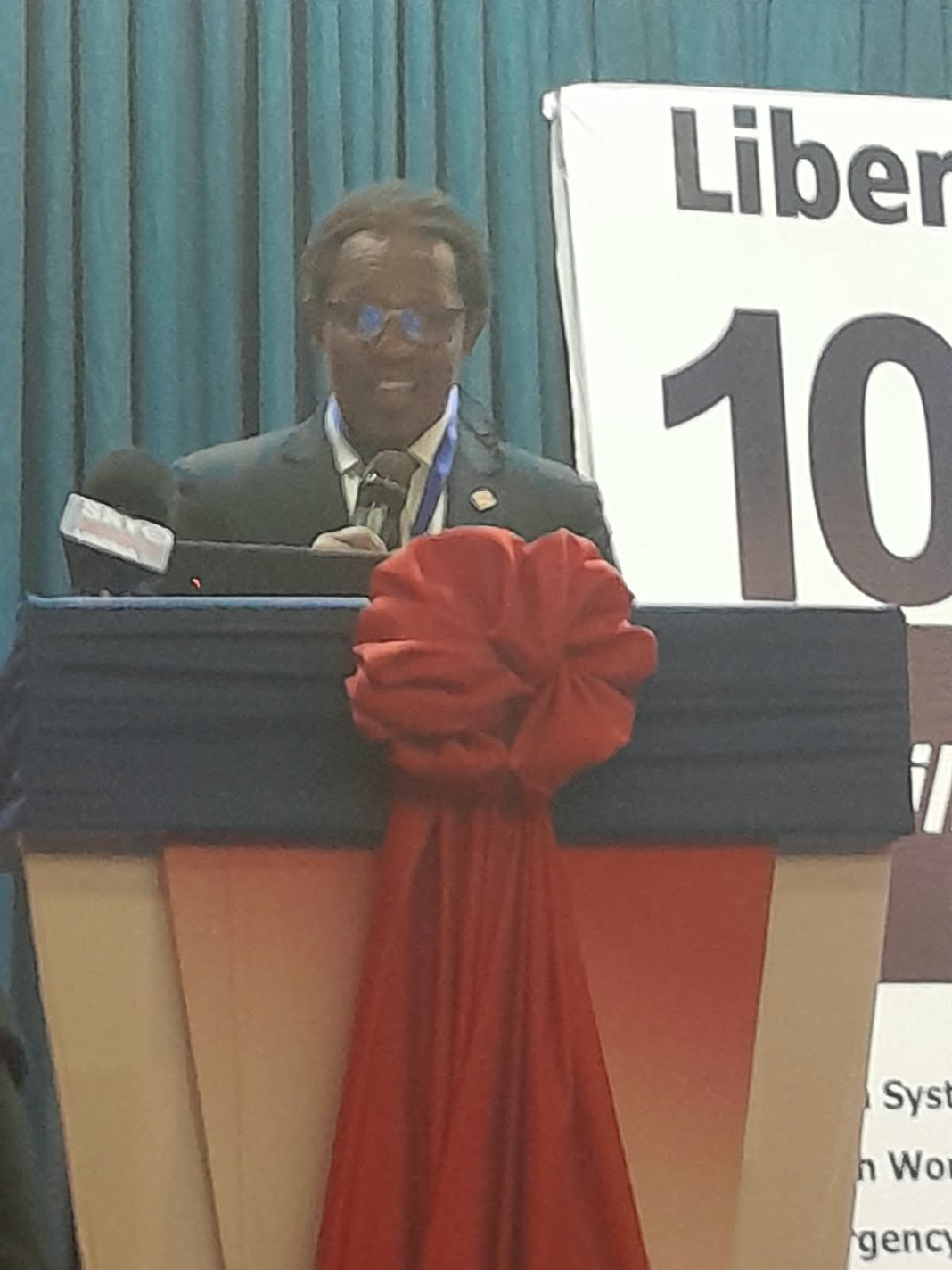
The call was made Thursday, September 17, 2026, during the 10th Annual General Scientific Meeting of the Liberia College of Physicians and Surgeons (LCPS), where the keynote address focused on transforming Liberia’s health sector from a model centered on recovery to one built around resilience, sustainability and innovation.
The keynote speaker, who is the Country Director for Partner in Heath, Dr. Maxo Luma spoke on the the theme “From Recovery to Resilience: Advancing Equitable, Sustainable, and Innovative Health Systems for Liberia 2030,” challenged health professionals, policymakers, researchers and development partners to rethink how the country prepares for future public-health emergencies.
Dr. Luma said Liberia has repeatedly demonstrated its capacity to recover from major crises, including civil conflict, the 2014 Ebola outbreak and the COVID-19 pandemic.
However, the address cautioned that recovery alone cannot be the country’s long-term health strategy.
“Recovery is important. Recovery is necessary. Recovery saves lives,” the speaker said, while stressing that recovery without structural transformation could leave the country trapped in a cycle of rebuilding after every major crisis.
The address argued that many public-health disasters should not be viewed solely as “natural” or unexpected events, but as the result of acute shocks colliding with longstanding vulnerabilities within health systems.
Liberia’s experience during the Ebola crisis was cited as a key example.
When Ebola struck in 2014, the country was still dealing with the consequences of years of civil conflict and a severely weakened health infrastructure. The keynote noted that Partners in Health encountered a country with approximately 45 doctors serving a population of about 4.5 million people.
The Ebola outbreak, according to the address, therefore, did not occur in isolation. Rather, it exposed and intensified weaknesses that already existed within the health system.
The speaker described the situation as a “catastrophic double shock,” arguing that the lesson for Liberia is the need to strengthen institutions and healthcare capacity before the next emergency occurs.
The post-Ebola period, the keynote noted, brought investments in disease surveillance, community health, workforce development and public-health institutions, including the strengthening of the National Public Health Institute of Liberia.
The address also highlighted Liberia’s Community Health Assistant program as an important component of health-system resilience.
Community health workers, the speaker said, provide an early line of defense by identifying health threats, connecting residents to care and strengthening surveillance at the community level.
“A resilient health system does not stop functioning every time a crisis emerges,” the speaker said. “It absorbs the shock. It adapts. It learns. It evolves.”
The keynote also addressed recent reductions in international health funding, saying the changing global financing environment presents a challenge while forcing countries such as Liberia to examine their dependence on external assistance.
The speaker referenced a statement attributed to President Joseph Boakai during a fundraising program last year: “Aid is aid. It comes and it goes. But what does not go is our responsibility.”
The statement was presented as a guiding principle for greater national ownership of Liberia’s health system.
The keynote argued that sustainability should involve increased domestic investment, improved training and retention of Liberian health professionals, stronger primary healthcare and greater national responsibility for maintaining essential services when external projects or funding cycles end.
The address further introduced the Partners In Health five-S framework for health-system strengthening: Staff, Stuff, Space, Systems and Social Support.
According to the keynote, resilience depends on strengthening all five areas rather than concentrating on individual projects or facilities.
Particular emphasis was placed on systems, including governance, leadership, financing, information management and accountability. Digital health platforms, electronic medical records, telemedicine and interoperable information systems were cited as potential tools for improving healthcare delivery and expanding access to specialized services.
But the speaker cautioned that technology alone does not constitute innovation.
Innovation, the address maintained, should focus on finding practical solutions that improve access, quality, accountability and health outcomes, particularly for underserved populations.
Equity was also presented as a central requirement of Liberia’s health-system transformation.
The keynote called for continued efforts to address disparities between urban and rural communities, improve the distribution and retention of health workers, strengthen referral systems, ensure reliable supplies of medicines and reduce financial barriers to healthcare.
Women and girls, children, persons with disabilities and remote rural communities were identified among populations requiring particular attention.
Looking toward 2030, the speaker said Liberia’s health system should be resilient, equitable, sustainable and innovative, while being digitally enabled, climate-aware, community-centered and locally led.
The ultimate measure of progress, the address concluded, should not simply be the number of health facilities constructed or programs implemented, but whether Liberia can maintain essential healthcare during future emergencies and sustain progress despite changes in external support.
“Liberia’s story has been one of recovery,” the speaker said. “Our next chapter must be one of resilience. And the chapter after that must be one of sustainability.”
The LCPS meeting brought together health professionals, policymakers, researchers, educators, students and development partners to reflect on the future of healthcare and the country’s path toward stronger health systems by 2030.

