

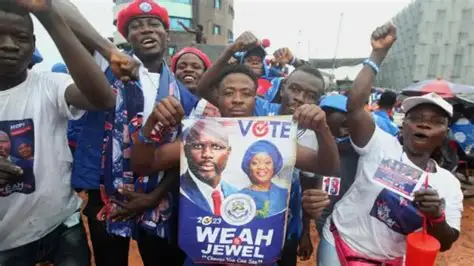
A growing movement within the opposition Congress for Democratic Change (CDC) is calling for the return of former National Chairman Mulbah K. Morlu Jr., with party supporters reportedly organizing a nationwide petition campaign aimed at restoring him to the helm of the party ahead of Liberia’s 2029 presidential and legislative elections.
Supporters say the planned mobilization, expected to culminate on November 14, reflects grassroots demands for experienced leadership and organizational renewal as the CDC seeks to reposition itself for a return to state power after its narrow defeat in the 2023 presidential runoff.
For many within the party, the debate is no longer centered solely on who should serve as chairman, but rather on who possesses the political experience, organizational capacity, and strategic vision needed to lead the CDC back to electoral victory.
Their answer, increasingly echoed by supporters across the party’s structures, is Morlu.
Advocates of Morlu’s return point to the 2023 election results as evidence that the CDC remains a formidable political force despite losing the presidency.
Official figures from the National Elections Commission showed former President George Weah securing 793,914 votes in the presidential runoff, compared to President Joseph Nyuma Boakai’s 814,481 votes. The margin of defeat was just over 20,000 votes, one of the closest presidential contests in Liberia’s recent political history.
The CDC also emerged with significant representation in the House of Representatives, capturing 25 of the 73 contested seats.
For supporters, those numbers demonstrate that the party does not require a complete political reconstruction. Rather, they argue, it needs strategic reorganization and stronger leadership capable of converting its existing support base into electoral success in 2029.
They contend that the next chairman must be able to unite various factions within the party, rebuild grassroots networks, strengthen discipline, and broaden the CDC’s appeal beyond its traditional support base.
A major pillar of the campaign for Morlu’s return is his extensive involvement in the CDC’s development over nearly two decades.
Morlu first emerged as a key figure in the party’s political operations in 2005, serving as Chairman of the Progressive Action for Change (PAC), a CDC-aligned auxiliary organization. He later held several influential positions, including Assistant Public Relations Director, Director of Public Relations, Chairman of the Policy Response Committee, Chairman of the Mobilization and Recruitment Committee, Vice Chairman for Operations, and Chairman of the CDC Convention Committee.
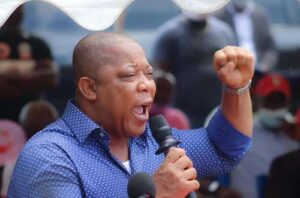
His supporters frequently cite his leadership of the party’s nationwide restructuring efforts following the 2011 elections, a period during which the CDC faced significant internal challenges and declining organizational structures across several counties.
Under Morlu’s stewardship, supporters say the restructuring exercise helped restore party structures nationwide and strengthened grassroots engagement, laying groundwork that would later contribute to the CDC’s electoral successes.
Morlu eventually rose to the position of National Chairman, serving for approximately six years, including during the CDC-led administration.
Political observers within the party note that his rise through various levels of leadership provided him with deep institutional knowledge of the CDC’s internal operations, membership structures, and electoral machinery.
Although Morlu resigned from the CDC chairmanship in February 2024 amid internal disagreements, his supporters argue that his departure from office did not diminish his political relevance.
They point to his subsequent leadership of Solidarity and Trust for a New Day (STAND), a civic advocacy movement that has organized several public demonstrations focused on governance, accountability, and economic concerns.
Supporters cite the July 17, 2026 “Lead or Leave” protest as evidence of Morlu’s continuing ability to mobilize large numbers of citizens around national issues. The demonstration drew participation from various civic and student organizations and was described by observers as largely peaceful.
Particularly notable, supporters say, was the endorsement of the protest by several student bodies at the University of Liberia, including organizations that have traditionally held differing political positions.
For Morlu’s backers, such developments highlight an ability to engage beyond party politics and build relationships across diverse constituencies.
As Liberia’s political landscape begins to shift toward the next electoral cycle, advocates for Morlu’s return insist that the CDC requires a leader capable of bridging internal divisions while expanding the party’s national appeal.
They argue that the challenges facing the opposition extend beyond maintaining party structures and demand a broader strategy focused on rebuilding public confidence and presenting a credible alternative to the governing Unity Party.
Supporters further contend that the CDC’s next chairman must be able to engage with international partners, democratic institutions, and development stakeholders while strengthening the party’s domestic political standing.
Whether the growing grassroots campaign ultimately succeeds remains to be seen. However, the increasing calls for Morlu’s return underscore a broader conversation within the CDC about its future direction, leadership, and prospects for reclaiming the presidency in 2029.
As the party prepares for the years ahead, the debate over who should lead its resurgence is likely to remain at the center of Liberia’s evolving political landscape.

