

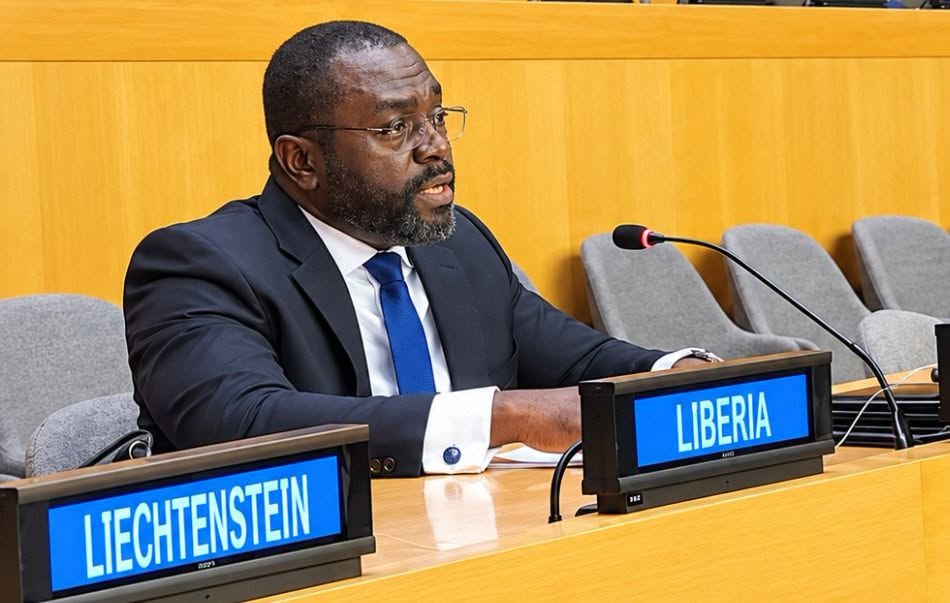
Liberia has called on the United Nations to strengthen and adequately finance its Resident Coordinator System (RCS), warning that funding shortages, staffing cuts and ongoing institutional restructuring could undermine the organization’s ability to effectively support national development efforts across Africa.
The appeal was made by Liberia’s Deputy Permanent Representative to the United Nations, Ambassador Baba Sillah, during the 2026 Resident Coordinators Global Meeting held in New York. Addressing a session on Resident Coordinator System support in Africa, Sillah stressed the need for a more responsive, well-resourced and technically capable coordination structure to meet the continent’s complex and evolving development needs.
Speaking during discussions between African member states and UN Resident Coordinators, the Liberian diplomat argued that strengthening country-level coordination mechanisms is essential if the United Nations is to remain effective in supporting sustainable development, institutional capacity building and economic transformation across the continent.
Sillah expressed concern that persistent financial constraints, shortages of professional personnel and the potential downgrading or elimination of critical technical positions could significantly affect the operational effectiveness of Resident Coordinator Offices.
According to him, these offices play a vital role in ensuring that the work of UN agencies, funds and programs is aligned with national priorities and development strategies. Weakening their professional capacity, he warned, could impair the quality of technical support available to governments, particularly in developing countries facing multiple socio-economic challenges.
The Liberian representative specifically highlighted the importance of maintaining key professional positions, including economists, data analysts and development policy experts.
He noted that such specialists provide essential support for evidence-based decision-making, development planning, resource mobilization and the implementation of programs aimed at achieving national and global development goals.
“Technical expertise is indispensable for designing policies that are grounded in accurate data and aligned with national development objectives,” Sillah emphasized, underscoring the need for sustained investment in professional staffing.
He further argued that Africa’s development challenges cannot be effectively addressed through a uniform staffing model. Instead, countries facing distinct vulnerabilities require tailored support mechanisms capable of responding to their specific circumstances.
Sillah pointed out that least-developed countries, post-conflict societies and nations struggling with climate-related pressures and institutional weaknesses require differentiated assistance and sustained engagement at the country level.
His remarks reflect broader concerns among African countries that efforts to improve administrative efficiency within the UN system should not come at the expense of the technical and operational capacities needed to support development outcomes on the ground.
Liberia’s concerns are also supported by recent data from the United Nations Sustainable Development Group (UNSDG), which reveal significant resource gaps within the Resident Coordinator System.
According to the UNSDG’s 2025 report, only 33 percent of Resident Coordinator Offices worldwide were fully staffed with their core professional capacities in 2024. The report also highlighted a funding shortfall of nearly US$80 million during the same period.
The financial pressures persisted into 2025. UN figures show that as of March 2025, approximately US$202.1 million had been mobilized against the system’s approved budget requirement of US$281.8 million for 2024, leaving substantial financing needs unmet.
These resource constraints have raised concerns over the system’s ability to deliver coordinated development assistance, particularly in countries heavily reliant on international technical cooperation and support.
The Resident Coordinator System occupies a central role within the United Nations development architecture. Its current structure emerged from comprehensive UN development system reforms endorsed by the UN General Assembly through Resolution 72/279 in May 2018.
The reforms, which took effect on January 1, 2019, were designed to create a more independent and empowered coordination framework, enabling Resident Coordinators to provide stronger leadership in aligning UN support with national priorities.
Under the reformed structure, Resident Coordinators serve as the highest-ranking UN development representatives at the country level, overseeing collaboration among multiple UN entities and ensuring coherent support for government-led development programs.
According to the UN Development Coordination Office, the system currently comprises 130 Resident Coordinators and 132 Resident Coordinator Offices serving 162 countries and territories around the world.
Their mandate includes coordinating UN development assistance, fostering partnerships with governments and stakeholders, and supporting implementation of the 2030 Agenda for Sustainable Development and its 17 Sustainable Development Goals (SDGs).
For Liberia, maintaining a strong and adequately funded Resident Coordinator System is critical to ensuring that international development support remains responsive to the realities facing African nations.
Many countries across the continent continue to grapple with overlapping challenges, including poverty, unemployment, infrastructure deficits, climate vulnerability, weak institutional capacity and post-conflict recovery needs.
Against this backdrop, Liberia argues that a robust UN presence at the national level remains indispensable for advancing sustainable development and strengthening resilience.
The message from Monrovia was unequivocal: meaningful progress toward Africa’s development aspirations will require a stronger, better financed and professionally staffed Resident Coordinator System capable of delivering coordinated, measurable and lasting development results across the continent.

