

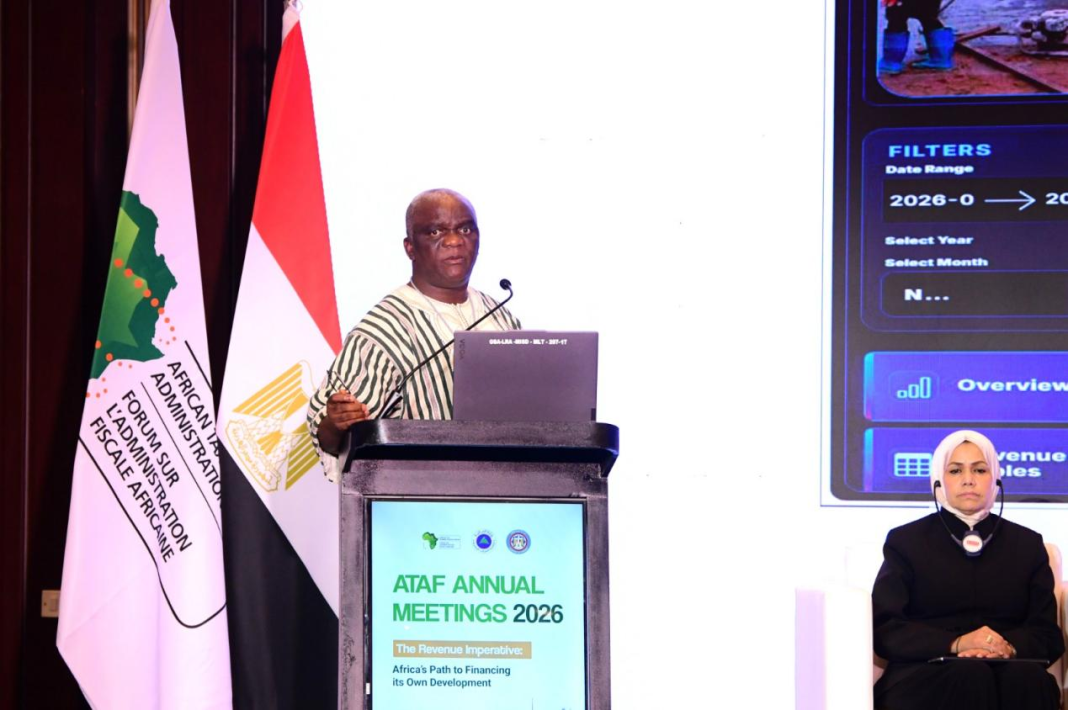
Liberia’s efforts to strengthen domestic revenue mobilization, promote institutional accountability, and accelerate digital transformation were highlighted at the 2026 African Tax Administration Forum (ATAF) Annual Meetings and General Assembly, where Liberia Revenue Authority (LRA) Commissioner General James Dorbor Jallah presented the country’s recent progress in tax administration reforms and revenue growth.
Speaking during a high-level panel discussion on “Domestic Resource Mobilisation: Differentiated Pathways for a Diverse Continent,” Commissioner General Jallah outlined key reforms being implemented by the LRA to enhance revenue collection, improve transparency, and reduce Liberia’s dependence on foreign aid.
Jallah said Liberia inherited a challenging revenue environment when the current administration took office in 2023, with domestic revenue collections standing at approximately US$612 million, declining development assistance, and expired strategic plans governing revenue mobilization.
Despite those challenges, he reported significant improvements in revenue performance over the last three years. According to him, domestic revenue collections increased to US$699 million in 2024, rose further to US$848 million in 2025, and have now reached approximately US$1.134 billion. He noted that an additional US$5 million carried over from the previous fiscal year brings the combined total to approximately US$1.139 billion.
The Commissioner General described the growth as clear evidence of Liberia’s increasing ability to finance its own development agenda through internally generated resources.
“Domestic resource mobilization is critical to sustainable development,” Jallah emphasized, noting that stronger revenue generation enables governments to invest in essential services and infrastructure while reducing vulnerability to fluctuations in external support.
At the center of the LRA’s transformation agenda, Jallah said, are five strategic priorities: leadership and governance, technology and data management, compliance and enforcement, customs and tax administration, and institutional integrity.
He explained that the reform pillars are designed to strengthen operational efficiency, improve tax compliance, enhance enforcement mechanisms, and increase public confidence in the tax system.
A major aspect of the reform effort has been the Authority’s commitment to accountability. Jallah disclosed that the LRA dismissed 46 employees in 2025 over fraud and other forms of misconduct.
The dismissals, he said, underscore the Authority’s zero-tolerance stance on corruption and unethical behavior.
“Integrity remains at the heart of revenue administration,” he noted, adding that public trust is essential for improving voluntary tax compliance and expanding the country’s revenue base.
A key highlight of Liberia’s presentation at the ATAF gathering was the demonstration of the LRA’s public revenue dashboard, a digital platform designed to provide citizens, businesses, and stakeholders with direct access to revenue collection data.
The dashboard allows users to monitor government revenue performance and download monthly reports detailing collections by category and tax type.
Jallah explained that the system currently offers near-real-time updates and is being upgraded to provide fully real-time reporting capabilities.
According to him, the platform forms part of the LRA’s broader transparency strategy, allowing taxpayers to track revenue performance while strengthening public oversight of government collections.
The initiative complements ongoing efforts to expand electronic tax payment systems and other technology-driven services across the Authority.
The Commissioner General also unveiled the LRA’s emerging virtual taxpayer contact center, an innovation intended to improve public engagement and address delays in responding to taxpayer inquiries.
During the presentation, a virtual assistant known as “Fatu” demonstrated its ability to respond to questions from taxpayers, including guidance on tax obligations for small businesses.
The system is expected to enhance taxpayer education by providing round-the-clock access to information and reducing the need for individuals and businesses to visit LRA offices for routine inquiries.
Officials believe the initiative will help simplify compliance, improve service delivery, and expand access to tax information across the country.
Jallah emphasized that successful domestic resource mobilization extends beyond increasing tax collections. Sustainable progress, he argued, requires a combination of institutional reforms, transparency, accountability, taxpayer engagement, and efficient service delivery.
He further stressed the importance of adapting reform strategies to national realities rather than applying uniform solutions across the continent.
The ATAF panel brought together tax administrators and development experts from across Africa, including representatives from Egypt, Angola, The Gambia, Mauritius, and academia. Discussions focused on how countries can strengthen domestic revenue mobilization while addressing unique economic conditions, expanding digitalization, large informal sectors, and varying levels of institutional capacity.

