

By Festus Poquie
When prosecutors from Liberia’s Asset Recovery Taskforce filed papers, this month seeking to seize property linked to the Clar Hope Foundation — the high-profile charity founded by former first lady Clar Weah — they did more than open a case file.
They thrust into the national spotlight a wider and more uncomfortable question: what happens when Liberia’s most senior politicians and their families run private foundations with murky funding and close ties to state power?
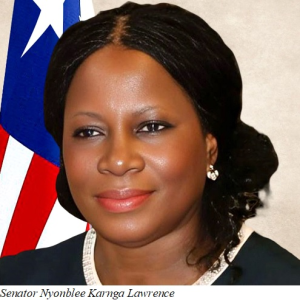
The Clar Hope action has prompted fresh scrutiny of a constellation of foundations led by current and former senior officials — from President Joseph Nyuma Boakai’s JNB Foundation to the Jewel Starfish Foundation of former vice-president Jewel Howard Taylor, the Nyonblee Cares Foundation run by Senate Pro Tempore Nyonblee Karnga Lawrence, the Ellen Johnson Sirleaf Presidential Center for Women and Development, and the KYB Foundation operated by First Lady Kartumu Yarta Boakai.
All trumpet social programs on their websites — scholarships, clinics, farms, skills training and other community projects — but few publish detailed accounts of where their money comes from or how it is spent. That opacity, critics say, raises the possibility that public resources, influence or favors could be channeled into ostensibly private entities.
“What we are seeing now is not just about Clar Hope,” said a governance expert who asked not to be named. 
“It’s about the way private foundations can become parallel channels for power and money unless there are clear rules and transparency.”
Prosecutors say Clar Hope assets are linked to alleged misdirected public funds. The foundation denies it used state money to acquire its property.
The case and Clar Hope’s categorical denials have crystallized two competing concerns that dominate public debate. One is the legitimate need to hold organizations and officeholders accountable if public resources were diverted. The other is the risk that enforcement becomes politicized, used selectively against some figures while sparing others.
Foundations on the frontlines and off the books?
Taken at face value, the philanthropic work of Liberia’s political class reads as an extension of public service: scholarships for hundreds of students, clinics and mobile health outreach, agricultural projects employing youth and donations of school furniture.
The JNB Foundation, established by President Boakai, runs a 127-acre farm near Tubmanburg that its managers say trains young people in sustainable agriculture.
In November its executive director publicly donated classroom furniture to the Nyonblee Cares Foundation.
The Nyonblee Cares Foundation has mounted scholarship drives for 500 students and runs mobile clinic programs and education centers in multiple counties.
The Jewel Starfish Foundation claims more than two decades of work supporting girls’ education in Liberia and neighboring countries. 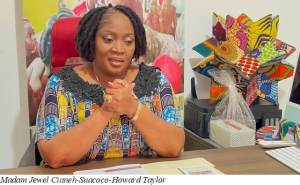
The Ellen Johnson Sirleaf center sponsors leadership programs for African women. First Lady Kartumu Yarta Boakai’s KYB Foundation highlights support to single mothers, people with disabilities and orphans.
But beyond the success stories and the websites there is a scarcity of public financial trail.
None of these organizations appears to routinely publish audited financial statements showing donors, amounts and program spending in a way accessible to the Liberian public.
Donors are generally described as “partners” or “donors” without a public register identifying them, the value of their gifts, or whether they have business before the state.
That absence of disclosure is the crux of concern for anticorruption campaigners.
“If a private donor gives to a foundation tied to a public official and then wins a government contract, citizens have a right to know whether that was a coincidence or a quid pro quo,” said a lawyer specializing in public ethics.
“Without transparent donor registers and independent audits, you can’t rule out influence peddling.”
Legal guardrails and grey areas
Liberia’s Code of Conduct for public officials sets clear prohibitions: soliciting or accepting gifts that could influence official duties is barred. Token gifts must be declared within seven days; and gifts from foreign governments or international organizations are subject to reporting.
The Constitution also forbids public office holders from demanding “perquisites, emoluments, or benefits… on account of any duty required by the government.”
But experts say the rules were written with direct bribery in mind, not the more complex modern arrangements where state actors use personal foundations to receive funds, run programs and accept gifts on behalf of vulnerable communities.
Key legal questions arise: when does a foundation run by a public official constitute a private vehicle and when might it be a de facto public entity? Can property buy for a charitable center that serves thousands be considered public property if public funds, in whole or part, were used in the purchase or upkeep? And crucially, who bears the burden of proof?
The Asset Recovery Taskforce’s filing against Clar Hope raises that latter question in stark terms. If prosecutors can demonstrate that public monies or state assets were diverted into the foundation, those assets could be seized.
The motion to seize has prompted immediate pushback from political allies of Clar Weah and has been portrayed by some as selective targeting — an attempt to use law enforcement as a political weapon.
Selective enforcement or necessary accountability?
That charge of selective enforcement echoes across Liberian politics. Supporters of the Clar Hope Foundation and of Clar Weah have described the case as politically motivated, while transparency advocates counter that accountability should apply across the board.
Observers point out that many foundations run by sitting and former officeholders operate in an unregulated space where the risk of conflicts of interest and the appearance of impropriety is high.
“In countries where the state is weak and patronage networks are strong, private foundations can be used to consolidate favor,” said an academic who has studied post conflict governance in West Africa.
“That is why you need clear rules, routine disclosures and independent audit mechanisms.”
Some practical examples deepen the unease. The public announcement that the JNB Foundation would seek a tractor to accelerate work on its farm and the reported plan to engage the presidency to secure such equipment raises the question of whether state resources, even in-kind, are being mobilized for private initiatives.
When the JNB Foundation next receives classroom equipment from unnamed donors, or when a company that commits to philanthropy linked to a foundation later wins a government contract, the absence of a transparent trail leaves the public with suspicion even if no laws were broken.
Foundations’ responses, and the limits of public information
The foundations themselves emphasize service. On its website, Clar Hope describes a vision of “weaving a tapestry of empowerment,” while the Jewel Starfish Foundation and Nyonblee Cares publish long lists of school fees paid, scholarships awarded and health outreach performed.
Leaders and spokespeople for these organizations say their work fills gaps left by the state and reaches the poorest communities.
But when asked to produce audited accounts, donor lists and formal evidence that no public funds were used in specific purchases, few of the groups have proactively published such documents.
Clar Hope denies using public funding to acquire the property now under scrutiny. Other foundations say donors include private individuals, international partners and grants, but do not always identify them by name.

