

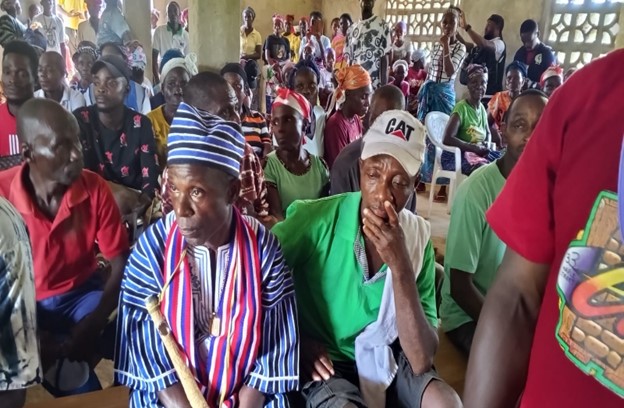
By Ben TC Brooks/ River Gee County
8,000 people. Yet for decades, residents say they have been cut off from the rest of the country—trapped by poor roads, absent communication networks, limited health care, and unsafe drinking water.
A recent visit by the Rural Reporter News Network (RRNN) revealed stark scenes of deprivation. Families struggle daily to access basic services, while unregulated mining operations have sprung up behind homes as residents attempt to survive without government support.
The district’s eight towns—Behteken, Mahken, Woloken, Tyaken, Dwehso, Tianbo, Wlehaken, and Karbuken—remain largely inaccessible. Karbuken is the only community reachable by motorcycle; the rest can only be reached on foot. During the rainy season, roads become impassable, forcing residents to trek for hours through forests and mud.
Pregnant women, the elderly, and the critically ill are often carried on makeshift stretchers. Others, unable to reach medical care, die from treatable illnesses such as malaria and typhoid.
“We are suffering,” said Ma. Esther K. Toe, a mother of six from Karbuken. “When someone gets sick at night, there is no way to call for help. Sometimes, we just pray and wait, not knowing if the person will survive.”
Equally troubling is the absence of mobile network coverage. Residents say there is no phone signal anywhere in the district, leaving them unable to contact relatives, call for medical assistance, or alert authorities during emergencies. Community members believe this communication blackout has contributed to preventable deaths and heightened insecurity.
“There is no mobile network in the whole district,” Toe added.
Despite a population of 7,905, Nyenebo has only one health facility—a small clinic in Tyaken. For many, reaching it requires walking more than an hour, a journey that is nearly impossible at night or during emergencies.
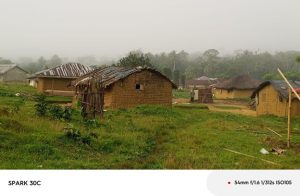
Education is equally dire. The district’s only public school serves just over 300 students, with only one government-assigned teacher. Parents fear their children’s futures are being sacrificed to neglect.
Agriculture, the main source of livelihood, is crippled by the lack of roads. Farmers struggle to transport produce to markets, leading to high post-harvest losses and reduced incomes.
Residents accuse successive governments and development partners of abandoning them. “Apart from Karbuken, cars and motorcycles cannot reach the rest of the towns. We walk two to three hours just to get to other communities,” said Pauh Bartee of Mahken.
The frustration is compounded by unsafe mining activities, which have become a desperate means of survival. Without regulation, these operations pose environmental and health risks, further endangering already vulnerable communities.
Community leaders are appealing to the national government, lawmakers, and humanitarian organizations for urgent intervention. They demand roads, communication networks, health facilities, schools, and clean water.
As Liberia continues to champion development and inclusion, Nyenebo stands as a stark reminder of communities left behind. For residents, the promises of national growth remain distant, while daily life is defined by isolation, poverty, and abandonment.
“The people of Nyenebo are calling on the government to see us, hear us, and support us,” one elder said during a town hall meeting. “We cannot continue to live like this.”
Nyenebo’s plight underscores the broader challenge of rural neglect in Liberia. Without deliberate investment in infrastructure and social services, thousands of citizens remain excluded from the nation’s development agenda. For the 7,900 residents of River Gee’s forgotten district, survival continues to depend not on state support, but on resilience and endurance in the face of systemic abandonment.

