

By Comfort T. Doe | Ahteenah Radio
A storm of fear and outrage is sweeping across Grand Kru County as traditional chiefs and elders raise their voices against the relentless scourge of illegal mining. What was once a land of fertile farms and pristine rivers is now scarred by pits, poisoned waters, and shattered livelihoods — a crisis they warn could doom generations to come.
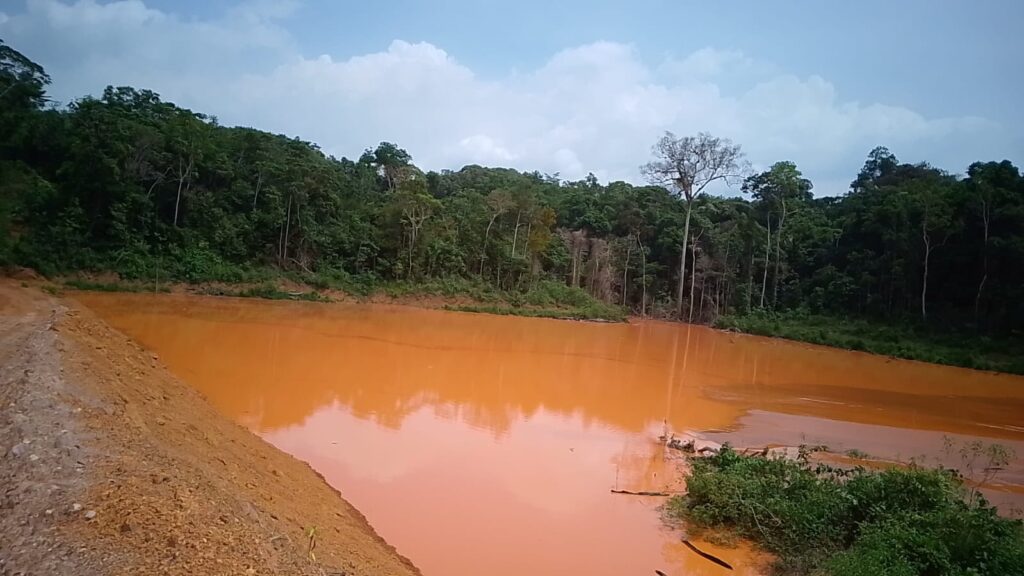
Community leaders describe the devastation as nothing short of catastrophic. Rivers and creeks that for centuries sustained life have turned into toxic streams, their waters clouded by unchecked mining operations. Families who once drank freely from nature’s bounty now recoil in fear, uncertain if the water they consume carries sickness or death.
“Our people are suffering,” lamented one elder, his voice heavy with despair. “The water is no longer safe, the land is being destroyed, and nobody seems to care.”
The chiefs paint a grim picture: abandoned mining pits litter the countryside like open graves, threatening children who wander too close and farmers who tread the land in search of survival. Fertile farmland, the backbone of rural life, is being swallowed by the greed of miners who operate with impunity. With crops failing and soil stripped bare, hunger and poverty loom ominously over communities already struggling to endure.
But the damage is not only environmental. The chiefs warn of a social and economic collapse as young people are robbed of opportunities, their futures buried beneath the rubble of destroyed farmland. With livelihoods vanishing, desperation grows, leaving families trapped in a cycle of despair.
Traditional leaders are now demanding urgent intervention. They are calling on the Government of Liberia, the Environmental Protection Agency (EPA), and the Ministry of Mines and Energy to launch sweeping investigations and crack down on illegal miners who continue to ravage the land unchecked. Stronger environmental safeguards and community awareness programs, they insist, are vital to halting the destruction before it becomes irreversible.
“If urgent action is not taken, future generations will suffer for the mistakes being made today,” the chiefs warned, their plea echoing across the county like a desperate cry for salvation.
As Grand Kru’s rivers run dark and its farmland disappears, the question remains: will the nation act swiftly to protect its people, or will silence and neglect allow this crisis to consume the very soul of the county?

