

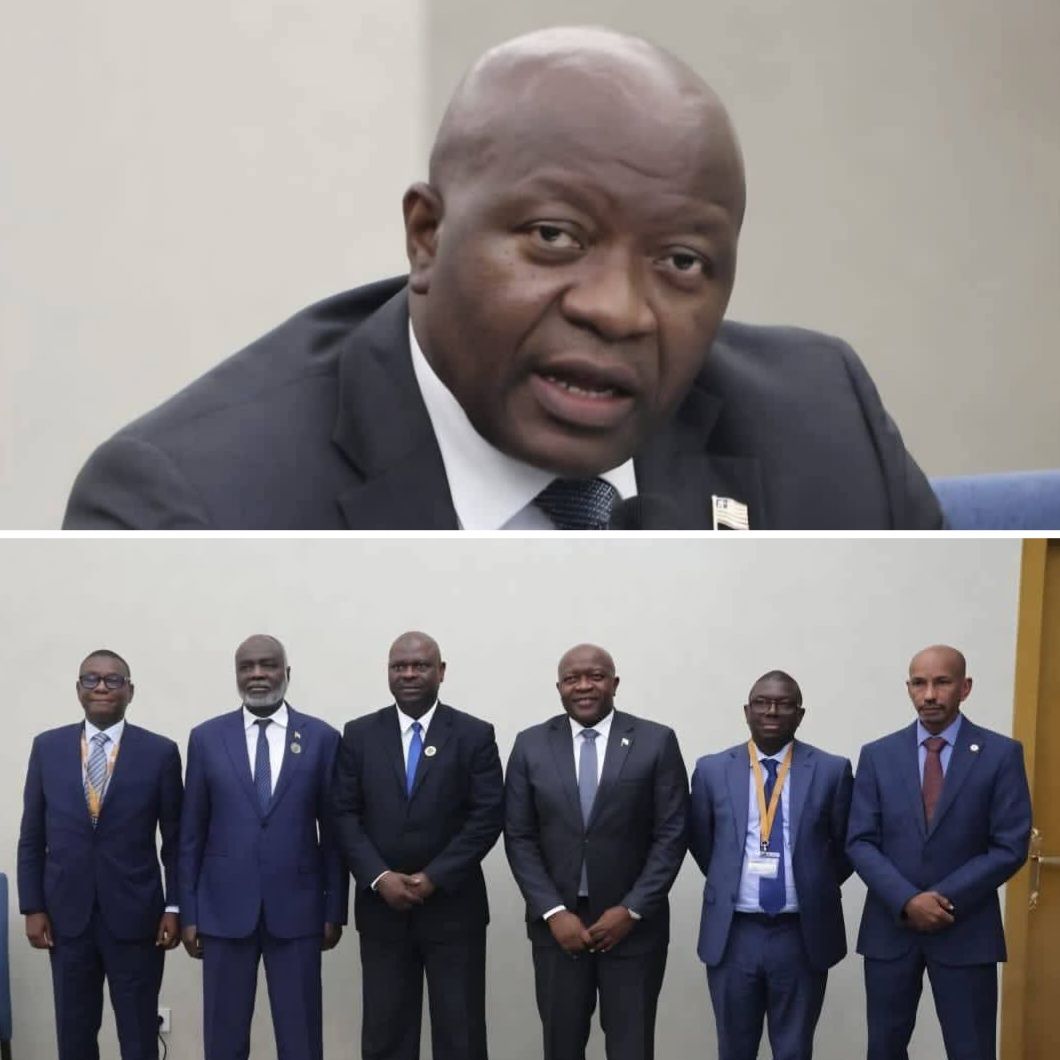
Brazzaville, Republic of Congo — In a moment charged with history and urgency, Liberia’s Finance and Development Planning Minister, Augustine Kpehe Ngafuan, has assumed the chairmanship of the African Development Bank’s (AfDB) Constituency 15, rallying five nations to embrace fiscal resilience and domestic resource mobilization as Africa confronts one of its most turbulent economic eras since independence.
Speaking at the Annual Constituency 15 Meeting on the sidelines of the AfDB’s 2026 Annual Meetings, Ngafuan declared that Africa stands at a crossroads, buffeted by geopolitical shocks, tightening global financial conditions, and volatile commodity markets. “The global financial landscape is tightening. Africa must rely more on resilience, reform, and domestic resource mobilization,” he warned delegates, echoing the continent’s historic struggle for economic sovereignty.
Ngafuan’s rise comes as the AfDB itself undergoes transformation under newly elected President Sidi Ould Tah, who secured a record 76 percent shareholder mandate in 2025 — the strongest in the Bank’s history. Constituency 15, comprising The Gambia, Ghana, Liberia, Sierra Leone, and Sudan, now finds itself at the heart of this reform agenda, advocating for vulnerable yet reform-driven economies.
Ngafuan praised his predecessor, Sierra Leone’s Finance Minister Sekou Ahmed Bangura, for strengthening cohesion within the Bank’s governance system, while pledging Liberia’s active role in reinforcing accountability and integrity. His appeal carried echoes of Africa’s post-independence leaders who once demanded unity against external pressures, now reframed for the 21st century’s financial battleground.
The minister underscored how instability in the Middle East has rattled energy markets and shipping routes, driving up import bills for fuel and food across Africa. For Constituency 15 nations, the consequences are stark: inflation spikes, shrinking fiscal space, and intensifying competition for concessional financing. Analysts estimate Africa faces an annual development financing gap exceeding US$400 billion — a figure reminiscent of the debt crises of the 1980s that crippled African economies and forced painful structural adjustments.
In The Gambia, tourism is rebounding and rural electrification is expanding through solar mini-grids.
In Ghana, inflation management and digital tax systems are restoring fiscal confidence.
In Liberia, digitized governance reforms and infrastructure investments are stimulating productivity.
In Sierra Leone, education reforms and renewed mining interest are strengthening growth prospects.
In Sudan, modest recovery indicators shine despite humanitarian and political crises.
“These developments remind us that even in a turbulent global environment, African countries continue to move forward with determination, reform, and resilience,” Ngafuan told delegates.
AfDB approvals for Constituency 15 surged to US$223 million in 2025 — a 238 percent increase over 2024 — with major operations in Ghana and Sudan. The bloc also contributed US$16 million to the African Development Fund’s record US$11 billion replenishment, a historic show of ownership.
But challenges persist: 24 percent of operations remain flagged due to procurement delays and weak project capacity. More troubling, Ngafuan lamented the absence of private-sector financing in 2025, stressing that “our constituency recorded no non-sovereign approvals, and this must change.”
Fiscal resilience through domestic revenue mobilization and sustainable debt management.
Private-sector expansion by building pipelines of investment-ready projects.
Restoring influence within the Bank by reversing shareholder erosion and meeting subscription commitments. “Our voting power, credibility, and ability to shape policy depend on them,” he reminded governors.
In a stirring appeal, Ngafuan urged solidarity with Sudan, commending Khartoum for honoring AfDB commitments despite extraordinary humanitarian pressures. His call evoked Africa’s long tradition of collective struggle, from the Pan-African Congresses of the early 20th century to the anti-apartheid solidarity movements of the 1980s.
Closing his remarks, Ngafuan declared: “The global environment may be uncertain, but our resolve must remain steady.” His words carried the weight of history — a reminder that Africa’s destiny has always been shaped not by external dictates, but by unity, resilience, and the will to mobilize its own resources.

