

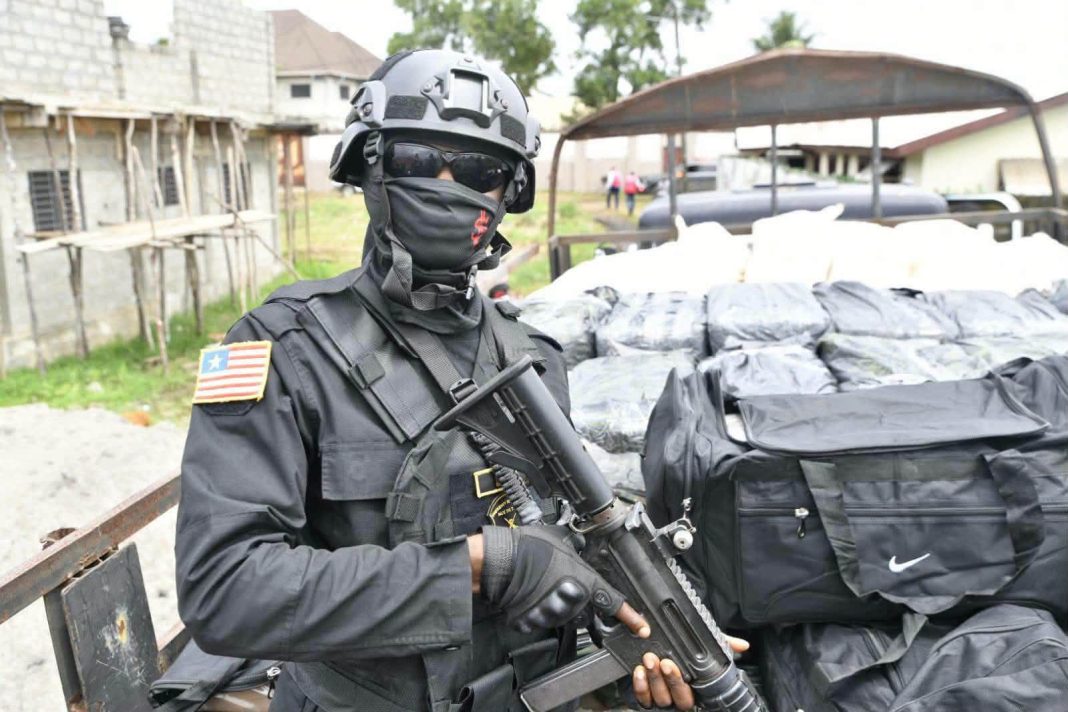
Abstract
The illicit trafficking and distribution of cocaine remain among the most pressing security challenges confronting Liberia and the wider West African sub-region. The expansion of transnational organized crime, combined with porous borders, limited law enforcement resources, and evolving trafficking methods, has increased the need for more proactive and intelligence-driven policing strategies.
Traditional reactive policing alone is insufficient to dismantle sophisticated criminal organizations involved in cocaine trafficking. Consequently, intelligence-led policing (ILP) has emerged as an internationally recognized approach that enables law enforcement agencies to anticipate criminal activities, identify high-value targets, and deploy operational resources efficiently.
This article examines intelligence-led house-to-house searches as an operational strategy for cocaine seizures from a criminal justice perspective, with particular emphasis on the Liberia Drug Enforcement Agency (LDEA). It argues that house-to-house searches should be based on credible intelligence, conducted in accordance with Liberian law, and carried out with respect for constitutional rights and human dignity. Intelligence-led search operations, when lawfully authorized and professionally executed, can contribute significantly to disrupting drug trafficking networks, recovering illicit narcotics, gathering evidence, and prosecuting offenders.
The paper further discusses the historical evolution of intelligence-led policing, the legal framework governing search and seizure in Liberia, intelligence collection methods, operational planning, inter-agency cooperation, and the role of communities in combating drug trafficking. It also analyzes the major operational challenges confronting the LDEA, including inadequate funding, technological limitations, corruption risks, weak intelligence-sharing mechanisms, and insufficient forensic capabilities. Comparative examples from other jurisdictions are used to identify best practices that can strengthen Liberia’s anti-drug strategy.
The article concludes that intelligence-led policing represents one of the most effective modern approaches to combating cocaine trafficking when combined with judicial oversight, accountability, inter-agency coordination, and community engagement. It recommends strengthening intelligence capacity, enhancing professional training, improving forensic and technological resources, expanding public education, and promoting regional and international cooperation to improve cocaine seizure operations and national security.
Keywords: Intelligence-Led Policing, Cocaine Trafficking, House-to-House Searches, Liberia Drug Enforcement Agency, Criminal Justice, Search and Seizure, Drug Enforcement, Organized Crime, National Security.
Introduction
The global cocaine trade has become one of the most profitable forms of transnational organized crime, generating billions of dollars annually while undermining public safety, governance, and economic development. Criminal organizations engaged in cocaine trafficking have become increasingly sophisticated, using advanced communication technologies, financial networks, maritime transportation, land routes, and corrupt practices to avoid detection by law enforcement agencies.
West Africa has increasingly become a strategic transit corridor for cocaine trafficked from South America to Europe and other international destinations. The region’s extensive coastline, relatively weak border management systems, and varying law enforcement capacities make it attractive to international drug trafficking organizations. Liberia, because of its Atlantic coastline and geographic position, remains vulnerable to exploitation by these criminal networks.
The consequences of cocaine trafficking extend far beyond the illegal drug market. Drug trafficking fuels violent crime, corruption, money laundering, illegal firearms trafficking, youth involvement in organized crime, and institutional instability. It also weakens public confidence in law enforcement institutions and undermines national development efforts. Addressing these challenges requires a comprehensive strategy that combines law enforcement, criminal intelligence, public education, judicial effectiveness, international cooperation, and community participation.
In response to these growing threats, the Liberia Drug Enforcement Agency (LDEA) serves as the country’s principal institution responsible for preventing, investigating, and suppressing illicit drug trafficking and related offenses. To remain effective against increasingly organized criminal networks, the LDEA must rely on intelligence-led policing rather than reactive enforcement alone.
Intelligence-led policing is a strategic model that places criminal intelligence at the center of decision-making. Instead of waiting for crimes to occur, law enforcement agencies collect, analyze, and evaluate information to identify criminal threats before they become more extensive. This proactive approach allows investigators to focus on high-risk offenders, dismantle criminal organizations, and allocate resources more effectively.
Within this framework, house-to-house search operations may be used as an investigative tool when supported by credible intelligence and conducted in accordance with Liberian law. Such operations should never be arbitrary or indiscriminate. They should be based on lawful authority, supported by evidence, and carried out in a manner that respects constitutional rights, protects innocent citizens, and preserves public confidence in the criminal justice system.
The success of intelligence-led house-to-house searches depends on several factors, including the quality of intelligence, proper planning, effective leadership, professional conduct, inter-agency cooperation, and adherence to legal procedures. Equally important is the cooperation of communities, whose willingness to share information can significantly improve the identification of drug trafficking networks and reduce the movement of illicit drugs within neighborhoods.
As cocaine trafficking continues to evolve, the LDEA must continue strengthening its intelligence capabilities, modernizing investigative techniques, investing in technology and forensic science, and developing strategic partnerships with national, regional, and international agencies. Such efforts will not only improve cocaine seizure operations but also contribute to broader national security objectives and the protection of Liberian society.
Background of the Study
Drug trafficking has transformed from localized criminal activity into a highly organized international enterprise. The United Nations Office on Drugs and Crime (UNODC) estimates that transnational drug trafficking generates billions of dollars annually, enabling criminal organizations to expand their influence across continents. These organizations exploit weaknesses in governance, border security, financial systems, and law enforcement institutions to facilitate the movement of illicit narcotics.
Liberia has experienced increasing concerns regarding the transit, distribution, and consumption of cocaine and other dangerous drugs. While the country may not be a major producer of cocaine, its strategic location along the West African coast makes it susceptible to international trafficking networks seeking alternative routes to European markets. Criminal groups often use maritime transport, commercial cargo, air travel, and informal border crossings to move narcotics through the country.
Recognizing these challenges, the Government of Liberia established and strengthened the Liberia Drug Enforcement Agency to coordinate national efforts against drug trafficking. The Agency works in collaboration with the Liberia National Police, the Liberia Immigration Service, the National Security Agency, customs authorities, prosecutors, the judiciary, and international partners such as INTERPOL and the United Nations.
However, increasing criminal sophistication requires more than routine patrols and random enforcement operations. Effective cocaine interdiction depends on timely intelligence, strategic planning, lawful investigations, and evidence-based operational decisions. Intelligence-led house-to-house searches, when properly authorized and professionally executed, provide an opportunity to identify concealed narcotics, arrest suspects, gather evidence, and dismantle criminal networks while safeguarding constitutional rights and maintaining public trust.
This study therefore examines how intelligence-led policing can enhance cocaine seizure operations in Liberia and strengthen the operational effectiveness of the Liberia Drug Enforcement Agency while promoting accountability, professionalism, and respect for the rule of law.
Intelligence-Led Policing and Cocaine Enforcement in Liberia
The fight against cocaine trafficking has evolved significantly over the past three decades. Criminal organizations have become increasingly sophisticated, utilizing advanced communication technologies, encrypted messaging applications, international financial systems, maritime transportation, and cross-border criminal networks to conceal their activities. These developments require law enforcement agencies to adopt modern investigative strategies that are proactive rather than reactive.
One of the most effective contemporary approaches is Intelligence-Led Policing (ILP). Intelligence-led policing is a strategic model that uses criminal intelligence to identify threats, prioritize enforcement efforts, and support informed operational decision-making. Instead of relying solely on responding to crimes after they occur, ILP seeks to anticipate criminal activities by collecting, analyzing, and acting upon reliable information.
For the Liberia Drug Enforcement Agency (LDEA), intelligence-led policing provides an opportunity to improve operational effectiveness by identifying cocaine trafficking networks, targeting key offenders, disrupting supply chains, and strengthening criminal investigations. When implemented within the framework of Liberian law and with respect for constitutional rights, intelligence-led operations can significantly enhance the country’s ability to combat illicit drug trafficking.
Understanding Intelligence-Led Policing
Intelligence-Led Policing is a philosophy of law enforcement that places intelligence at the center of operational planning and decision-making. Rather than conducting broad or indiscriminate enforcement activities, investigators analyze information from multiple lawful sources to identify criminal patterns, assess threats, and prioritize the highest-risk targets.
The core objective of ILP is to prevent crime before it occurs by identifying individuals, organizations, and locations involved in criminal activities.
The intelligence cycle generally consists of:
Planning and Direction: Identifying intelligence priorities and operational objectives.
Collection: Lawfully gathering information from various sources.
Processing: Organizing and validating collected information.
Analysis: Converting information into actionable intelligence.
Dissemination: Sharing intelligence with authorized decision-makers.
Operational Action: Conducting investigations and enforcement activities based on intelligence.
Evaluation: Assessing outcomes to improve future operations.
This systematic approach enables agencies such as the LDEA to deploy limited resources more efficiently while increasing the likelihood of successful investigations and prosecutions.
Cocaine Trafficking in Liberia
Liberia occupies a strategic position along the Atlantic coast of West Africa. While the country is not a producer of cocaine, its location and transportation links make it vulnerable to exploitation by transnational criminal organizations seeking to move cocaine from South America to European and other international markets.
Drug trafficking organizations continually adapt their methods to evade law enforcement. Cocaine may be concealed in shipping containers, commercial vehicles, luggage, private residences, warehouses, or other storage locations. Some traffickers also exploit remote border crossings, coastal communities, and informal transportation routes.
The consequences of cocaine trafficking extend beyond the illegal drug trade. They include:
Increased organized crime.
Corruption within public institutions.
Money laundering.
Violent crime associated with drug markets.
Youth involvement in criminal activities.
Public health challenges related to drug abuse.
Reduced investor confidence.
Threats to national and regional security.
These realities underscore the importance of strengthening intelligence capabilities within the LDEA and enhancing cooperation among all criminal justice institutions.
The Role of the Liberia Drug Enforcement Agency (LDEA)
The Liberia Drug Enforcement Agency serves as the principal government institution responsible for preventing, investigating, and suppressing drug trafficking and related offenses.
Its major responsibilities include:
Conducting criminal investigations into drug trafficking organizations.
Collecting and analyzing criminal intelligence.
Coordinating lawful drug interdiction operations.
Working with prosecutors to support criminal prosecutions.
Cooperating with other national security agencies.
Collaborating with international organizations involved in drug control.
Promoting public awareness regarding the dangers of illicit drugs.
Supporting national policies aimed at reducing drug trafficking and substance abuse.
In carrying out these responsibilities, the LDEA should prioritize intelligence-driven investigations that focus on high-risk offenders and organized criminal networks rather than relying solely on routine enforcement activities.
Intelligence Collection and Analysis
Effective intelligence is the foundation of successful cocaine investigations. Intelligence should be collected lawfully, carefully evaluated, and corroborated before it is used to support operational decisions.
Potential lawful sources of criminal intelligence include:
Information voluntarily provided by members of the public.
Surveillance conducted in accordance with applicable law.
Analysis of crime trends and patterns.
Interviews and witness statements.
Financial investigations related to suspected criminal proceeds.
Information lawfully shared by domestic and international law enforcement partners.
Open-source intelligence, including publicly available information where appropriate.
Once collected, information should be assessed for reliability, relevance, and credibility before being incorporated into intelligence products. Analysts can then identify criminal networks, recurring patterns, trafficking routes, and operational risks that assist investigators in planning effective enforcement actions.
Intelligence analysis also enables the LDEA to allocate personnel and resources efficiently, reducing unnecessary operations while focusing attention on significant criminal threats.
2.6 Intelligence-Led House-to-House Search Operations
House-to-house search operations can be an effective investigative tool when they are based on credible intelligence, supported by lawful authority, and conducted in accordance with Liberia’s Constitution and applicable laws. They should be planned and executed with professionalism, proportionality, and respect for the rights of occupants.
Before conducting such operations, investigators should:
Assess the credibility and reliability of the available intelligence.
Clearly define the investigative objectives.
Identify potential operational risks.
Coordinate with relevant authorities and partner agencies as appropriate.
Ensure that all required legal authorizations are obtained.
Prepare plans to protect both officers and civilians during the operation.
Document actions taken and preserve evidence in accordance with legal procedures.
Following an operation, officers should prepare detailed reports, maintain the chain of custody for seized evidence, and evaluate the operation to identify lessons that can improve future investigations.
When carried out in this manner, intelligence-led searches can help locate illicit narcotics, collect admissible evidence, identify members of trafficking networks, and support successful prosecutions while maintaining public confidence in law enforcement.
Legal Framework for Search and Seizure in Liberia
The effectiveness of intelligence-led policing depends not only on accurate intelligence but also on strict compliance with the law. The rule of law is a cornerstone of democratic policing and requires that all law enforcement activities be conducted within the limits established by the Constitution and the laws of Liberia. Search operations that are carried out without legal authority or that disregard due process may undermine criminal prosecutions, erode public trust, and expose law enforcement agencies to legal challenges.
For the Liberia Drug Enforcement Agency (LDEA), intelligence should guide investigations, but operational actions—including searches of private residences—should be undertaken in accordance with applicable legal requirements. Lawfully conducted searches help ensure that evidence is admissible in court and that the rights of individuals are respected throughout the criminal justice process.
The legal framework governing search and seizure seeks to achieve two important objectives:
Empower law enforcement agencies to investigate and suppress crime effectively.
Protect citizens against unlawful or arbitrary interference with their privacy, liberty, and property.
Balancing these objectives is essential to maintaining both public safety and public confidence in the justice system.
Constitutional Rights and Human Rights Considerations
Respect for human rights is fundamental to professional drug enforcement. Intelligence-led policing should strengthen, not weaken, the protection of constitutional freedoms. Officers conducting search operations must recognize that every individual is entitled to dignity, fairness, and equal treatment under the law.
In practice, this means that operations should be guided by the following principles:
Legality: Actions must be based on lawful authority.
Necessity: Enforcement measures should be necessary to achieve a legitimate law enforcement objective.
Proportionality: The level of force or intrusion should be proportionate to the circumstances.
Accountability: Officers should document their actions and remain answerable for their conduct.
Non-discrimination: Enforcement decisions should not be influenced by ethnicity, religion, political affiliation, gender, or socioeconomic status.
Professionalism: Officers should interact with members of the public respectfully and avoid unnecessary damage to property or harm to individuals.
Adherence to these principles enhances the legitimacy of the LDEA and encourages greater cooperation from the public.
Inter-Agency Cooperation
Drug trafficking is a complex criminal enterprise that often involves multiple forms of crime, including money laundering, corruption, document fraud, firearms trafficking, and cross-border smuggling. No single agency possesses all the expertise or resources required to address these challenges independently.
Effective intelligence-led policing therefore depends on close cooperation among relevant institutions. In Liberia, this may include collaboration between the LDEA and agencies such as the Liberia National Police, the Liberia Immigration Service, customs authorities, prosecutors, financial investigators, and other competent government bodies, as well as appropriate regional and international partners.
Successful inter-agency cooperation is strengthened by:
Timely and lawful intelligence sharing.
Joint operational planning.
Coordinated investigations.
Standardized operating procedures.
Regular multi-agency training.
Shared analytical resources.
Mutual respect for institutional mandates.
When agencies work together effectively, they are better positioned to identify trafficking networks, disrupt criminal operations, and support successful prosecutions.
Community Partnership and Intelligence Development
Communities are among the most valuable sources of lawful criminal intelligence. Residents often observe suspicious activities before they become known to law enforcement. Building strong relationships with communities can therefore improve the quality and timeliness of intelligence while enhancing public confidence in the LDEA.
Community engagement should focus on:
Encouraging voluntary reporting of suspected criminal activity.
Conducting public education on the dangers of cocaine trafficking and substance abuse.
Developing partnerships with community leaders, youth organizations, religious institutions, and civil society.
Protecting the confidentiality of individuals who provide information, consistent with the law.
Promoting transparency and accountability in law enforcement operations.
Public trust is a strategic asset. Citizens are more likely to cooperate with law enforcement when they believe officers act fairly, professionally, and within the law.
International Best Practices
Many countries have strengthened drug enforcement by integrating intelligence-led policing into broader criminal justice strategies. While each country’s legal framework differs, several common practices have proven effective and may inform Liberia’s ongoing efforts.
These practices include:
Establishing specialized criminal intelligence units staffed by trained analysts.
Using modern information technology to support intelligence analysis and case management.
Providing continuous professional development in intelligence analysis, investigations, and evidence management.
Strengthening forensic laboratories to improve the scientific examination of seized evidence.
Enhancing regional and international cooperation to address transnational trafficking.
Conducting regular operational reviews to identify lessons learned and improve future investigations.
Promoting ethical leadership, integrity, and anti-corruption measures within law enforcement agencies.
For Liberia, adapting these practices requires investment in personnel, technology, training, and institutional governance while ensuring that all operational activities remain consistent with national law and internationally recognized human rights standards.
Conclusion
Cocaine trafficking presents a significant threat to Liberia’s national security, public health, economic development, and criminal justice system. As trafficking organizations become increasingly sophisticated, traditional reactive policing alone is insufficient to address this evolving challenge. Intelligence-led policing offers a proactive framework that enables law enforcement agencies to identify criminal threats, prioritize investigations, and disrupt organized criminal networks more effectively.
For the Liberia Drug Enforcement Agency, intelligence-led investigations can significantly improve cocaine seizure operations when they are supported by reliable intelligence, lawful investigative practices, professional leadership, and effective collaboration with other institutions. Operational success also depends on continuous investment in personnel, technology, forensic science, and institutional capacity.
At the same time, successful drug enforcement must always be balanced with respect for the Constitution of Liberia, the rule of law, and internationally recognized human rights principles. Investigative measures should be based on credible intelligence and carried out with appropriate legal authority, ensuring that public safety is protected while individual rights are respected.
Ultimately, the fight against cocaine trafficking cannot be won by the LDEA alone.
It requires a whole-of-government and whole-of-society approach involving law enforcement agencies, prosecutors, the judiciary, policymakers, community leaders, civil society organizations, educational institutions, the private sector, and citizens. Through strengthened intelligence capabilities, professional policing, lawful investigations, regional cooperation, and sustained public support, Liberia can continue to enhance its capacity to combat cocaine trafficking and promote a safer, more secure society.
About the Author
Apostle Dr. Tarpeh L. U-sayee, Jr. is a highly accomplished Liberian law enforcement professional, criminal justice scholar, police training expert, and ordained Apostolic minister with over two decades of combined experience in security services, higher education, leadership training, and ministry.
He currently serves as an Instructor with the Executive Protection Service (EPS) and the Liberia National Police Training Academy, while lecturing in Criminal Justice, Forensic Science, and Physical Education at several private universities in Liberia.
His professional career is distinguished by extensive international exposure, including advanced police and counter-terrorism training in the United States and Nigeria.
Dr. U-sayee holds a Doctor of Ministry (DMin) in Church Growth, a master’s degree in foreign service leadership (International Relations), a Master of Divinity, dual bachelor’s Degrees in Sociology and Criminal Justice, and an Associate Degree in Management.
As an Apostle, academic, and security practitioner, he integrates ethical leadership, faith-based values, and practical expertise to advance peacebuilding, institutional development, and the rule of law in Liberia.
References
Beare, M. E., & Murray, T. (Eds.). (2007). Police and government relations: Who’s calling the shots? University of Toronto Press.
Carter, D. L. (2009). Law enforcement intelligence: A guide for state, local, and tribal law enforcement agencies (2nd ed.). U.S. Department of Justice.
Goldstein, H. (1990). Problem-oriented policing. McGraw-Hill.
Ratcliffe, J. H. (2016). Intelligence-led policing (2nd ed.). Routledge.
United Nations Office on Drugs and Crime. (2023). World Drug Report 2023.
United Nations Office on Drugs and Crime. (2024). World Drug Report 2024.
United Nations. (1988). United Nations Convention against Illicit Traffic in Narcotic Drugs and Psychotropic Substances.
United Nations. (2000). United Nations Convention against Transnational Organized Crime.
INTERPOL. (2023). Global policing capabilities against transnational organized crime.
African Union. (2019). African Union Plan of Action on Drug Control and Crime Prevention.
ECOWAS Commission. (2016). Regional Action Plan on Illicit Drug Trafficking, Organized Crime and Drug Abuse in West Africa.
Constitution of the Republic of Liberia (1986).
Liberia Drug Enforcement Agency Act (as amended).

