

The Office for the Establishment of the War and Economic Crimes Court for Liberia (OWECCL) has renewed its appeal for swift legislative action to establish the long-awaited War and Economic Crimes Court, declaring that Liberia can no longer afford to delay justice for victims of its brutal civil wars.
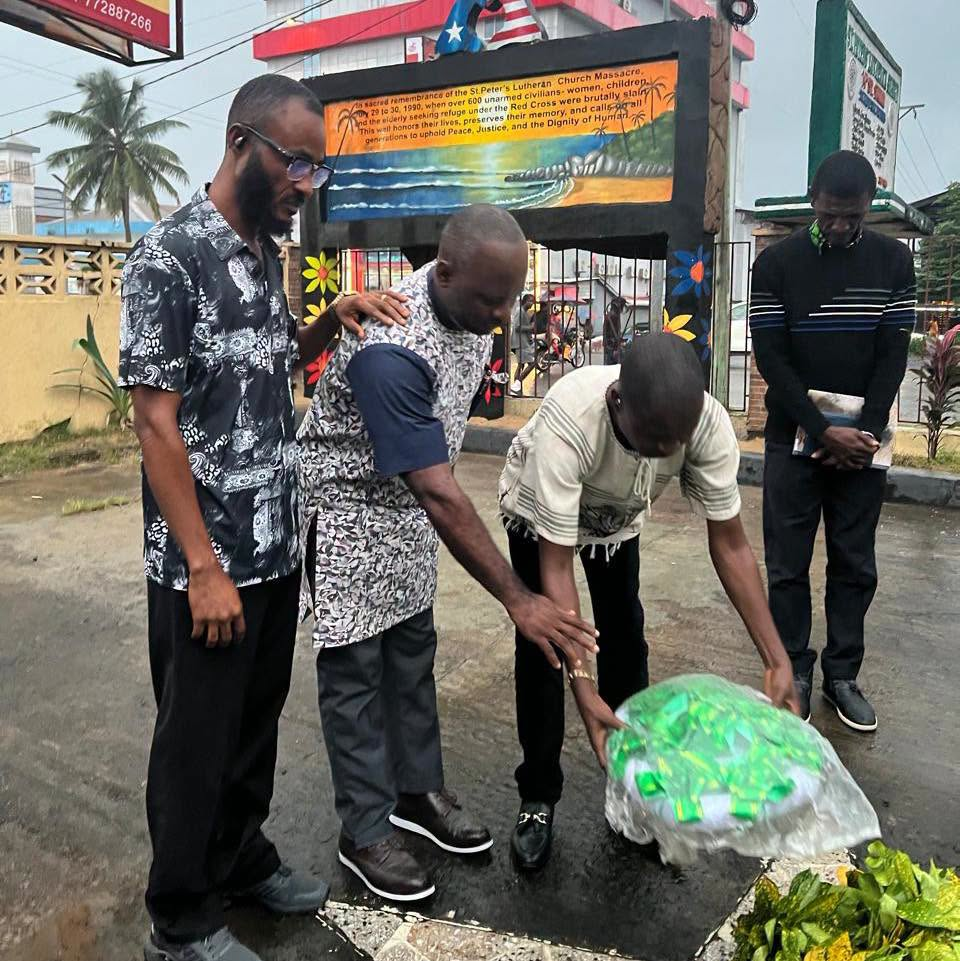
The call came Wednesday during solemn events marking the 36th anniversary of the St. Peter’s Lutheran Church Massacre, one of the deadliest atrocities of the conflict. On July 29, 1990, armed men stormed the church compound, killing more than 600 civilians who had sought refuge inside.
Speaking on behalf of OWECCL Executive Director Dr. Cllr. Jallah A. Barbu, Ms. Charelyn Mulbah of the War Crimes Division described the massacre as “one of Liberia’s darkest moments,” stressing that accountability remains essential to national healing and reconciliation. “Justice delayed for thirty-six years cannot become justice denied forever,” she said, underscoring that the proposed court is designed to promote dignity and healing for victims rather than revenge.
Mulbah also highlighted the launch of the Civil War Memorial Photo Gallery, calling it a vital step toward preserving the memory of victims, educating future generations, and confronting denial of wartime atrocities.
OWECCL further urged lawmakers to expedite passage of both the War and Economic Crimes Court Bill and the National Anticorruption Court Bill, arguing that the measures are critical to ending impunity, strengthening democratic governance, and reinforcing the rule of law.
Marcus P. Quoigoah Sr., Executive Director of the Lutheran Church Massacre Survivors Association (LUMASA), echoed the appeal, urging government to prioritize the welfare of survivors. Many, he noted, continue to struggle with physical injuries, psychological trauma, and economic hardship. Survivors are seeking dignity, medical care, psychosocial support, meaningful reparations, and justice for crimes committed during the war.
The memorial drew survivors, government officials, diplomats, religious leaders, civil society organizations, and development partners. Together they honored the victims and reaffirmed Liberia’s commitment to justice, accountability, reconciliation, and lasting peace.
For many, the anniversary was not only a remembrance of lives lost but also a renewed demand that Liberia confront its painful past. As OWECCL emphasized, the establishment of the War and Economic Crimes Court is more than a legal necessity—it is a moral imperative to ensure that atrocities like the Lutheran Church Massacre are never forgotten and never repeated.

