

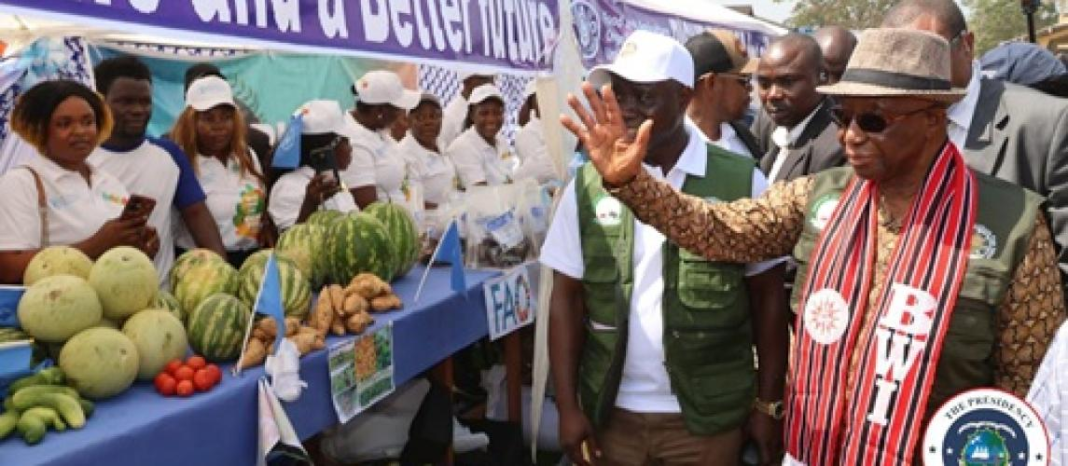
Liberia will host its 2026 National Agriculture Fair in Voinjama City, Lofa County, from December 10 to 12, with authorities using the event to promote increased domestic food production and reduce the country’s dependence on imported agricultural commodities.
Launching the annual fair, Agriculture Minister J. Alexander Nuetah announced that the three-day event will bring together farmers, agribusinesses, cooperatives, processors and stakeholders from across Liberia’s 15 counties to showcase agricultural products and explore opportunities to strengthen the sector.
The fair will be held under the theme, “Grow More, Import Less for Sustainable Development,” a message the minister said reflects the urgent need to boost local production and build a more resilient agricultural economy.
“This theme is speaking directly to our farmers and everyone involved in the agricultural value chain,” Nuetah said. “The goal is to encourage increased production so that more food can be supplied to local markets and Liberia can reduce its reliance on imports.”
According to the agriculture minister, reducing food imports would help retain revenue within the country while creating opportunities for investment, employment and economic growth in rural communities.
The National Agriculture Fair is expected to feature a wide range of activities designed to promote innovation, investment and collaboration in Liberia’s agricultural sector. Organizers say the event will also provide a platform for farmers and agribusinesses to connect with potential buyers, financiers and development partners.
The Ministry of Agriculture is organizing the fair in partnership with the Crusaders for Peace, while the Liberia National Police will provide security. The Food and Agriculture Organization of the United Nations (FAO) and other development partners are also expected to support the event.
Activities will begin on Thursday, December 10, with Liberia’s national observance of World Food Day, celebrated in collaboration with FAO under the global theme, “Innovate Today, Nourish Tomorrow.” Although World Food Day is internationally observed on October 16, countries are permitted to organize national commemorations on different dates.
The opening day will also feature a cultural food festival highlighting traditional dishes from all 15 counties. Participating counties will prepare and present local cuisines for evaluation by a panel of judges.
On December 11, FAO will host an agriculture finance forum aimed at addressing financing challenges faced by farmers, cooperatives and agribusinesses. The forum will explore strategies for improving access to credit and investment within the sector.
The day will also include the symbolic inauguration of agricultural mechanization service centers in Lofa County. Nuetah revealed that the ministry has established mechanization centers in six counties ahead of the arrival of 304 pieces of agricultural machinery. Lofa alone has four designated centers located in Voinjama, Kolahun and Foya District.
The final day of the fair will focus on exhibitions, with farmers displaying crops, livestock and processed agricultural products for public viewing and sale.
Organizers will also honor former Liberian agriculture ministers who served from 1983 onward, recognizing their contributions to the country’s agricultural development.
The event will culminate in an awards ceremony for outstanding farmers and agricultural products, including rice producers. The government is also expected to officially launch Liberia’s Agro-Connect Compact, being developed in partnership with the World Bank, during the closing program.
Nuetah noted that the National Agriculture Fair dates back to 1956 and was revived by the government in 2024 after years of inactivity. Previous editions were held in Kakata, Margibi County, and Ganta, Nimba County.
He called on farmers, cooperatives and agribusinesses nationwide to participate in this year’s event, describing Lofa County as one of Liberia’s leading food-producing regions and urging the public to support local producers by purchasing Liberian-grown products.

