

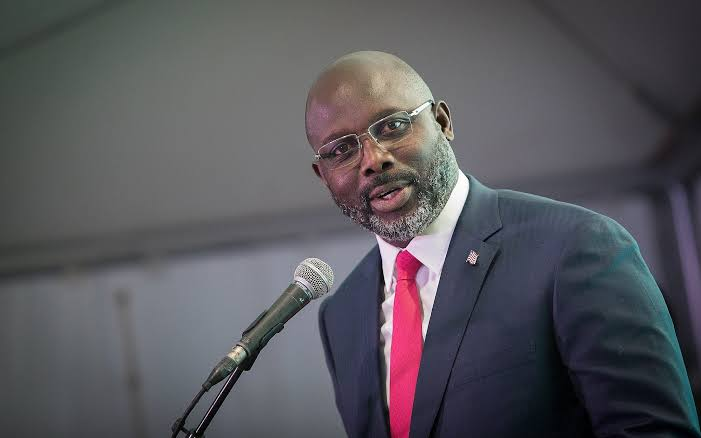
Former Speaker of the House of Representatives, Cllr. J. Fonati Koffa, has issued a strong warning that any attempt to disrespect ex-President George Manneh Weah in his native Grand Kru County will be strongly resisted by partisans and locals alike.
Speaking as Grand Kru’s representative in the House, Koffa stressed that the same courtesy must extend to President Joseph Nyuma Boakai in his home county of Lofa, declaring that political rivalry should never translate into dishonor for national leaders in their places of origin.
The statement comes amid mounting criticism from some Unity Party supporters who have faulted Weah for failing to construct football stadiums during his six-year presidency. Koffa dismissed the attacks as “pure politics,” arguing that development should be celebrated regardless of which administration delivers it.
“When President Weah was building housing units, he did not say Ellen Johnson Sirleaf failed to build them,” Koffa asserted. “The schools, clinics, and youth centers erected under Weah were not branded as Unity Party projects. If this government wants to build stadiums, that’s perfectly fine — we will applaud them. But to preface it with claims that Weah, as a football icon, should have built stadiums is nothing but political noise.”
Koffa further criticized the decision to host the National County Sports Meet in Picnicess, Grand Kru, suggesting that the move was politically motivated and designed to highlight Weah’s alleged shortcomings. “So what was the purpose of all that noise against Weah and stadiums? People were celebrating early. Let’s keep politics out of county development,” he said.
The Grand Kru lawmaker emphasized that respect for leaders must transcend partisan divides. “When elections come, you can claim all your credit. But we won’t go to Lofa and disrespect President Boakai, and nobody will come to Grand Kru and disrespect President Weah,” Koffa concluded, his tone defiant and uncompromising.
His remarks have sparked debate across political circles, with supporters hailing his defense of Weah’s legacy while critics accuse him of inflaming tensions. Yet one thing is clear: Koffa’s warning has set the stage for a heated discourse on the intersection of politics, respect, and development in Liberia’s fragile democracy.

