

The Independent Information Commission (IIC) has shifted gears in its fight for transparency, moving beyond mere awareness campaigns to demand real compliance with the country’s Freedom of Information (FOI) Act.
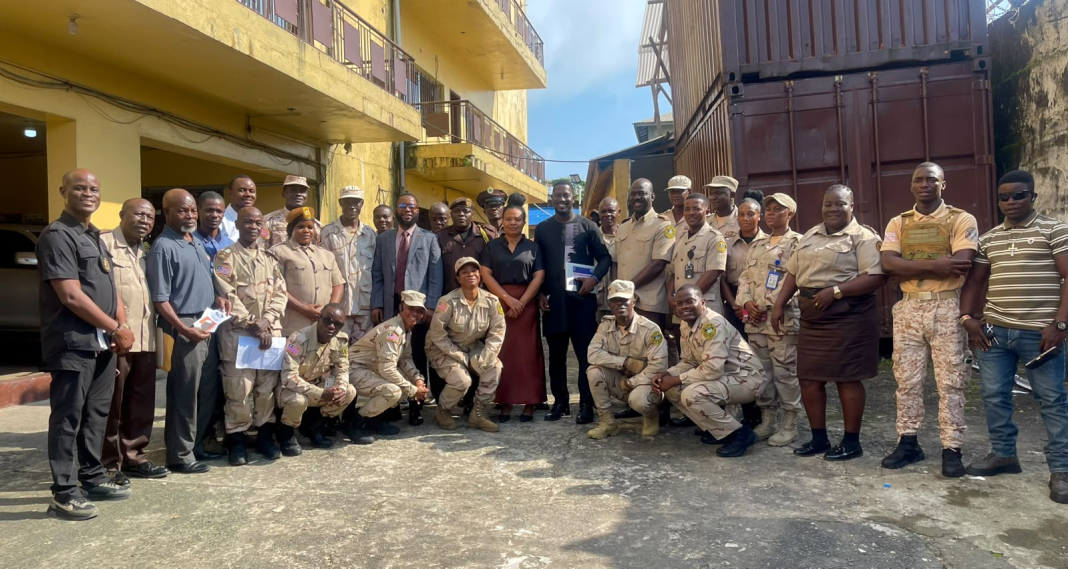
In partnership with the Center for Transparency and Accountability in Liberia (CENTAL), the Commission wrapped up a three-day training from September 9–11, targeting three critical agencies: the Liberia Immigration Service (LIS), the Food Authority of Liberia (FAL), and the Liberia Electricity Corporation (LEC).
The sessions combined FOI compliance training with anti-corruption instruction — a deliberate pairing meant to underscore the link between information access and accountability. For the IIC, the message was clear: Liberia’s 16-year-old FOI law must move from paper promises to practical enforcement.
Passed in 2010, Liberia’s FOI Act was hailed as a landmark in West Africa, guaranteeing citizens the right to access public records with only narrow exemptions.
Yet implementation has remained patchy. Ministries and agencies often nod politely at awareness sessions but fail to appoint Public Information Officers, publish records, or respond to requests within the law’s 30-day deadline.
The IIC’s new approach is institution-by-institution training — tailored sessions that confront agencies with their specific compliance dilemmas. “A one-size-fits-all seminar produces polite nodding and little else,” officials explained. “But when immigration officers, food regulators, or power managers face their own compliance questions directly, the law becomes real.”
Armah Boimah Johnson, Acting Compliance Director at the IIC, opened with a blunt warning: FOI compliance cannot be dumped on a single officer while the rest of the institution looks away.
“Compliance with the Freedom of Information Act should be treated as an institutional responsibility rather than the responsibility of one officer or department,” Johnson told participants.
He walked agencies through the mechanics: appointing Public Information Officers, establishing Internal Information Request Review Bodies, publishing budgets and contracts proactively, and managing records so requests don’t collapse under disorganized files.
Without functioning systems, he warned, institutions default to improvisation — leading to missed deadlines, inconsistent answers, and eventual complaints to the Commission.
Johnson pressed for proactive disclosure: enabling legislation, policies, strategic plans, procurement contracts, expenditure reports, and service procedures should all be published without waiting for requests.
“Proactive disclosure cuts down on the volume of requests while giving citizens a running start on accountability,” he argued.
IIC Acting Outreach Director Jutomue Doetein reinforced the constitutional foundation of FOI. He reminded officials that citizens do not need to justify why they want information, and institutions cannot hide behind vague claims of “confidentiality.” Any refusal must cite a specific exemption written into the Act.
Doetein explained how partial disclosure works, how requests can be transferred, and how appeals function when information is wrongly withheld. He also stressed that searching for and providing information is free, with citizens only responsible for reproduction costs.
CENTAL Program Officer Siafa S. Kamara delivered the anti-corruption segment, hammering home the point that transparency and integrity are inseparable. He outlined corruption risks in procurement, hiring, and financial management, warning that secrecy is fertile ground for bribery, favoritism, and kickbacks.
“Access to information isn’t a separate governance value,” Kamara declared. “It is one of the sharpest tools for catching irregularities before they calcify into scandals.”
At LIS, Deputy Commissioner Nelsco Aleo Wolo welcomed the training as proof of young Liberians stepping up. “Our work is deeply rooted in transparency, accountability, integrity, and anti-corruption,” he said, pledging that LIS officers would engage substantively.
At FAL, Director General Precellia Cherue raised a thorny issue: her agency had signed a Mandatory Non-Disclosure Agreement with the Civil Service Agency. How does that square with FOI obligations? The dilemma underscored the real-world tensions institutions face between confidentiality clauses and statutory disclosure requirements.
At LEC, discussions focused on records management and proactive disclosure. Facilitators urged the utility to see FOI not as a bureaucratic burden but as a trust-building tool. In a sector where billing disputes and outages spark public frustration, transparency could ease tensions and strengthen citizen confidence.
The IIC insists this is only the beginning. More institution-specific trainings, compliance assessments, and technical support are planned. The Commission’s message is unmistakable: FOI compliance is not a box to tick, but a governance tool that strengthens trust, oversight, and citizen participation.
Whether agencies now move from nodding in training rooms to publishing budgets and answering requests within 30 days remains to be seen. For the IIC, the bet is clear: spelling out obligations, institution by institution, is the path to real compliance.

