


The Ministry of Gender, Children and Social Protection (MGCSP) has launched an internal investigation after sensitive records from its flagship Save the Future Project spilled onto social media, sparking outrage, confusion, and debate over government accountability.
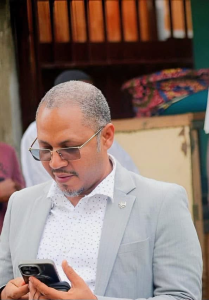
The leak, posted by Liberia Water and Sewer Corporation Managing Director Mo Ali, followed public criticism branding the ruling Unity Party as “mean and stingy.” Ali’s disclosure created speculations, with opposition voices falsely claiming the records represented survivors of sexual and gender‑based violence (SGBV).
In a strongly worded statement, the Ministry confirmed the leaked data are authentic but stressed that authenticity does not equal authorization.
“The characterization of these records as SGBV survivors is false and misleading,” the Ministry declared. “The data represent children engaged in street selling and solicitation, who are being removed and supported by the Government.”
Officials emphasized that the Ministry manages vast volumes of confidential information through its social protection programs and remains bound by Liberia’s Data Protection and Privacy Act. They underscored that the Ministry itself helped shape the very legal framework governing data privacy, insisting it cannot condone practices that undermine those protections.
The Ministry acknowledged that collated statistics are routinely shared with funding partners for monitoring and accountability. Yet it stressed that such sharing does not authorize public dissemination of personal data.
Regretting the unauthorized circulation, the Ministry pledged to tighten internal controls, reinforce safeguards, and re‑engage partners to ensure strict compliance with privacy standards. “We take the protection, confidentiality, and responsible management of personal information with the utmost seriousness,” the statement read.
The incident has raised legitimate concerns about privacy and confidentiality in government programs. To restore public trust, the Ministry has ordered a comprehensive probe to determine how the records left its custody. Officials vowed that accountability measures will follow, alongside reinforced expectations for donor and partner compliance.
Beyond the uproar, the Ministry highlighted the staggering scale of Liberia’s child vulnerability crisis. A UNICEF‑funded survey in 2022 revealed 366,585 children living in street situations nationwide, with Montserrado County alone accounting for 153,982.
In response, the Ministry launched the Save the Future Project in August 2024 — a national initiative to identify, trace, remove, reunify, and enroll vulnerable children in school while reintegrating them into safe family environments.
To date, more than 18,000 children have been removed from the streets, reunited with families, and enrolled in school. Officials hailed this as a milestone in restoring children’s rights to care, protection, education, and dignity.
The Ministry expressed gratitude to UNICEF, Street Child Liberia, GiveDirectly, SOS Children’s Villages, the Embassy of China, and the Child Protection Network, among others, for their financial and technical support. These partnerships, it said, have been instrumental in turning government commitments into measurable results.
Despite the setback of the data leak, the Ministry reaffirmed its dedication to transparency, accountability, and responsible stewardship of sensitive information. It pledged to continue advancing child protection while safeguarding the dignity and privacy of every beneficiary.
For Liberia, the challenge is twofold: protecting vulnerable children from the harsh realities of street life while ensuring that the systems designed to help them remain trustworthy, confidential, and secure.

