

By Sampson David
When Annie Jerue assumed leadership of Liberia’s National Union of Community Forestry Development Committees (NUCFDC), she became a symbol of a transformation that many rural women once thought impossible.
For decades, women were largely excluded from decisions affecting forest resources and community development. Cultural norms often confined them to the sidelines while men dominated public discussions and leadership positions. Today, however, women are increasingly occupying influential roles in forest governance, a shift many stakeholders attribute to the implementation of the Voluntary Partnership Agreement (VPA) between Liberia and the European Union.
“The VPA helped us a lot,” Jerrue said. “Before, when meetings were called, mostly men attended while women stayed home. The VPA made people understand that women are important in all discussions.”
The VPA, signed in 2011 and brought into force in 2013, was designed to combat illegal logging, strengthen sustainable forest management, and prevent illegally harvested timber from entering European markets. Beyond its trade and environmental objectives, the agreement became a catalyst for greater citizen participation, particularly among women.
Forestry experts say the agreement significantly strengthened governance within Liberia’s forest sector by enhancing legal compliance, promoting accountability, and expanding opportunities for marginalized groups.
Former Forestry Development Authority (FDA) Managing Director Harrison Karnwea credits the VPA with breathing life into existing forestry laws that were often poorly enforced.
“The laws were there, but they were broken,” Karnwea said. “The VPA added some flesh to the bones.”
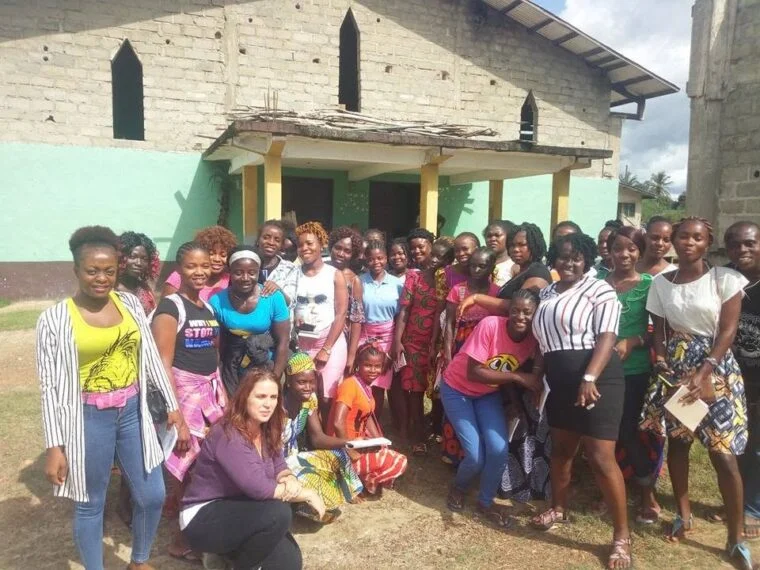
One of the agreement’s most visible impacts has been the promotion of female leadership within community forest governance structures. Through awareness campaigns, leadership training, and advocacy initiatives conducted across rural communities, women have gained the skills and confidence needed to participate in decision-making processes.
Between 2017 and 2025, civil society organizations supported under the VPA framework trained more than 100 women in counties including Bong, Grand Gedeh, and River Gee. The training covered leadership, forest governance, negotiation, representation, and community engagement.
Andrew Y. Y. Zelemen, head of the NUCFDC Secretariat, said the initiative sought to demonstrate the importance of women’s contributions to natural resource management.
“We made them understand that they have an important role to play in the management of natural resources,” Zelemen said. “Their inclusion adds value to governance and community development.”
The results have been notable. According to NUCFDC records, women held just 52 of 230 leadership positions within community forestry governance structures in 2021. Today, that figure has increased to 68 positions, representing nearly one-third of all leadership roles and a 30.7 percent increase in representation.
“Women are ascending to leadership positions within community governance structures,” said Jonathan W. Yiah, head of the Forest Governance Program at the Sustainable Development Institute (SDI). “These are developments we rarely heard about before, but they are happening now.”
Women’s rights advocate Julie Weah believes the training programs helped women become more effective leaders by equipping them with practical skills needed to engage government officials, negotiate with companies, and advocate for community interests.
“The negotiation component was especially important,” she said. “Many women had never participated in formal negotiations before. The training gave them confidence and the tools to represent their communities.”
The VPA also influenced broader legal reforms. Stakeholders point to the Land Rights Act of 2018, which grants communities greater authority over customary lands and guarantees equal representation of women, men, and youth in community-level decision-making.
In community forestry structures, the NUCFDC strengthened participation standards by requiring a minimum of 30 percent female representation in Community Forestry Development Committees (CFDCs), surpassing previous regulatory requirements that called for only one woman member.
“Some CFDCs previously had no women at all,” Zelemen noted. “Today, every CFDC has at least 30 percent women’s representation, while some exceed 50 percent. In several communities, women are serving as chairpersons.”
Despite the progress, challenges remain. Domestic responsibilities, financial constraints, and entrenched cultural traditions continue to limit women’s full participation in some areas.
At the same time, concerns are mounting over the future of these gains. In June 2026, the European Parliament approved plans to end the legally binding VPA by July 2027 and replace it with a non-binding Forest Partnership.
Many stakeholders fear that without sustained funding and institutional support, advances in gender inclusion could stall or even reverse.
“If the VPA leaves and nothing is done, it will affect the gains made in gender mainstreaming and participation,” Yiah warned.
Nevertheless, stakeholders agree that the progress achieved over the past decade should not be lost. Karnwea is urging both the Liberian government and the European Union to preserve the legal reforms, training programs, and inclusive governance structures established under the VPA.
For Jerrue, the future partnership will be judged not by its name but by its commitment to communities.
“The VPA understands community development,” she said. “If the new Forest Partnership continues putting communities first, then I will not miss the VPA. But if communities are forgotten, then surely, I will.”

