

Liberia is set to convene a high-level international dialogue on maritime safety, security and the welfare of seafarers as the country prepares to assume the rotating presidency of the United Nations Security Council in December 2026.
The event, known as the Marshall High-Level Dialogue on Global Maritime Safety, Security and the Welfare of Seafarers, will take place on November 19 at the Liberia Maritime Training Institute in Marshall, Margibi County.
Organized by the Liberia Maritime Authority (LiMA), the gathering will bring together senior government officials, diplomats, United Nations representatives, maritime security experts and shipping industry leaders to address mounting threats facing global maritime commerce.
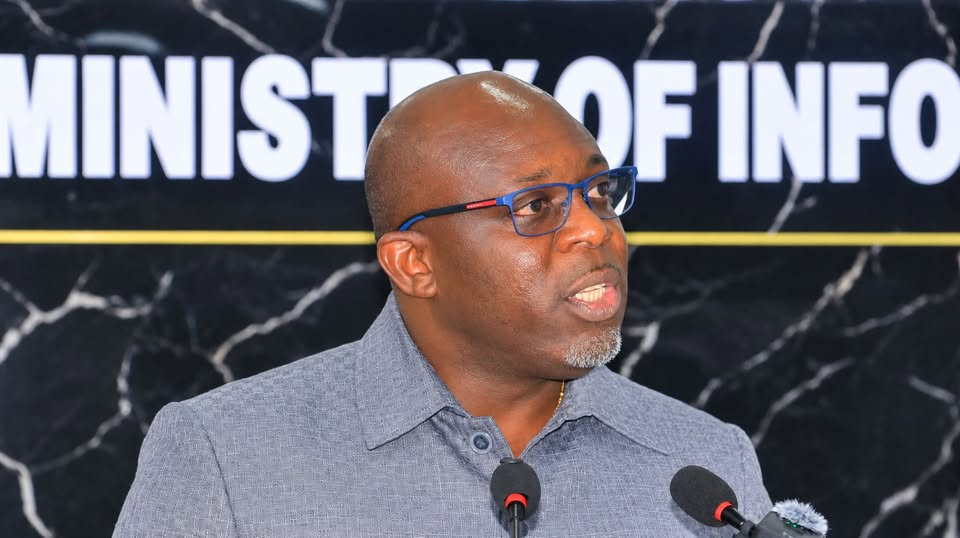
Speaking during the Ministry of Information’s regular press briefing on Tuesday, LiMA Commissioner and Chief Executive Officer, Cllr. Neto Zarzar Lighe said the dialogue comes at a critical moment for Liberia and the international community.
Held under the theme, “Enhancing Global Maritime Security and the Welfare of Seafarers for International Peace and Shared Prosperity in a Period of Heightened Insecurity,” the forum aims to generate practical recommendations for tackling emerging maritime security challenges while protecting the men and women who sustain global shipping.
Lighe emphasized that the maritime sector remains indispensable to international trade, food security, energy supplies and the movement of essential goods worldwide. He cautioned, however, that the industry is facing increasingly complex threats ranging from armed conflicts and piracy to cyberattacks, human trafficking, narcotics smuggling and illegal, unreported and unregulated fishing.
“Commercial shipping is one of the principal arteries of the global economy,” he said. “When shipping routes are threatened, international trade is disrupted, supply chains are weakened, and the consequences are felt across nations and communities around the world.”
According to him, the evolving security landscape poses serious risks not only to vessels and maritime infrastructure but also to seafarers who often operate under difficult and dangerous conditions far from their families.
“The safety and security of commercial shipping must go hand in hand with the protection of seafarers,” Lighe noted. “Their welfare, dignity and lives deserve equal attention in discussions about global maritime security.”
As the world’s largest flag state, Liberia occupies a unique position within the international maritime industry. Lighe said that status carries broader responsibilities beyond maintaining a reputable ship registry.
“Our commitment extends to promoting freedom of navigation, strengthening maritime safety, protecting seafarers and supporting international cooperation to combat maritime crime,” he said.
He stressed that no single country can independently address the growing range of maritime threats confronting the world today. Instead, he called for stronger collaboration among flag states, coastal nations, port authorities, international organizations and the private shipping sector.
The dialogue will focus on two major thematic areas. The first will examine strategies for securing the global maritime domain amid armed conflicts and emerging threats. Discussions will address piracy, cybercrime, armed robbery at sea, narcotics trafficking and risks to commercial shipping in conflict-affected waters.
The second will center on strengthening maritime governance through enhanced international cooperation and institutional coordination. Participants will explore ways to improve implementation and enforcement of international maritime regulations while reducing fragmentation in global maritime responses.
Liberian President Joseph Nyuma Boakai Sr. is expected to deliver the keynote address, underscoring the government’s commitment to maritime security as a component of international peace and stability.
The event is also expected to produce a communiqué containing key recommendations and policy proposals, including measures to improve coordination among United Nations agencies and maritime institutions, strengthen protections for commercial shipping and seafarers, and explore the establishment of safe maritime corridors in conflict-prone regions.
Lighe said the outcomes of the dialogue will help shape Liberia’s signature initiative during its presidency of the United Nations Security Council next month.
“Liberia intends to approach its Security Council presidency with seriousness and a strong commitment to international cooperation,” he said. “The Marshall Dialogue provides an opportunity for our country to facilitate meaningful engagement and contribute practical solutions to global challenges.”
He added that Liberia’s message to the international community is clear: maritime security and the welfare of seafarers are inseparable from global peace, economic stability and shared prosperity.
“As we protect our seas, we protect global commerce. As we protect shipping routes, we safeguard economic stability. And when we protect seafarers, we protect the people who make international trade possible,” Lighe said.
The LiMA chief called on local and international media to closely follow the discussions, describing the forum as an opportunity for Liberia to demonstrate leadership on issues of global significance while strengthening its voice in international peace and security affairs.

