

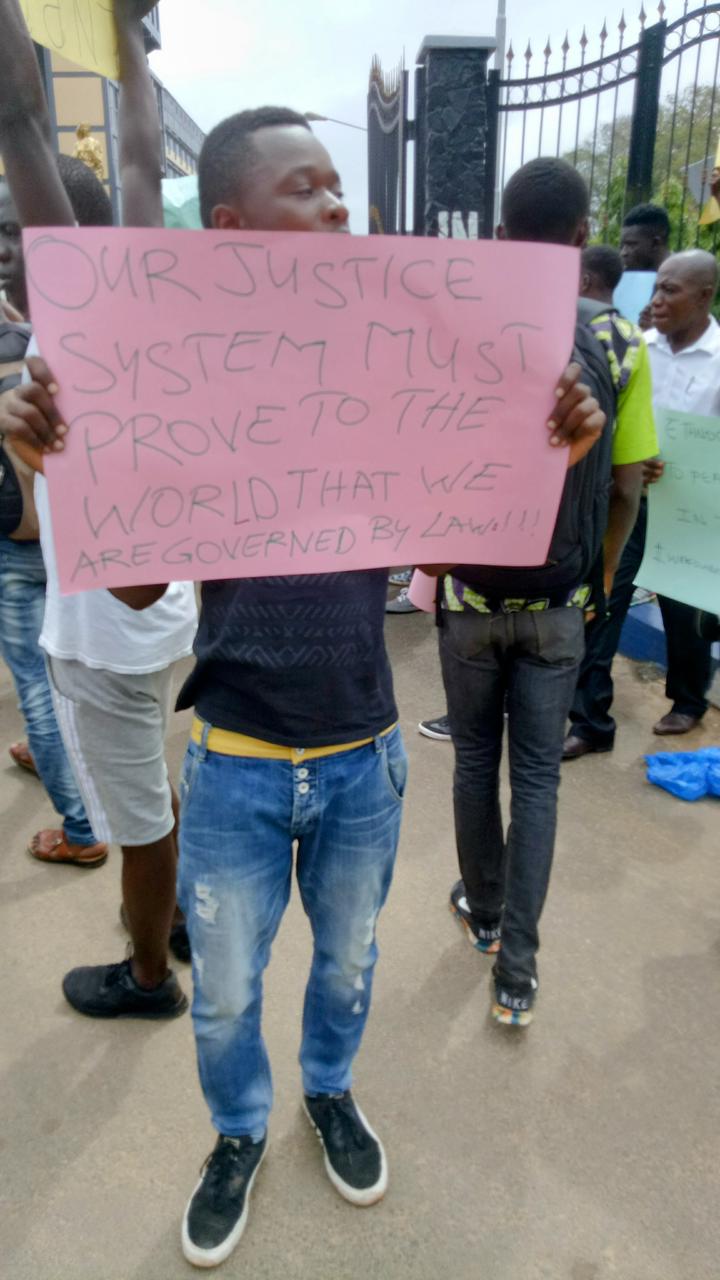
A young Liberian human rights activist, Abrahim Kanneh, alarms over death threats and physical harassment, questioning local police authority fairness and impartiality in providing protection for him against his alleged attackers.
After numerous complaints of imminent danger to his safety and peace of mind filed with the Jacob Town Police depot in Paynesville outside Monrovia, where he had reported about physical attacks, life threats, molestation, and intimidation by a local neighborhood gang, Activist Kenneh informs newsmen that the police authority, especially the local depot in the Jacob Town area, has made no effort in addressing his security risk, let alone talking about serving the needed cry for justice by launching an investigation into the matter.
When questioned about who he thinks would after his life and sending gangs to attack him, Kenneh recounted his very strained love affairs with a school mate at the AME University, one Ms. Mariam Swaray. The situation he described as risky and dangerous due to the family pressure from his girlfriend, whom he later secretly engaged and planned to marry.
According to Abrahim’s account, he since became a target of displeased members of his fiancée’s family, the Swaray, many of whom had voiced their objection to their relationship and condemned their daughter’s decision to have cohabitated with him and were going to do all within their power to stop and end their relationship.
Critical Commentary: “Youth Activist Cries Out For Justice, Questions Police Fairness”
This report chronicles the ordeal of Abrahim Kanneh, a young Liberian human rights activist, who alleges sustained threats and physical violence due to his romantic relationship with Mariam Swaray and his outspoken opposition to Female Genital Mutilation (FGM) and other harmful traditional practices.
Despite repeated appeals to the Jacob Town Police depot, Kanneh claims authorities failed to investigate or offer protection, raising serious concerns about institutional bias and the erosion of justice in Liberia.
Human Rights vs. Cultural Orthodoxy:
Kanneh’s activism places him at the volatile intersection of progressive human rights advocacy and entrenched traditional customs. His opposition to FGM and arranged marriage—practices still upheld in some communities—has made him a target not only of familial hostility but of broader societal backlash. This reflects the deep-rooted tension between modern human rights frameworks and cultural preservation, particularly in post-conflict societies like Liberia.
The alleged threats and physical assault against Kanneh are emblematic of how patriarchal systems enforce control—not only over women’s bodies but also over those who challenge their authority. Mariam’s family’s insistence on FGM and marriage to an elderly relative underscore the commodification of female agency, while Kanneh’s victimization reveals how dissenters are punished through intimidation and violence.
The most troubling dimension of this story is the apparent indifference—or complicity—of law enforcement. Kanneh’s repeated reports of threats and assault were met with bureaucratic deflection and demands for impossible evidence. The CID’s refusal to act without full identification of attackers, despite visible injuries and a clear pattern of harassment, suggests either gross negligence or systemic corruption. This undermines public trust in the justice system and reinforces the perception that protection is reserved for the wealthy and well-connected.
Socioeconomic Disparities and Access to Justice
Kanneh’s concluding reflection—that “as a poor man, you could [not] be served justice” in Liberia—speaks to a broader structural inequality. His experience illustrates how economic status and social connections often dictate legal outcomes, leaving marginalized individuals vulnerable and voiceless. This is particularly dangerous in cases involving gender-based violence, where victims and advocates alike face retaliation without recourse.
Legal Reform: Liberia must strengthen its legal protections for activists and victims of gender-based violence, ensuring that cultural practices do not override constitutional rights.
Police Accountability: Independent oversight mechanisms are needed to investigate allegations of police bias and ensure impartial enforcement of the law.
Public Awareness: Civil society organizations should amplify stories like Kanneh’s to challenge harmful traditions and promote rights-based education.
International Support: Global human rights bodies must continue to monitor Liberia’s progress on eliminating FGM and protecting activists, offering both pressure and support.
Abrahim Kanneh’s story is not just a personal tragedy—it is a mirror reflecting the systemic failures of justice, the dangers of cultural rigidity, and the courage required to speak truth in hostile environments.
His voice deserves not only to be heard but to be protected. But why were they opposed to your relationship with Mariam? Abrahim narrated that he and Mariam Swaray were school mates at the AMEU, where they met each other as friends and fell deeply in love with each other, building an unbreakable bond between them.
To their dismay and in keeping with cultural and traditional practices, Mariam’s family were already making arrangements for her to attend the Sande society to undergo FGM and subsequently get into an arranged marriage to one of her family uncles, a rich Swaray elderly man old enough to be Mariam’s grandfather, according to the young activist.
This started becoming a reality when one year into their relationship, Mariam engaged him and told him her mother had informed her that she was going to get married to this family uncle and that she should get ready to be going to the Sande bush. This is from when his life and relationship turned chaotic, from one attack to another unabated, with the threats becoming direct through direct messaging, phone calls, and public harassment. 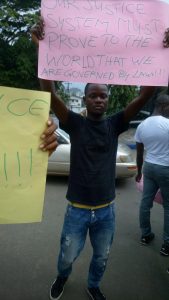
As an activist in gender, human rights, and FGM and backward traditional practices, I became an even more target as I would constantly face bullies for my stands against harmful cultural practices. Many view my stance as an agent of the West, dangerous to the typical culture. I have been isolated and confined, Kanneh narrated.
In the most recent incident, while making his way home from watching a European football match late evening, he got physically attacked by three unknown men who kicked, slapped, and dragged him to the ground to the back of the St. Francis Road cemetery, where they allegedly tortured him, leaving there with threats that if he does not leave Mariam, he could eventually lose his life, and that if he even informs anyone about what has happened, he will be killed.
He managed his way home, paining all over his body, slept, and woke up the next day with bruises and blood stains everywhere on his face and body. His mother asked him what had happened, fearing, he lied of running into gangs that fought him and made away with his phones and money. They rushed to a local community clinic and did first aids.
Eventually, Abrahim and his mother, along with other family members, proceeded to the police station to register and report the case in Jacob Town community. Stating that on many occasions, he’s informed the commanders and brought to their attention his experiences with direct threats on his life by members of the Swaray family but with no strong efforts on the part of the police to provide adequate protection.
His family registered the case this time with the CID commander office. As the commander then insisted that Kanneh and his family provide full details of the attackers as the basis to consider the case a matter to proceed with. This shocked everyone, leaving an air of mistrust and doubts.
It became clear from then that the police were either uninterested in the matter or were being compromised by the rich old man his fiancée’s family had arranged for her, since the man in question was not only rich but powerfully connected. At this young human rights activist ponders why even the state was failing him, even though the evidence of danger and direct threats were clear, and he concluded that there’s no way staying in Liberia as a poor man, you could be served justice when involved in a case with some of the established, rich, and powerfully connected individuals or families.
Abrahim Kanneh, a young Liberian human rights activist who faced death threats and physical harassment. His situation involved a complicated love affair with Mariam Swaray, which was opposed by her family due to cultural and traditional practices, including arranged marriages and Female Genital Mutilation (FGM). 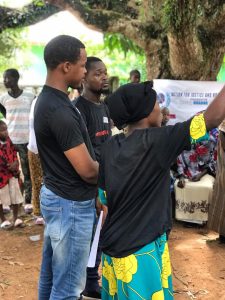
Abrahim’s case highlights the challenges faced by individuals who oppose harmful cultural practices in Liberia. As an activist, he advocated against FGM and backward traditional practices, which made him a target for bullies and threats. His experience with the police also raises concerns about the effectiveness of the justice system in Liberia, particularly in cases involving powerful individuals or families.
Some key issues in Abrahim’s story include
Cultural Clashes: The conflict between Abrahim and Mariam’s family stems from their different values and adherence to traditional practices.
Police Impartiality: Abrahim questioned the fairness of the police in handling his case, suggesting possible corruption or bias.
Human Rights: Abrahim’s activism highlights the importance of protecting human rights, particularly for women and girls, in Liberian society.

