

By Sidiki Fofana | Truth in Ink
By all appearances, the political storm surrounding former House Speaker J. Fonati Koffa might seem like the final chapter of a once-rising ambition. An abrupt, public arrest. Allegations of legislative misconduct. Arson conspiracy. Coordinated attacks from within his own CDC and the ruling Unity Party. To many, this looked like the moment he was politically buried.
But what if this is not the end? What if this is the beginning — the political birth of J. Fonati Koffa?
From Legislative Powerhouse to Presidential Threat
- Fonati Koffa’s rapid rise in Liberian politics has not gone unnoticed. As Speaker of the House of Representatives since 2024, he spearheaded key reforms, pushed for long-overdue audits, and clashed with both entrenched elites and traditional power structures. His bold, confrontational, and reform-minded brand earned him praise among younger voters and suspicion among political veterans, both from within his own party and among members of the Unity Party.
His plainspoken legal arguments, respected mastery of the law, digital outreach, and unapologetic criticism of elite impunity have made him a symbol of generational frustration, particularly among urban youth and politically independent voters.
Yet it is perhaps this cross-party appeal that became his true political “crime.” As one analyst observed: “The arrest is a culmination of a long-targeted plan against him. The unprecedented cooperation and coordination of elements of the CDC and Unity Party to remove him as Speaker only support this political theory. Koffa’s actual guilt is not any crime he committed, nor abuse of the speakership. His true crime is his growing appeal to voters that go beyond party lines.”
It is usually through controversy that Koffa has emerged stronger ; from his stint with the law in the United States to becoming the chairman of Liberia’s third-largest political party upon his return. He would later become a celebrated prosecutor, holding some of the country’s most influential figures to account, before being elected as a representative of his native Grand Kru.
In the legislature, Koffa would not stop at merely chairing the powerful House Judiciary Committee, shaping laws that might now ironically be used against him as he moves into the dock, this time not as a prosecutor but as a defendant.
He rose to become Deputy Speaker for nearly six years before attaining the Speakership in 2024. Just as he rose through controversial circumstances, so too has his removal from the Speakership followed that pattern, orchestrated, some argue, by those fearful of his political rise, though they justify their actions by accusing him of abusing his office.
As the British historian Thomas Carlyle once wrote: “No great man lives in vain. The history of the world is but the biography of great men.”
In Koffa’s case, his biography has been one of struggle through controversy , and history suggests that such figures often re-emerge when least expected.
Debate Over His Ambitions
Not everyone agrees on whether Koffa’s political downfall stems from any real presidential ambition ,
or whether such ambition ever existed.
James Emmanuel Potter, a Weahcian, believes Koffa never harbored presidential ambitions in the first place ,
a false narrative, he argues, that contributed to Koffa’s current troubles. He posted: “Fonati never had presidential dreams… Those were lies whispered in corners, and those same lies brought us to where we are today, because most of those lies were repeated.”
Thomas Kruah, a former vice presidential candidate in the last presidential and general elections, holds a different view. Even if Koffa harbored such ambitions, he argues, they are now dead on arrival: “Given his current circumstances, I believe J. Fonati Koffa’s presidential aspirations are unlikely to materialize. His history of alleged misconduct and substantial criminal records raise concerns about his suitability for the presidency. Effective leadership requires integrity and accountability, and these issues may impact his viability as a candidate.”
The Arrest: Justice or Political Execution?
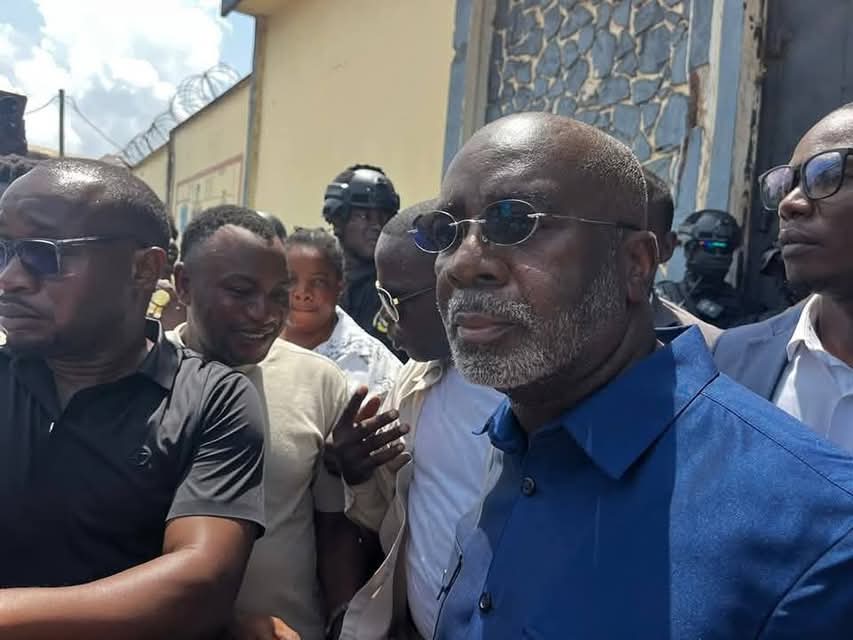
The abrupt, public arrest of Koffa has ignited national debate. To his supporters, this is political persecution dressed as legal accountability. They argue that Koffa’s growing popularity and refusal to conform to Unity Party expectations made him a threat too dangerous to ignore, his arrest was orchestrated not because of what he has done, but because of who he is becoming: a major presidential force.
As one political analyst put it: “His true crime is not abuse of office; it’s his appeal to voters across tribal, generational, and partisan lines. That makes him dangerous to both Boakai’s inner circle and Weah’s shadow network.”
His detractors, however, insist no one is above the law. They point to allegations of financial impropriety and abuse of legislative authority as long-standing issues finally catching up with him.
But regardless of where one stands, the political consequence is the same: Koffa is now the eye of the storm, at the intersection of justice, power, and the 2029 race.
Koffa himself sees his recent released from the central prison as the beginning of a political victory; speaking to journalists upon his bond release, he said: “The Inspector General himself termed the case as a political one, so my win will be a political win.” He vowed to assemble a legal defense team “beyond any imagination” to, in his words, “defeat the lies.”
A Man Besieged: From All Directions
What makes Koffa’s predicament uniquely volatile is the broad front of opposition he now faces.
Within the CDC, he has unnerved gatekeepers loyal to George Weah, who view his rise as a deviation from the party’s populist roots. His legal sophistication and independent posture have made him a target for party insiders who still favor loyalty over strategy. In a CDC still grappling with post-Weah identity and factional rivalries, Koffa’s rise is seen as both a threat and a test of the party’s future direction.
From the Unity Party, he is viewed as a legislative insurgent , too bold, too vocal, too unpredictable. His exposure of internal corruption, refusal to rubber-stamp executive overreach, and ability to maneuver the law have embarrassed those who hoped for a more docile legislature. To them, he presents a threat to their desire to maintain political power.
Though it seems Koffa is standing alone, his supporters say he is not weakened. He is carving a unique identity in Liberian politics: a man under siege , but not bowed.
The Myth of Political Death, and the Power of Narrative
History, both Liberian and African, suggests something counterintuitive: arrest is not always defeat. In fact, it often births political mythology. It turns politicians into martyrs, symbols, and standard-bearers of defiance.
Liberia’s presidential history is familiar with men of controversial pasts emerging to claim the nation’s highest office. Charles Taylor serves as a compelling example, a former warlord who won the presidency in 1997 amid public exhaustion with war and promises of stability.
Nelson Mandela’s imprisonment did not destroy him; though labeled a terrorist, it immortalized him as a symbol of resistance and reconciliation in South Africa.
Kenya’s Jomo Kenyatta was imprisoned by the British as a “terrorist,” yet would emerge to lead his country to independence and become its first president.
Ghana’s Kwame Nkrumah was jailed by the British but released in time to win elections and lead Ghana to independence.
Ngũgĩ wa Thiong’o, the great Kenyan writer, produced his most influential political works while imprisoned.
Ellen Johnson Sirleaf returned from political exile and imprisonment to become Liberia’s first female president.
And George Weah himself was once politically ridiculed, dismissed as inexperienced, before achieving Liberia’s highest office.
The political graveyard is full of false burials. Koffa may be the latest to rise from one.
The Crucible of 2029: Will He Fade, or Will He Fight?
The real question is not what the system does to Koffa,
but what he chooses to do next. If he fades into the background, remains silent, or negotiates a quiet political survival, then yes, his ambition may die a slow, invisible death.
But if he leans into the fire, frames his ordeal as political warfare, rallies disaffected voters, and confronts the power structures aligned against him, then this could be the very moment his presidential journey truly begins.
With the 2029 field likely divided between aging establishment figures, ambitious political newcomers, and a fragmented CDC, Koffa’s ability to project cross-party and cross-generational appeal could prove decisive. Because in Liberia, the path to the Executive Mansion is never a straight line. It is a crucible of betrayal, resilience, reinvention, and public trial , both literal and symbolic.
onclusion: End or Beginning?
So is the political and potential presidential ambition of J. Fonati Koffa dead, or is this merely its birth?
History, resilience, and the unpredictability of Liberian politics suggest it may be too early to declare the final verdict. As one veteran politician remarked: “In Liberia, the more they try to finish you, the more they make you.”

