

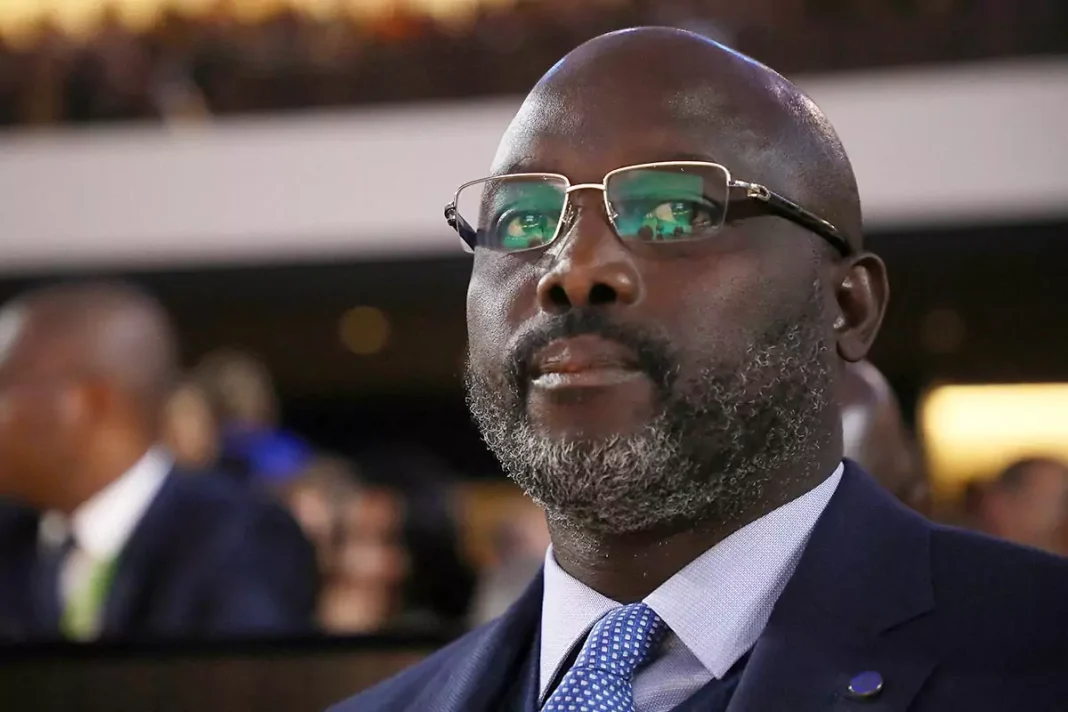
Few figures in modern Liberian politics have wielded as much influence, or provoked as much debate, as former President George Manneh Weah.
From football icon to president, his journey embodied the aspirations of a new generation. Yet his presidency, often marked by bold ambition and uneven governance, now stands at a crossroads. As murmurs of a 2029 return grow louder, Liberians are left to ask: Will we see a new George Weah, or more of the same?
The Discontent Within
The loudest criticisms of Weah’s first term have not come from traditional opposition voices, but from within. Former allies, party stalwarts, and CDC veterans who once championed his rise have become some of his sharpest critics. Their core grievance? Weah allowed personal loyalty and friendship to outweigh merit and loyalty to the party’s base.
This sense of abandonment runs deep. Many who sacrificed political capital to establish the CDC’s grassroots dominance were sidelined in favor of a small, insular circle. The perception that “proximity to Weah” became the most valuable currency has fueled a quiet exodus, some to Boakai’s camp, others to political limbo, and a few into bitter silence.
Still, a loyal contingent defends him, arguing that ingratitude is the price of unmet personal ambition. But beneath this debate lies an undeniable truth: the party grows in contradictions, and the man at its helm must confront why.
The Dual Legacy
Weah’s presidency embodies contradiction. On one hand, his populist appeal, infrastructure investments, and free tuition policy gave hope to many. On the other hand, a lack of institutional reform, poor communication, and charges of favoritism left others disenchanted.
The problem is not that Weah failed completely, it is that he failed differently than expected. Rather than dismantling the system of privilege and exclusion, he replicated parts of it, albeit with a new cast. And now, as 2029 nears, he must decide with which version of his legacy he wishes to defend or transform.
The Case for Reinvention
The political field is shifting. Liberia’s electorate is increasingly sophisticated, rejecting slogans, with hungry for authenticity. If Weah is to make a successful comeback, he must do more than campaign, he must confront the criticisms that haunt his tenure.
- Reclaim the Base
Weah cannot afford to treat CDC as a personal fiefdom. He must rebuild trust with the party’s foundational members and correct the perception that loyalty is rewarded only when it flatters his inner circle. A sincere reconciliation effort, backed by real inclusion, could begin to restore faith.
- Reform His Leadership Style
A new Weah must be seen, not just heard. Transparency, responsiveness, and humility must replace the defensive posture of his last years in office. In politics, course correction is not weakness, it’s wisdom. He must demonstrate that he has learned from power, not been consumed by it.
- Empower the Grassroots
The CDC was born in the ghettos, marketplaces, and youth quarters of Liberia, not in boardrooms or at Jamaica. To win again, Weah must return to that spirit. Empowering young voices, community organizers, and ordinary citizens within the party could revive its populist identity and undo the damage of elite capture.
- Offer a Vision, Not Just a Comeback
Liberians know Weah’s past, but what is his future? A second bid must be anchored in a renewed vision for governance, one that confronts corruption, decentralizes power, and builds resilient institutions. Without this, his campaign risks becoming a nostalgic echo, not a credible alternative.
Comparative Lessons
Political comebacks are not unheard of. Leaders like Nigeria’s Muhammadu Buhari, Chile’s Michelle Bachelet, and Ghana’s John Mahama have each returned to the ballot with mixed results. The most successful among them came back not just older, but wiser, humbler, and more attuned to their nation’s pulse.
Weah must decide whether to follow this path, or double down on past tactics that failed to deliver long-term change.
The Choice Is Now Between Redemption and Repetition, Which Will He Choose
The road to 2029 offers George Weah a rare opportunity to rewrite the second chapter of his political story. But it will require something more radical than a campaign, it will demand introspection, renewal, and the courage to break from habits that undermined his first presidency.
Whether he chooses redemption or repetition will not only define his legacy, it may also determine the future of the CDC and the direction of Liberia itself.

