

By Sidiki Fofana / Truth in Ink
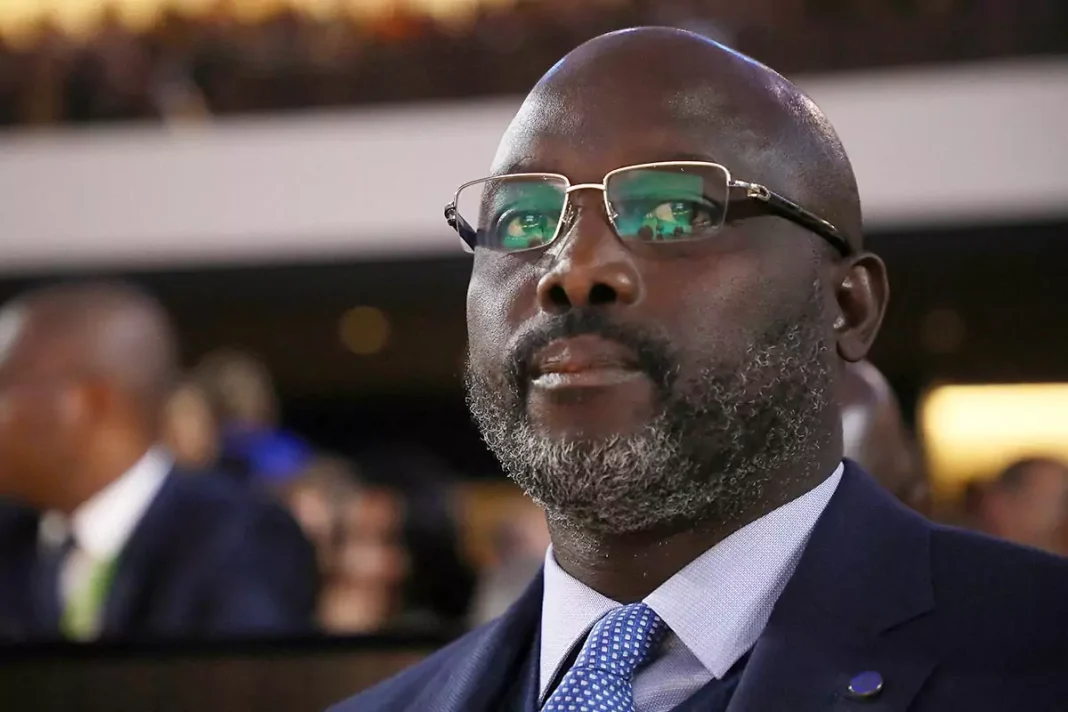
A few days ago, the internet lit up once more with the famous name and face of George Manneh Weah. Once celebrated as the only African to conquer world, Europe, and African football, once President of Liberia, he now returns to the global stage, this time not in politics, but in football.
FIFA has appointed him as chair of its newly established Players’ Voice Panel Against Racism; a task force of global football figures charged with giving players a stronger role in shaping the fight against discrimination.
For many Liberians, this was yet another crown placed on Weah’s head, proof that his global relevance has not dimmed. “The man is still respected worldwide,” one supporter told Truth in Ink on Ashmun Street. “Even when he leaves politics, the world cannot leave him.” Yet others dismissed it as unworthy of applause. “He was President already,” a political rival retorted. “How can chairing a FIFA panel be considered a promotion? It is a return to his comfort zone, not a step forward.”
FIFA’s Mandate: Neutrality Above All
Beyond the praise and cynicism lies a question that cuts deeper; can a man preparing to re-enter politics meet FIFA’s demands for neutrality?
FIFA’s rules leave little room for ambiguity. Its governance rests on the principle of political independence. In the words of its President, Gianni Infantino:
“Racism and discrimination are not simply wrong, they are crimes. These 16 panel members will support education at all levels of the game and promote new ideas for lasting change.”
Integrity, neutrality, and independence are non-negotiable currencies in FIFA’s committees. While advisory panels like this one may not face the same restrictions as FIFA’s judicial or ethics bodies, the spirit is the same; football must remain free of partisan politics.
Weah’s Own Words: Pride and Purpose
For Weah, the role is not symbolic alone; it is personal. He carries the scars of racist abuse during his playing days in Italy, abuse so fierce it is believed to have cost him a second FIFA World Player award. Accepting the appointment, he wrote to Infantino:
“Kindly accept my heartfelt thanks and appreciation for the honour of appointing me to lead this all-important FIFA Players’ Voices Panel on Racism. I assure FIFA that we will work assiduously to find effective solutions to eliminate the ugly scourge of racism.”
And in his own public words:
“I will always exert all efforts, as I have done in the past and continue to do, to promote the sport because football is life.”
In Monrovia, the appointment has triggered mixed emotions.
A sports journalist noted: “This is not ceremonial. Chairing a FIFA task force means shaping global policy, setting tone, and monitoring how federations respond to racism. It is a serious global role.”
But a senior football administrator, politically opposed to Weah, pushed back: “Let us be honest, this is a man who held the highest office in Liberia. Compared to being president, a FIFA chairmanship is small talk. It is not nation-building, it is sports lobbying.”
On the streets, the voices are more reflective. “Politics divides us,” a young vendor near Red Light said. “Football unites us. Maybe this will show us who he really is or can be – a unifier, fighting for justice through the game he gave his life to.”
The Political Question
The real tension is whether Weah’s FIFA role collides with his ambition for 2029. On one side, the appointment strengthens his image as a unifier, a statesman still trusted beyond Liberia’s borders. It allows him to campaign at home with renewed global stature, projecting himself as more than just another politician.
On the other side, critics warn it could create contradictions. How can a man bound by FIFA’s call for neutrality simultaneously serve as a political force with a partisan voice on Liberia’s campaign trail? His predecessor in this role was not politically active, focusing exclusively on football. Weah’s dual path, statesman in Zurich, politician in Monrovia, will test boundaries FIFA has seldom confronted.
Truth in Ink’s Verdict
George Weah’s appointment is more than a football headline. It is a collision of symbolism and politics, pride and skepticism, neutrality and ambition. For supporters, it is vindication that Liberia’s most famous son still commands global respect. For critics, it is anticlimax, proof that after the executive mansion, Weah has retreated to the field he truly loves that brings out the best in him.
For FIFA, it is a gamble; entrusting an active political figure with a role that demands impartiality and moral authority. For Liberia, it is another chapter in the long debate about Weah, whether he remains a global statesman or a local politician with an active ambition.
The verdict will not be written in FIFA communiqués or political speeches. It will be measured in whether George Weah can straddle two worlds, football and politics, without compromising the values and expectations of either.

