

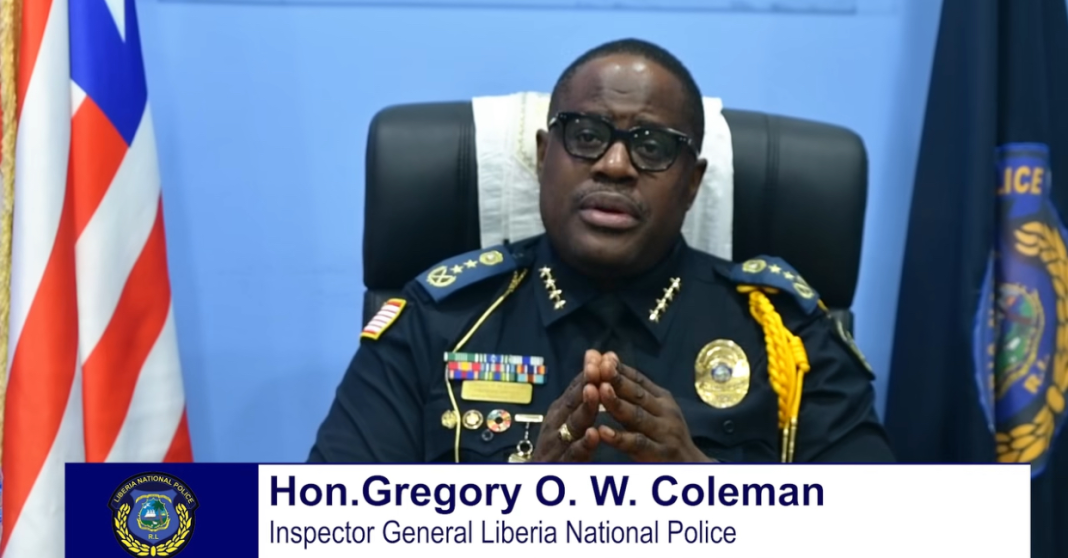
The Inspector General of the Liberia National Police has declined to arrest a government minister facing rape allegation in apparent breach of the country’s rape law.
Amended in 2006, the law classifies rape as either a first-degree or second-degree felony, with severe penalties including life imprisonment.
- The crime is first-degree felony if the victim is under 18 years of age. This is also referred to as statutory rape Punishable by a maximum sentence of life imprisonment.
Now the Police are facing public outrage for refusing to bring into custody the deputy youth and sports minister accused of raping a 14-year-old girl. The situation is pulling questions about enforcement of Liberia’s nonbailable statutory rape provisions and sparking calls for immediate action from lawyers and rights groups.
President Joseph Nyuma Boakai on Wednesday confirmed the suspension of Deputy Youth Minister Bryant McGill following the allegation. The Executive Mansion said the suspension is “in line with the government’s zero tolerance policy toward all forms of sexual and gender-based violence” and is intended to allow for a “fair and transparent investigation.” McGill has not been charged.
Police say they have been investigating the matter since early September and describe the probe as “delicate.”
Inspector General Gregory Coleman told reporters in Monrovia the LNP is proceeding cautiously and will not make an arrest without what he called sufficient, legally sound evidence.
He said investigators have interviewed the alleged victim, her father and McGill; collected surveillance footage and clothing for DNA testing; and are reviewing call logs and other digital evidence. Forensic results have not yet been completed.
Those actions have not satisfied victims’ advocates and civil society groups. Protesters gathered outside the Ministry of Justice demanding McGill’s immediate arrest, and the Association of Female Lawyers of Liberia (AFELL) accused the police of applying a double standard because of the accused’s government position.
AFELL President Cllr. Philomena Williams said the law is clear and that statutory rape is nonbailable when the victim is a minor.
“Any individual found attempting to intervene or compromise this case will face legal consequences,” Cllr. Williams said, urging the police to arrest the accused “immediately” and vowing legal support to the victim’s family. The group also said its members observed that McGill was present at a police station on September 15 and had not been detained.
Cllr. Isaac George, coordinator of the Sexual and Gender Based Violence Crimes Unit at the Ministry of Justice, acknowledged the high-profile nature of the case and urged caution to protect the integrity of the investigation. Atty. Ebenezer Zonoe of the Ministry of Gender, Children and Social Protection said the alleged victim is receiving psychosocial support and shelter in a government safe home.
Under Liberia’s rape law, amended in 2006 with further changes in 2017, rape can be prosecuted as a first-degree or second-degree felony. The law treats sexual intercourse with anyone under 18 as statutory rape and, in such cases, is explicitly nonbailable.
First-degree rape carries a potential life sentence; second-degree rape carries a maximum sentence of up to 10 years. The law also recognizes male and female victims, criminalizes spousal rape, and gives the state, not the complainant, the authority to drop rape charges once filed.
Critics say the case highlights persistent concerns about selective enforcement when politically connected figures are implicated in sexual violence allegations. Activists warn that perceived impunity undermines public trust and discourages victims from reporting crimes.
Police have required McGill to report to authorities daily while the investigation continues but have not set a timeline for completing forensic tests or filing charges. The Ministry of Justice and the LNP declined to provide a date for the release of DNA results.

