

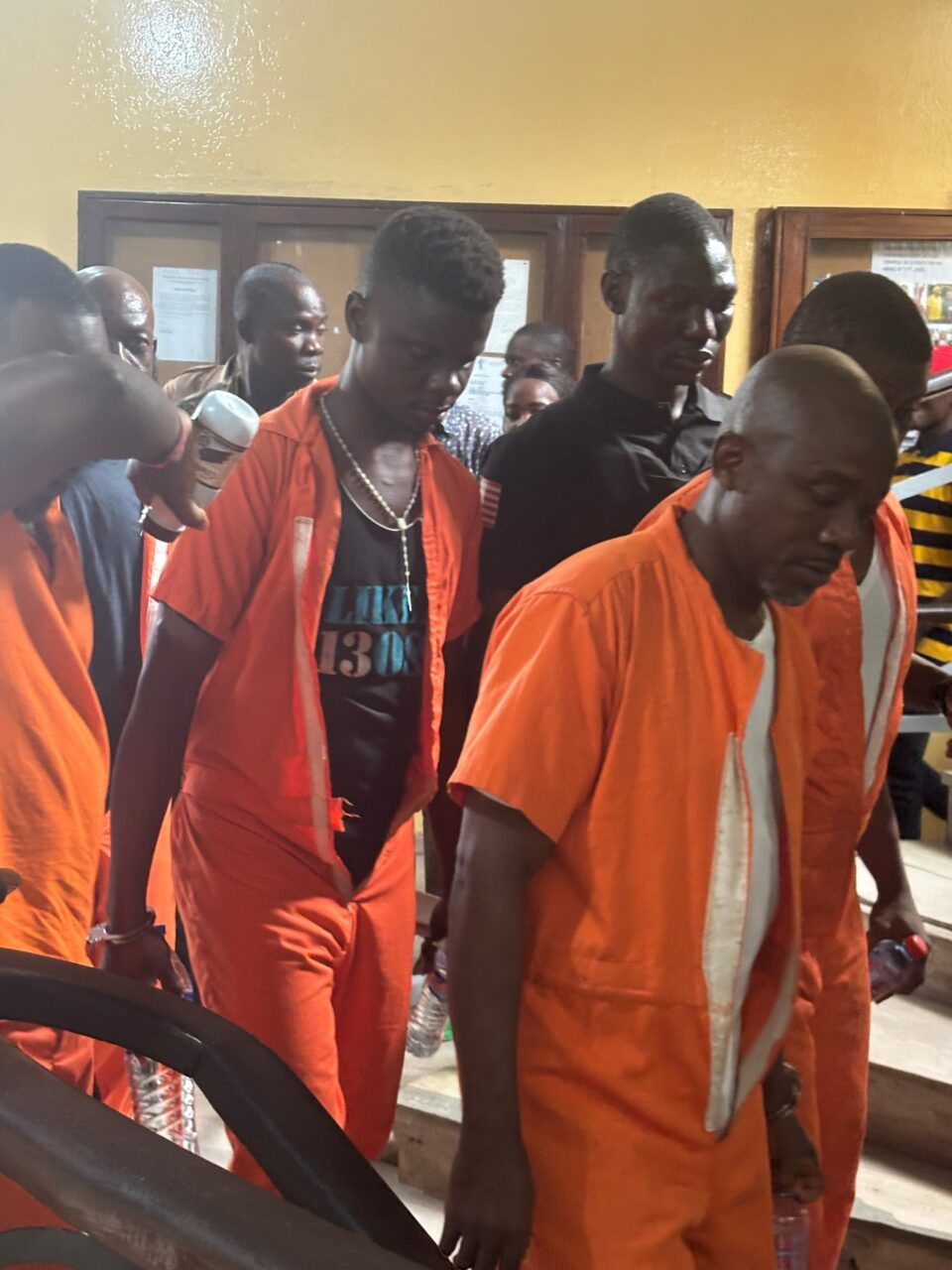
Court-ordered medical examination of six men accused of arson has revealed evidence of severe torture, leading to grave medical conditions including disfigurement, vision loss, and psychological distress.
The examination was conducted as part of an ongoing trial related to the December 2024 fire that engulfed the Capitol Building in Monrovia.
The accused have alleged that members of the Liberian National Police and the National Security Agency subjected them to inhumane treatment to extract confessions and implicate then Speaker of the House J. Fonati Koffa in the arson case.
They narrated being coerced into providing false testimony under extreme physical and psychological pressure.
The admissibility of the evidence obtained from these alleged torture victims has become a pivotal issue in the case.
Judge Roosevelt Willie of Criminal Court “A” ordered the medical examinations, which were conducted in accordance with the Istanbul Protocol, a UN manual for the effective investigation and documentation of torture.
Dr. Philip Zochonis Ireland, an Assistant Professor of Internal Medicine at the University of Liberia, conducted the examinations at the AMI Expeditionary Healthcare Medical Center. His findings were alarming:
Stephen M. Broh, 54: Alleged blindness in the left eye due to severe slaps and baton beatings, as well as upper back injuries. Medical findings are consistent with his trauma history and highly consistent with allegation of torture.
Thomas Etheridge: Reported severe beatings, including a dislocated shoulder and psychological trauma. His symptoms, including chronic anxiety and sleep disturbances, align closely with the signs of torture outlined in the Istanbul Protocol.
Jerry Poken, 40: Skin lesions on wrists and arms corroborated his allegations of torture.
John Nyanti, 30: Current medical conditions consistent with torture allegations.
Eric Susay, 40: Findings of left shoulder disfigurement and chronic dislocation support his claims of severe trauma sustained during abuse. Current condition highly consistent with allegation of torture
Kivi Bah Kaba: Medical opinion indicates conditions consistent with allegations of torture.
In January, a Washington-based human rights organization urged the U.S. Congress and State Department to impose sanctions against Liberia’s Vice President, Jeremiah Koung, and high-ranking security officials accused of orchestrating widespread human rights abuses under President Joseph Boakai’s administration.
The Panoramic Justice Group’s report highlights a pattern of impunity, state violence, and repression of political dissent in Liberia.
The Liberian government, through its Attorney General, has denied all claims of human rights violations.
However, the rising documentation of torture and mistreatment raises serious questions about the legal standards surrounding confessions obtained through such means.
Under Liberian law, evidence obtained through torture is generally considered inadmissible in court. The principle is rooted in both international law and human rights standards, which emphasize the prohibition of torture and the right to fair trial.
The use of coerced confessions undermines the integrity of the judicial process and raises significant ethical and legal concerns. As the trial progresses, it remains to be seen how the court will address the admissibility of the evidence extracted under these circumstances, particularly in light of the medical findings and testimonies of the accused.

