


Liberia enters 2026 with renewed economic ambitions and significant political and social challenges. The IMF and the central bank project growth of 5.4% for 2026, driven largely by an expected mining and iron ore boom and major infrastructure projects.
At the same time the government’s ARREST Agenda (Agriculture, Roads, Rule of Law, Education, Sanitation, Trade, Tourism) and a proposed $1.2 billion budget signal heavy public investment in roads, energy and youth programs — even as climate risks, poverty and governance concerns persist.
2025: highlights and lingering issues

Protracted legislative crisis: A drawn-out leadership dispute in the Legislature paralyzed parts of government business in 2025.
Mineral discoveries: Authorities announced the discovery of rare earth minerals, attracting fresh investor interest.
Diplomacy: President Boakai met U.S. President Donald Trump in 2025, part of intensified engagement with key partners. US cut aid, Sweden exited.
IMF outlook: The IMF downgraded its growth forecast for Liberia during 2025, reflecting short term fiscal and external pressures.
U.S. partnerships: A new U.S. health partnership was finalized and Liberia secured or advanced Millennium Challenge Corporation (MCC)eligibility discussions, strengthening ties and donor support.
High profile legal case: Fonati Koffa, the then House Speaker was arrested, jailed and indicted in an alleged arson case tied to the burning of the capitol building. One year on, prosecutors have struggled to present clear evidence. The jury was disbanded and the trial is stalled. Coverage and public debate over the case remain politically sensitive.
Controversy over presidential project: President Boakai’s reported $6.1 million mansion project in Foya, his homeland drew public scrutiny and calls for accountability from anticorruption advocates.
2026 Look Ahead
Economy & macro-outlook

IMF and central bank estimate 5.4% GDP growth in 2026, underpinned by mining, infrastructure, and energy projects.
The $1.2 billion budget focuses on infrastructure (energy, roads) and youth employment; oil related revenues are expected to support public investment.
Dependence on commodity prices, opaque budget items, and capacity to implement large projects pose downside risks.
Mining & energy
 Boom expected. Iron ore and gold projects are central to the 2026 outlook. An estimated $17 billion iron deposit along the rail corridor could reshape export revenues.
A multiuser railway project is on track to unlock mineral deposits along the corridor. Lawmakers recently granted access for iron ore transportation using Liberia’s rail and seaports.
US firm Ivanhoe Atlantic is expected to commence work in Q1 after receiving rail access authorization. ArcelorMittal expansion of production expected with $1.8 billion concentrate set to go.
The Mines and Energy Ministry’s 2025–2029 strategy targets $3 billion annually by 2029, more licensed artisanal miners, greater digitization and state participation.
Infrastructure bottlenecks (ports, roads, power), regulatory hurdles, environmental safeguards and commodity volatility remain threats.
Infrastructure & transport

Road upgrades, energy expansion and port works (including the Bao Chico pier) are highlighted in government plans.
The multiuser rail line is central to unlocking mineral corridors and is a linchpin for private investment and export logistics.
Health

The FY2026 health allocation rises to US$101.71 million, though the sector’s share of the overall budget remains debated.
A U.S. health partnership and other bilateral support aim to modernize systems and roll out electronic tools.
Renovations for key hospitals funded by an AML signature bonus, monthly pay increments for health workers, and an international surgical team (Nov 2025–Aug 2026) to bolster specialist capacity.
Rollout of the Soft Logistics Management Information System (sLMIS) across 20% of public pharmacies by end 2026, plus extensions to lab and disease surveillance systems.
Education

Increased education funding under the ARREST Agenda with emphasis on teacher pay, training, and tackling “ghost teacher” issues.
Development of an Education policy expanded digital infrastructure and remote learning initiatives.
Greater focus on STEM and vocational training to link young people to jobs, including opportunities in Special Economic Zones.
Politics, governance & rule of law

The Boakai administration is expected to pursue infrastructure and institutional reforms tied to the ARREST program.
On the political front, incumbent Boakai appears to start preparation for reelection. That desire will fostered throughout the year. Parties such as the Coalition for Democratic Change and Alternative National Congress are reorganizing ahead of future elections, sustaining political debate. Early failings of the ruling Unity Party Alliance has revamped the CDC to challenge for state power.
Rule of law: Strengthening police and judicial capacity remains a focus, but high profile cases and corruption allegations (including concerns about the Foya mansion) keep scrutiny high. Calls for transparent probes into public spending will continue.
Security & crime

Drug trafficking, youth involvement in illicit activity, and property crime remain prominent security challenges.
The Liberia National Police are being pushed to professionalize with international support; public order during protests will be a test.
Travelers should exercise caution, avoid travel after dark in some areas and be prepared for petty crime and utility disruptions.
Climate & social issues
Flooding, coastal erosion, heavy rains and rising temperatures will continue to threaten food security, infrastructure and settlements.
A large share of Liberians remain in poverty and reliant on subsistence farming; job creation and social services are urgent priorities.
Frequent power and water outages and uneven access to health and education services will shape daily life.
Diplomacy & global role
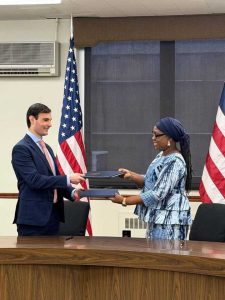
Liberia takes a non-permanent seat on the UN Security Council (Jan 2026–Dec 2027), raising its diplomatic profile on peace, climate security and African priorities.
Expect continued engagement with the U.S., EU and multilateral partners to attract investment and technical assistance.
What investors, citizens and visitors should watch

Mining and infrastructure offer major opportunities, but due diligence on rail access, environmental rules and contract transparency is essential.
Delivery of the ARREST Agenda will be measured by visible improvements in roads, energy, jobs and social services — and by how government addresses corruption concerns.
In summary, Liberia begins 2026 at a crossroads: a credible growth path is emerging from mining and large infrastructure projects, supported by a focused government agenda and international partners. Success will depend on resolving governance and implementation challenges, safeguarding the environment, and ensuring that new revenues translate into jobs and improved public services for ordinary Liberians.
- – By Oracle News Daily Editorial Team

