

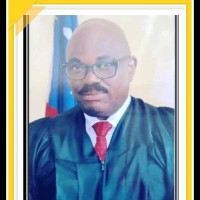
The latest development in the Capitol Building arson trial has plunged Liberia’s justice system into an even deeper crisis. Judge Roosevelt Z. Willie has granted the prosecution’s extraordinary motion to disband the duly empaneled jury and has ordered a mistrial.
This decision does not merely redirect the course of a high-profile case—it raises a grave national question: was this ruling grounded in Liberian law and the high threshold required for jury dissolution, or does it reflect a dangerous willingness to bend procedure to rescue a collapsing prosecution?
When a jury is dissolved and a mistrial is declared in the middle of proceedings—after weeks of testimony— the law demands one thing above all: proof. Proof of actual prejudice. Proof of corruption.
Proof of external influence. Proof of juror misconduct of such severity that the court has no other remedy capable of protecting fairness. Anything less invites the perception—and the danger—that judicial power is being deployed not to ensure justice, but to manage outcomes. In a fragile democracy, perception becomes consequence.

Cllr. N. Oswald Tweh, Minister of Justice
Under settled Liberian principles, mere discomfort, speculation, dissatisfaction with juror questions, or prosecutorial frustration is not juror bias and does not amount to legal disqualification. Juror questioning— conducted openly in court under the supervision of the judge—exists precisely to aid understanding of evidence.
Yet, despite the absence of any publicly established proof of bribery, external interference, intimidation, prohibited third-party communications, or premature deliberation rising to legal misconduct, the prosecution’s request was granted. The result is a judicial action so drastic that it now stands as an alarming precedent: a jury can be removed when it begins to ask the hard questions that reveal the weaknesses of the state’s case.
The Law Required Proof—The Decision Delivered Panic
To dissolve a properly seated jury panel is an extreme remedy. It should be reserved for those rare instances
where the integrity of the trial has been genuinely contaminated beyond repair. The prosecution had the burden to show actual prejudice or misconduct—not conjecture. Yet the principal trigger for the prosecution’s motion, as presented publicly, was juror engagement: jurors asking questions, requesting clarification, and probing the sufficiency and quality of evidence. That is not misconduct; that is the jury doing its job.
Jurors are factfinders. Their observations, impressions, and inquiries during the evidentiary phase do not constitute judgment. Judgment is legally reserved for deliberation after the close of evidence and proper jury instructions. To equate juror questioning with disqualifying bias is to misstate the function of a jury trial and to weaponize procedure against citizen participation in justice.
The Timing Still Betrays the Motive—Now the Ruling Confirms the Fear
This motion did not arise in a vacuum. It came after more than four weeks of testimony—at the exact point when juror questioning began to illuminate glaring weaknesses in the prosecution’s case, including:
- No forensic evidence: no fingerprints, no footprints.
- No CCTV footage.
- Audio recordings that are alleged to be unrelated and say nothing about fire or burning.
- No eyewitnesses linking any defendant to the act; and
- An investigation burdened by gaps, contradictions, and procedural irregularities—including questions around authentication, signatures, and chain of custody of key exhibits. Jurors asked the questions any reasonable factfinder would ask:
- Who protected the Capitol on the day of the fire?
- Were security officers assigned to the Capitol questioned?
- How were images obtained if there were no CCTV cameras?
- Why do key exhibits appear to lack proper authentication, signatures, or chain of custody?
These questions did not strengthen the prosecution’s case. They exposed its fragility. And now, with the jury disbanded and mistrial ordered, Liberia must confront the most dangerous implication of all: when evidence collapses, procedure is used to reset the board.
A Case Without Evidence Cannot Be Repaired by Restarting the Trial

Chairman of the Assets Recovery and Property Retrieval Taskforce (AREPT), Cllr. Edwin Kla Martin
From the genesis of this matter, everything Cllr. J. Fonati Koffa warned about appears to be falling into place. The public record, as reflected in the proceedings, points to a prosecution case dependent heavily on assumptions, circumstantial allegations, and speculative inferences rather than direct proof.
Equally significant is the institutional reality that cannot be overlooked: the Liberia National Police were responsible for the protection of the Capitol Building at the time of the incident. As the official law enforcement body assigned to safeguard the premises, the police were on duty when the fire occurred.
Yet the record, as revealed by juror inquiry, raises serious questions about whether that protective duty—and any failure in it—has been fully examined and accounted for within the state’s theory of the case.
Instead of confronting evidentiary shortcomings, the prosecution sought to remove the jury—then obtained a mistrial. If the state’s case was strong, it would have no need to fear juror scrutiny. If the state’s evidence was credible, it would welcome questions that confirm it. A justice system must never send the message that the price of juror diligence is dismissal.
This Is Not Merely a Trial Development—It Is an Alarm Bell for the Judiciary

Cllr. Bushuben Keita, Legal Advisor to the President
Judge Willie’s ruling will now echo far beyond this one case. It raises the terrifying prospect that the right to trial by jury becomes conditional—that juries can be punished for skepticism—that prosecutorial failure can be converted into procedural escape—and that the courtroom becomes a stage for strategy, not a forum for truth.
This is why many observers now describe the decision in the strongest terms. While courts must remain independent, judicial independence does not mean judicial immunity from scrutiny. The legitimacy of a ruling is inseparable from the transparency of its legal basis. If the ruling rests on proof, then the proof must be shown. If the ruling rests on legal thresholds, then those thresholds must be explained. If neither is present, what remains is a perception of arbitrary power—and in fragile democracies, that perception is corrosive.
The Broader Context Cannot Be Ignored
This ruling comes against a deeply troubling national backdrop. The international community must not remain silent in the face of mounting allegations of systematic manipulation, extrajudicial killings, political intimidation of powerful opponents, judicial overreach, and gross human rights abuses reportedly carried out by elements of Liberia’s state security apparatus.
Liberia now confronts a profound accountability crisis—one that threatens not only lives and dignity, but also the credibility of justice institutions by weaponizing the judiciary and eroding Liberia’s standing among democratic nations.

Solicitor General of Liberia, Cllr. Augustine C. Fayiah
We reiterate our urgent appeal for independent international accountability for alleged crimes, political intimidation, judicial overreach, and threats attributed to senior government and security officials, including Inspector General of Police Col. Gregory O. W. Coleman; National Security Adviser Atty. Samuel Kofi Woods; Minister of Justice Cllr. N. Oswald Natu Tweh; Legal Adviser to the President Cllr. Bushuben Keita; Solicitor General and AREPT Chair Cllr. Augustine C. Fayiah; and Cllr. Edwin Kla Martin. The gravity and recurrence of these allegations demand immediate scrutiny and decisive action.
Reports compiled by civil society organizations, eyewitnesses, community leaders, and victims’ families describe a pattern of lethal force, custodial abuse, and violent misconduct carried out with impunity. If substantiated, these constitute serious violations of Liberia’s Constitution and international human rights obligations.
The absence of credible prosecutions and transparent investigations has deepened public fear and strengthened the belief that justice is selectively applied—shielding the powerful while silencing critics and victims.
The disbanding of a jury and the ordering of a mistrial in a politically charged case—after jurors expose evidentiary gaps—only intensifies that belief.
What Is at Stake Now

Atty. Samuel Kofi Woods, National Security Advisor
With the jury disbanded and mistrial declared, Liberia now stands at a dangerous crossroads:
- Will juror participation in justice be discouraged by fear of removal?
- Will prosecutors learn that weak cases can be “reset” rather than dismissed?
- Will courts be seen as defenders of due process—or instruments of political convenience?
If these questions are not urgently addressed through transparent legal reasoning and accountability, the damage to public trust may be severe and lasting.
A Direct Appeal to the International Community We therefore call upon:
- The United Nations, including the Office of the High Commissioner for Human Rights, to initiate urgent monitoring and fact-finding mechanisms.
- The African Union and ECOWAS, to activate regional human-rights and early-warning frameworks.
- The United States Government, particularly the Department of State and the Department of the Treasury, to consider Global Magnitsky–style targeted sanctions, including travel bans and asset freezes.
- The European Union and allied democratic partners, to pursue coordinated accountability
measures; and International human rights organizations, to intensify documentation, witness protection, and advocacy.
Targeted sanctions should be understood not as punitive measures against the Liberian people, but as protective tools intended to deter abuses, uphold international norms, and signal that impunity will not be tolerated.
Liberia is already grappling with economic hardship, corruption allegations, and declining public trust. 
Col. Gregory Coleman, Inspector, Liberia National Police
Against this fragile backdrop, continuing allegations of state-sponsored violence and judicial manipulation risk pushing the nation toward deeper instability. History has repeatedly shown that when grievances are ignored and justice is denied; the consequences are devastating—domestically and regionally.
The Panoramic Justice Group remains steadfast in its mission to promote accountability, transparency, and human dignity. The organization is actively advocating for a comprehensive, internationally assisted investigation and is engaging U.S. government agencies—including the Department of Justice and the Department of State—as well as international partners, to explore lawful and effective actions to halt this alarming trajectory.
This is a defining moment for Liberia—and for the international community’s commitment to human rights. Justice delayed risks becoming justice denied. Silence, in the face of grave allegations, would amount to complicity.
Human life is sacred. Human rights are non-negotiable. Justice must be enforced—not postponed.
Authored by:

Garkpe Gedepoh
U.S Marine (RTD)
Executive Director
Panoramic Justice Group
1629 K Street NW Suite # 300 Washington DC 20006

