

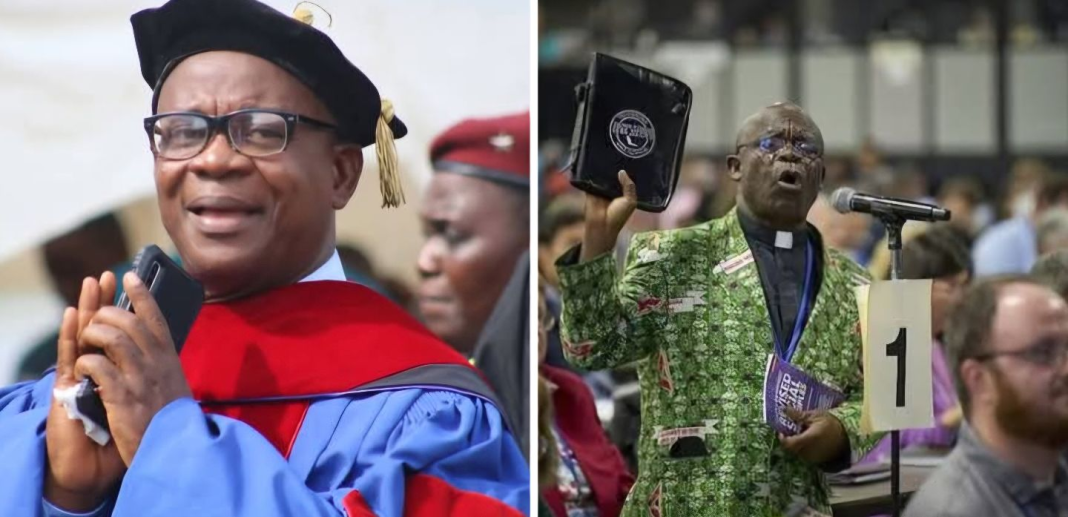
The United Methodist Church in Liberia has revoked the ministerial credentials of 125 clergy, including some of the denomination’s most prominent theologians and senior pastors who have opposed the accepted of same sex union in doctrinal practices.
The affected leaders who have already seceded from the church, forming the so-called Global Methodist Church, are yet to comment on the matter.
The decision, taken during the 193rd Annual Session of the Liberia Annual Conference (LAC), marks the largest single clergy purge in the church’s nearly two-century history in the country. It has ignited fierce debate within Liberia’s religious community and reverberated across the global Methodist connection, raising profound questions about authority, doctrinal enforcement, and the limits of dissent.
Among those stripped of ordination credentials are Rev. Dr. Jerry K. Kulah, Rev. Dr. Sarwolo J. Nelson Jr., Rev. Dr. George G. Wilson Jr., Rev. Dr. Isaac Chukpue-Padmore, Rev. Dr. Julius Z. Y. K. Williams, Rev. Rose Farhat, Rev. Jerry Kandea, Rev. Kenneth C. Jackson, Rev. Rodney Marshall, Rev. Allen Paye, Rev. Dr. Charles Fiske, Rev. Dr. Anna K. Labala, and Rev. Cooper Pay Mondolo.
Together with 113 others, the expelled pastors represented more than 18 percent of Liberia’s active United Methodist clergy, according to conference enrollment data. Many were highly educated, with doctoral degrees from Methodist and ecumenical institutions abroad, and had served the church for decades, leading large congregations and theological schools.
Conference officials said the clergy acted “in flagrant disregard for the order, discipline, and doctrinal standards” of the United Methodist Church. At the heart of the ruling was their alleged refusal to surrender ministerial credentials when formally requested by the Conference Secretary, a requirement under Paragraph 361 of the 2020/2024 Book of Discipline, the denomination’s constitutional framework.
Paragraph 605.7 empowers the Annual Conference to terminate clergy membership, while Paragraph 2702.1(c) criminalizes acts that undermine church order or facilitate unauthorized ministry. Delegates voted by well over the constitutionally required two-thirds majority, a safeguard designed to prevent politically motivated expulsions.
The Board of Ordained Ministry, which oversees clergy conduct, confirmed that all procedures complied with denominational law.
Church leaders framed the decision as a defense of doctrinal integrity and connectional unity. Critics, however, see it as an institutional crackdown on reformist voices amid broader global tensions within Methodism, particularly following worldwide debates over theology, governance, and social doctrine.
Conference leaders countered that education and seniority do not confer immunity from discipline, stressing that ordained ministers swear lifelong vows to uphold the Book of Discipline “not selectively, but in totality.”
One of the most controversial aspects of the resolution was the public publication of all expelled names, declaring them no longer clergy of the United Methodist Church. The conference also imposed a nationwide ban on the individuals entering pulpits or chancery offices, and sanctioned any clergy who permit them to function in ministerial roles.
Supporters argue the measures protect congregations from deception. Opponents call it ecclesiastical blacklisting unprecedented in Liberia’s post-war religious landscape.
The expulsions followed years of escalating conflict. In October 2024, Bishop Samuel J. Quire Jr., Resident Bishop of the Liberia Episcopal Area, suspended several pastors, including Rev. Kenneth C. Jackson and Rev. Allen Paye, citing insubordination, defiance of episcopal authority, and contempt for the Board of Ordained Ministry.
Church officials described those suspensions as part of a coordinated rebellion aimed at undermining conference authority and creating parallel structures of influence. The 193rd Annual Session, many delegates said, was the legal culmination of a crisis long in the making.
The United Methodist Church in Liberia oversees hundreds of congregations, schools, hospitals, and social programs. The fallout could affect rural parishes, donor confidence, and ecumenical relations.
International observers note that the Liberian action may set a precedent for stricter enforcement of discipline in other African conferences, at a time when global Methodism remains ideologically fractured.
In its closing statement, the Liberia Annual Conference reaffirmed its commitment to “doctrinal integrity, connectional order, and faithful obedience to the teachings and laws of The United Methodist Church, while continuing the mission of evangelism, discipleship, and service to all people.”
Whether history records the decision as a necessary act of institutional preservation or a moment of irreversible division remains an open and deeply consequential question.

