

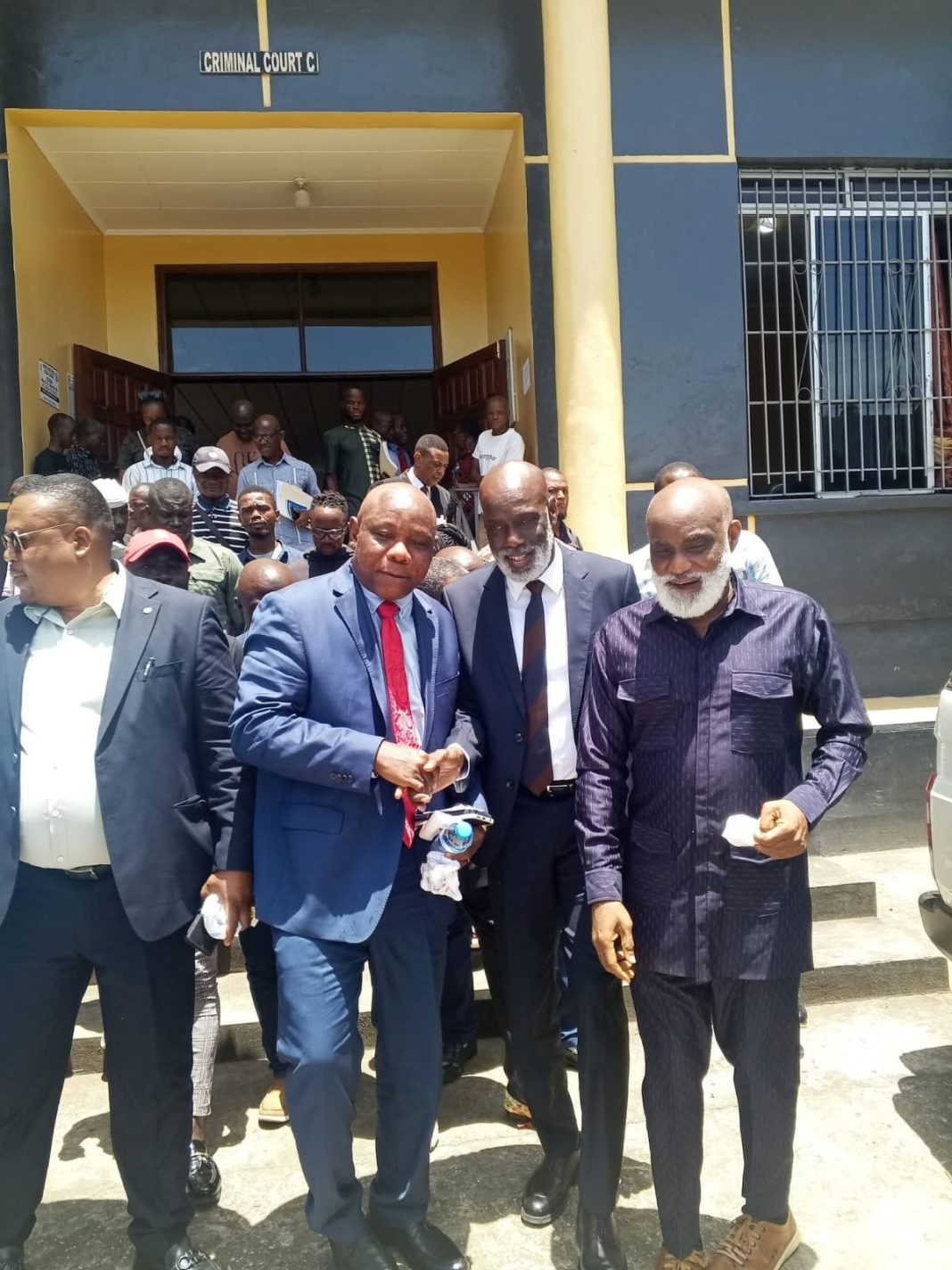
Former finance minister Samuel Tweah delivered a pointed, structured rebuttal of the prosecution’s case Monday and a judge ordered the Central Bank of Liberia governor to appear to authenticate documents that, the defense says, show the contested national-security transfers followed longstanding legal practice.
Under direct examination by lead defense counsel Arthur Johnson, Tweah methodically addressed core counts of the indictment, disputing prosecution assertions that transfers were unauthorized, unsupported by requests from national security actors, or otherwise unlawful.
He mounted his account around procedural and legal norms in Liberia’s public financial management (PFM) framework and asserted the payments at issue were consistent with established precedent.
Tweah told the court that the legal “trigger” for budgeted spending is the passage of the national budget, not the existence of a separate payment request, and that emergency or nonbudgeted spending can be activated by executive consensus in response to urgent needs.
That, he said, explained instances in which formal written requests were not present while still preserving legality.
Compelling documentary and precedent evidence
The defense introduced documentary evidence and transactional examples intended to demonstrate that direct transfers routed through the central bank are an established government practice.
Tweah cited prior transfers processed through the CBL, including more than $15 million to the National Elections Commission, $25 million to the World Food Programme for COVID-19 food support, and $1 million to UNFPA for the 2022 national census.
He argued the mechanism used in those cases mirrored the one now challenged by prosecutors.
When the defense sought to have photocopied instructions and transfer documentation authenticated, prosecutors objected to their relevance.
Presiding Judge Ousman Feika overruled the objection and ordered that the CBL governor — or a designated representative — be subpoenaed to appear in court to verify the documents’ authenticity.
The judge’s ruling paves the way for the central bank to confirm whether the transactions and procedures cited by the defense reflect official practice.
Legal analysts said authenticated confirmations from the CBL could undercut the prosecution’s theory by showing prior, similar transfers had been executed lawfully.
The defense contends the documents would rebut testimony and evidence suggesting such transfers were unprecedented or inherently illegal.

