

By: Trokon S. Wrepue & John Kamara Taylor
Firestone Liberia is at the center of a labour firestorm as workplace representatives from the Estates Department mount a dramatic challenge against the redundancy of union co‑chair Winston Ford, denouncing the move as unjust, politically motivated, and a direct assault on workers’ democratic rights.
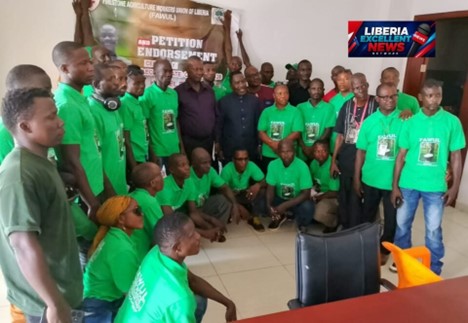
On Monday, May 5, 2026, the representatives convened at the Ministry of Labour’s conference facility in Monrovia, where they presented a detailed resolution to Labour Minister Cooper W. Kruah Sr. Their demand was unequivocal: a full investigation into the circumstances surrounding Ford’s removal.
Ford, a seasoned advocate for workers and current Co‑Chair of the Firestone Agricultural Workers Union of Liberia (FAWUL), has become a rallying figure for employees.
Earlier this year, he was widely petitioned to contest the union’s top leadership position in October, following the expected retirement of current chair Bongorlee. His rising popularity and uncompromising defense of workers’ rights, representatives argue, made him a target for management.
“This is nothing short of a witch hunt,” one representative declared during the meeting. “It is designed to block Ford’s rise and silence the collective voice of workers. We believe this action interferes with our right to freely choose our leaders.”
The redundancy decision, they contend, violates Liberia’s labour framework, which protects employees from unfair dismissal and discrimination based on union activity. By sidelining Ford, they warn, Firestone risks breaching fundamental principles of fair labour practice and undermining the credibility of union representation.
Minister Kruah, granting the group a 45‑minute audience, struck a conciliatory tone. He assured the representatives that the government remains committed to safeguarding labour rights and enforcing concession agreements.
“I will review the concerns raised and ensure that due process is followed,” he pledged. “Our goal is to reach an amicable resolution that upholds the law and maintains stability within the workforce.”
The Minister urged calm as the Ministry prepares to convene a dialogue meeting on Friday, bringing Firestone management and workers’ representatives face‑to‑face. The stakes are high: the outcome could determine not only Ford’s future but also the trajectory of labour relations within one of Liberia’s most influential industrial employers.
Observers note that the dispute has already electrified Liberia’s labour landscape, exposing deep tensions between corporate power and grassroots advocacy. For Ford’s supporters, his removal is a chilling reminder that strong voices for workers can be punished. For critics, the confrontation threatens to destabilize industrial peace at a time when Liberia’s economy leans heavily on concession agreements.
As the clock ticks toward Friday’s dialogue, the atmosphere at Firestone remains charged. Workers insist they will not relent until fairness, transparency, and respect for their collective voice are restored. The redundancy of Winston Ford, once a routine administrative decision, has now escalated into a defining test of Liberia’s labour justice system.
Whether the Ministry’s intervention delivers compromise or confrontation, one thing is certain: Firestone Liberia is at the center of a labour storm that could reshape the balance of power between management and workers for years to come.

