

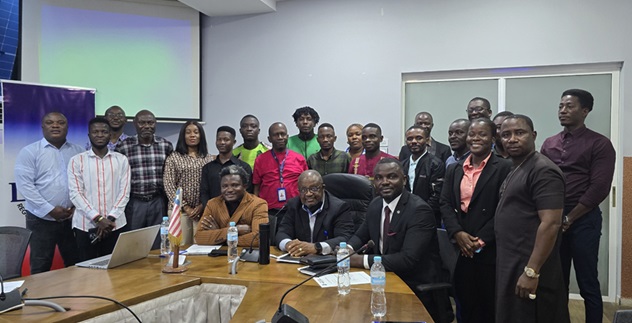
In a nation where electricity has long symbolized both promise and peril, the Liberia Electricity Regulatory Commission (LERC) has launched a bold initiative to enlist the media as a partner in rebuilding public trust. On Thursday, May 21, 2026, the Commission convened a day‑long training for publishers, editors, and reporters, urging them to sharpen their focus on the energy sector and track reforms under Liberia’s Electricity Regulatory Framework.
The workshop was more than a technical exercise; it was a historic moment in Liberia’s post‑war recovery. Electricity infrastructure, once the pride of Monrovia in the 1970s, was reduced to rubble during the civil wars of the 1990s and early 2000s. Entire communities were plunged into darkness, and the nation became one of the least electrified in the world. Today, as Liberia rebuilds, the LERC is determined to ensure that transparency and accountability light the way forward.
Board Chairman Claude J. Katta emphasized the Commission’s commitment to collaboration. “The media plays a critical role in informing the public, raising awareness on consumer rights, and building confidence in ongoing reforms,” he declared. He praised President Boakal’s administration for championing liberalization of the electricity sector, a policy designed to expand access and dismantle monopolies that once stifled progress. “We will work closely with the media to help educate the public on remedies available to electricity customers, especially when they feel aggrieved,” Katta added.
The Press Union of Liberia (PUL), led by President Julius Kanubah, echoed the urgency of the mission. “Access to energy lies at the heart of every society,” Kanubah said. He urged journalists to treat energy reporting as a matter of public interest journalism, calling for investigative rigor to hold actors accountable. “If our daily survival depends on access to energy, then we must focus on providing quality information by increasing the quality of stories on the energy sector,” he insisted.
Managing Director Augustus W. Goanue reminded participants of the painful past, recounting how the civil war decimated Liberia’s electricity infrastructure. His presentation underscored the enormity of the task ahead: rebuilding not only poles and grids but also confidence in institutions. Participants described the training as “impactful and informative,” a rare moment when regulators and reporters stood united in pursuit of national progress.
The symbolism was unmistakable. A country once plunged into literal and figurative darkness now seeks to illuminate its path with truth, transparency, and collaboration. If the media embraces its role as guardian of public interest, and if the LERC sustains its pledge of openness, Liberia may yet write a new chapter — one where electricity is no longer a privilege but a right, and where confidence in the sector burns brighter than the lights it powers.

