

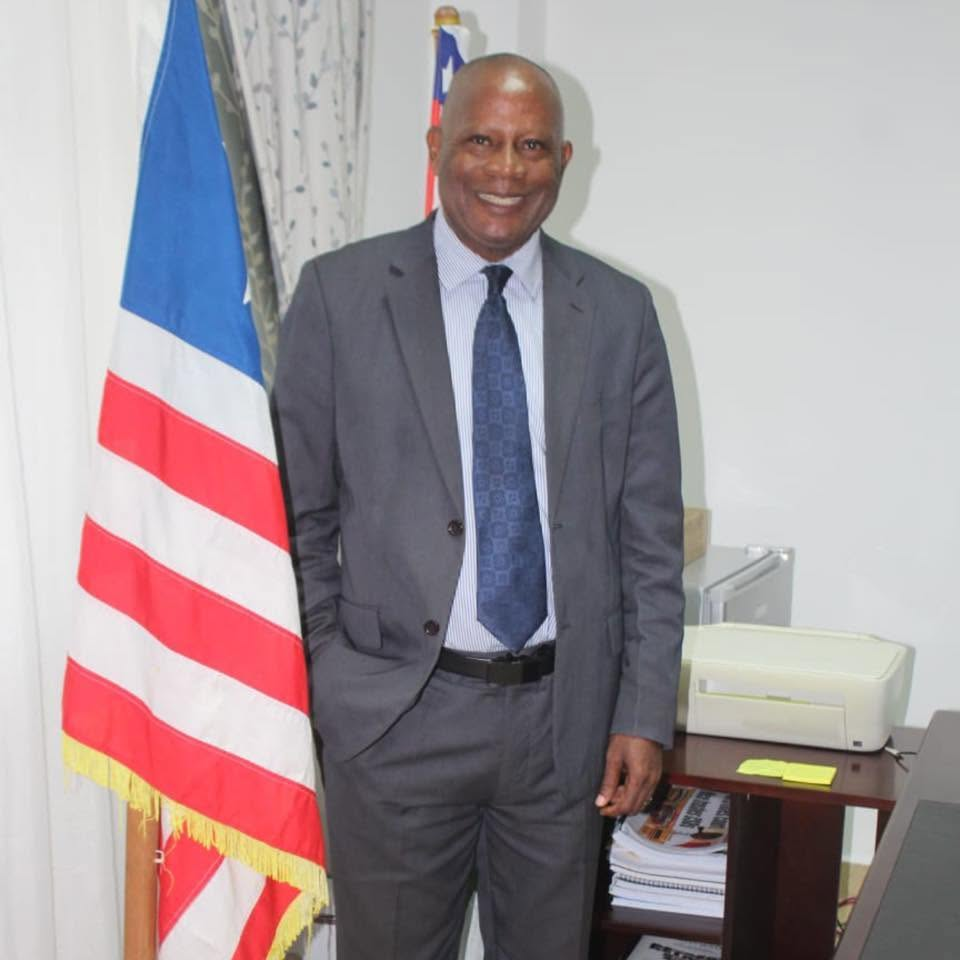
By Cllr. Augustine Chea (Senator, Sinoe COunty)
There is a Liberian saying that “if the house doesn’t sell you, the street will not buy you.” In other words, when those closest to us normalize certain behaviors, we should not be surprised when outsiders adopt the same attitude toward us. The events of recent years provide a troubling example of this reality.
For six years, “Prophet Key” and Representative Yekeh Kolubah made a habit of publicly insulting former President George Weah, his wife, and even his mother. Rather than condemn such conduct, many within the Unity Party and its support base applauded it. “Prophet Key” became a darling of many who saw no problem with the degradation of public discourse. Representative Kolubah was not only defended but politically supported, with voters trucked from various districts during the 2023 elections to aid his reelection campaign.
There is an old saying: “What is good for the goose is good for the gander.” One cannot celebrate disrespect when it is directed at political opponents and then suddenly discover the virtues of civility when the same behavior is directed at them. Principles must be consistent, or they are not principles at all.
The larger issue is not about one political party, one politician, or one administration. It is about the culture of disrespect that has steadily taken root in our country. Sadly, what was once considered unacceptable has now become commonplace. We have normalized insults, vulgarity, and personal attacks in our political conversations. We increasingly confuse rudeness with courage and insult with constructive criticism.
What makes this trend even more troubling is the irony of our times. Today, we have more “educated people,” more “college graduates,” and far more universities and colleges than the four (including the African Bible College) we had before the civil conflict. Yet, in many respects, our society appears less sophisticated than it once was. We “cuss ma and cuss pa” over every disagreement. We insult leaders instead of disagreeing with them respectfully. We have lost appreciation for basic decency, civility, decorum, restraint, and respect for institutions.
And that brings me to a point that is so dear to my heart: the kind of education our young people are receiving today. Education is not merely the acquisition of certificates and degrees. True education should also cultivate character, discipline, critical thinking, and respect for others, including those with whom we disagree. A society cannot thrive when it produces educated minds that lack the virtues necessary for responsible citizenship.
Whether one supports President Joseph Nyuma Boakai or opposes his administration is entirely beside the point. In a democracy, criticism of government is both legitimate and necessary. However, President Boakai is the duly elected President of the Republic of Liberia and the head of the Government of Liberia, as was former President Weah. That office deserves a measure of respect regardless of who occupies it.
It is therefore disappointing that a Nigerian pastor, seemingly oblivious to the many deep-seated and often existential challenges confronting his own country, would find it appropriate to publicly describe President Boakai as “confused.” Such a characterization is not constructive criticism; it is a gratuitous insult directed not only at an individual but at the highest office in our Republic.
Yet before we rush to condemn him alone, we must ask ourselves a difficult question: Have we not helped create the environment that emboldens such behavior? When we tolerate, celebrate, and even reward disrespect toward our own leaders, should we be surprised when others conclude that they can do the same? If the house does not value its own, why should the street?

