

By George K. Warner (former education minister)
Last week, I had the privilege of accompanying colleagues from the Mastercard Foundation during an intensive series of engagements across Liberia in support of the Government of Liberia’s Human Capital Development Agenda. It was not a ceremonial visit. It was an opportunity to listen, learn, and witness firsthand the serious work underway to strengthen Liberia’s education system and prepare its young people for the future of work.
Throughout the week, one message became increasingly clear: Africa’s future will be determined not simply by the roads we build or the minerals we extract, but by the people we educate.
Our journey took us from strategic discussions with the Minister of Education and her leadership team to classrooms, teacher training institutions, technical and vocational education and training (TVET) institutions, and secondary schools. We visited the Booker Washington Institute (BWI), Kakata Rural Teacher Training Institute (KRTTI), where we met faculty and student teachers alongside representatives from Zorzor Rural Teacher Training Institute (ZRTTI) and Webbo Rural Teacher Training Institute (WRTTI). We engaged with educators at the Monrovia Consolidated School System and spent time at Tubman High School, where education reform was no longer an abstract policy discussion but something tangible, visible, and deeply inspiring.
Among the week’s highlights was our visit to Tubman High School. Too often, conversations about education reform remain confined to conference rooms, policy papers, and strategic plans. Tubman High reminded us that real transformation is measured in classrooms. We met teachers who were energized by new approaches to teaching, eager to move beyond rote instruction and committed to helping students think critically, solve problems, collaborate effectively, and apply knowledge to real-life situations. Their passion reaffirmed an important truth: when teachers are trusted, equipped, and supported, they become the most powerful agents of change in any education system.
Equally impressive were the school’s technical and vocational facilities. Modern equipment was giving students opportunities to learn by doing rather than simply by listening. Workshops had become spaces where theory met practice and where technical competence was being developed alongside confidence and creativity. In many African countries, vocational education has too often been viewed as a second choice. Yet as industries evolve and labour markets demand practical skills, institutions like Tubman High demonstrate that technical education should be seen as a pathway to innovation, productivity, and dignity.
The school’s Work Ready Program was particularly encouraging. It recognizes that success in today’s economy requires far more than academic knowledge. Employers increasingly seek graduates who can communicate clearly, work in teams, think critically, solve problems, demonstrate initiative, adapt to change, and continue learning throughout their careers. By intentionally embedding these competencies into the student experience, Tubman High is helping young people make the critical transition from learning to earning.
Another inspiring stop was the Youth Coalition for Education in Liberia (YOCEL), where the ELEVATE Liberia initiative is helping young people develop entrepreneurship, leadership, and employability skills. Here again, education was not viewed simply as preparation for examinations but as preparation for life. The young people we met were learning to identify opportunities, start businesses, create employment, and contribute to their communities. In a continent where millions of young people enter the labour market every year, entrepreneurship is no longer optional—it is increasingly essential.
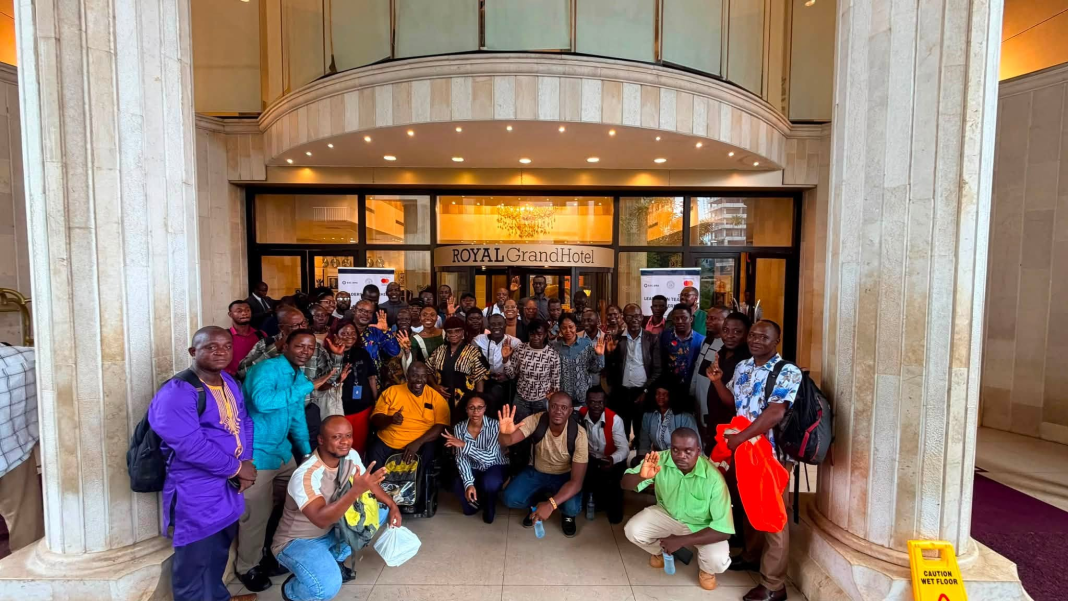
The week concluded with a two-day stakeholder dialogue at the Royal Grand Hotel, bringing together government ministries, teacher educators, TVET institutions, school leaders, implementing partners, youth organizations, civil society, and development partners. The conversations reflected a shared understanding that transforming education requires far more than improving individual schools. It demands stronger institutions, better policies, effective partnerships, and sustained investment in people.
As I reflected on the week, one thought remained with me: the most important progress in education is often invisible.
Governments understandably celebrate roads, bridges, airports, hospitals, and public buildings. These are visible symbols of development. They can be photographed, inaugurated, and proudly displayed. Education is different. How do you photograph a teacher who has become dramatically more effective? How do you capture a principal who has transformed the culture of an entire school? How do you showcase improved teacher preparation, stronger instructional leadership, better STEM teaching, or a curriculum that equips young people for jobs that may not yet exist?
These achievements rarely make headlines.
Yet they determine whether nations prosper.
Africa today stands at one of the most important moments in its history. The continent is home to more than 530 million young people between the ages of 15 and 35, making it the youngest region in the world. Over the coming decades, Africa will contribute the largest share of new entrants into the global workforce. While much of Europe and Asia confront ageing populations, Africa’s greatest resource will not lie beneath its soil but within its people.
Every year, millions of young Africans leave school in search of meaningful work. Some will become engineers, teachers, nurses, entrepreneurs, technicians, software developers, farmers, scientists, artisans, and public servants. But the overwhelming majority will never attend university.
That simple reality should fundamentally reshape how we think about education.
For decades, secondary education has often been viewed primarily as preparation for higher education. Yet for millions of African young people, secondary school is not simply a bridge to university—it is the bridge to work, entrepreneurship, citizenship, and adulthood. If that is true, then secondary education must evolve. Schools must become places where young people learn to think critically, solve problems, communicate effectively, collaborate with others, use technology confidently, innovate, and adapt to constant change.
These are not merely academic skills.
They are economic skills.
They are life skills.
They are nation-building skills.
This understanding lies at the heart of the Mastercard Foundation’s Young Africa Works strategy, whose ambition is to enable 30 million young Africans—70 percent of them young women—to access dignified and fulfilling work by 2030. Notice what that ambition does not promise. It does not promise thirty million university graduates. It promises thirty million young people prepared to thrive in work and life.
Liberia is part of a much larger continental movement. Beyond Liberia, the Foundation is pursuing similar system transformation initiatives in Tanzania, Malawi, Ghana, Rwanda, Sierra Leone, Uganda, and across the Sahel, partnering with governments and local organizations to strengthen teaching, school leadership, technical and vocational education, entrepreneurship, and the transition from learning to earning. Although each country’s priorities differ, the underlying vision remains constant: Africa’s demographic dividend will become an economic dividend only if its young people leave school equipped with the knowledge, competencies, values, and mindsets required by the twenty-first-century economy.
In Liberia, that vision is being pursued through an impressive coalition of organizations working alongside the Government of Liberia. These include the Education Development Center (EDC), BRAC Liberia, the Leymah Gbowee Foundation, International Training Institute (ITI), Teach For Liberia, the Youth Coalition for Education in Liberia (YOCEL), Youth Movement, FAWE Liberia, YMCA Liberia, Practical Education Network (PEN), and several other Liberian organizations.
Together with the Ministries of Education, Youth and Sports, Gender, Children and Social Protection, Agriculture, teacher training institutions, universities, TVET institutions, schools, communities, and employers, they are helping strengthen Liberia’s human capital ecosystem.
Each partner contributes a unique comparative advantage. EDC is supporting teacher education and systems strengthening. Teach For Liberia is investing in teacher leadership. Practical Education Network is helping make STEM education practical, hands-on, and relevant to real-world challenges. BRAC Liberia and FAWE Liberia continue to expand opportunities for girls and vulnerable learners. The Leymah Gbowee Foundation is strengthening women’s leadership and youth empowerment. YOCEL and Youth Movement are equipping young people with entrepreneurship, civic leadership, and employability skills, while YMCA Liberia continues to deepen youth development and community engagement.
Together, these organizations demonstrate that transforming education requires much more than improving schools. It requires building an ecosystem that connects learning to earning, classrooms to careers, and education to national development.
At the center of this work lies one simple but profound idea: if we want young people to graduate from secondary school with the knowledge, skills, confidence, creativity, and resilience demanded by the twenty-first-century economy, then we must first invest in the people who prepare them.
We cannot expect students to think critically if teachers themselves have never been supported to teach critical thinking. We cannot expect innovation if classrooms reward memorization instead of curiosity. We cannot expect graduates to become entrepreneurs if schools never encourage initiative, experimentation, creativity, and problem-solving. We cannot expect excellent schools without excellent school leaders. Nor can we expect modern technical education if TVET instructors are disconnected from evolving industries and technologies.
Research from UNESCO, the World Bank, and the OECD consistently demonstrates that teachers remain the single most important school-based factor influencing student learning. Strong instructional leadership amplifies that impact by creating school cultures where teachers continue to learn and students continue to thrive.
Simply put, if we want market-ready graduates, we must first build market-ready educators.
This is why investments in teacher preparation, school leadership, curriculum reform, STEM education, technical skills, entrepreneurship, and continuous professional development are not simply education reforms. They are economic reforms. They are employment reforms. They are nation-building reforms.
Countries no longer compete primarily because they possess natural resources. They compete because they possess capable people. Roads matter. Ports matter. Electricity matters. Digital infrastructure matters. But increasingly, the greatest competitive advantage any nation possesses is the quality of its human capital.
Every engineer begins with a teacher.
Every entrepreneur begins with a teacher.
Every doctor begins with a teacher.
Every scientist begins with a teacher.
Every technician begins with a teacher.
Every president begins with a teacher.
Perhaps our greatest challenge is not simply improving education. It is making educational progress politically visible. Imagine if governments celebrated improvements in literacy with the same enthusiasm they celebrate new highways. Imagine if outstanding teachers received the same public recognition as outstanding athletes. Imagine if election campaigns debated learning outcomes, teacher quality, graduate employability, and school leadership as passionately as they debated roads, electricity, and public buildings.
The roads we build today will eventually crack. The bridges we inaugurate will one day require repair. The buildings we celebrate will inevitably age. But the investment we make in a young person’s mind compounds for generations.
An inspired teacher can change hundreds of lives.
An outstanding principal can transform an entire school.
A skilled TVET instructor can prepare generations of innovators.
A confident young entrepreneur can create opportunities for countless others.
The most important road we can build is therefore invisible.
It begins with a child.
It is guided by an excellent teacher.
It is strengthened by visionary school leadership.
It is supported by governments, communities, employers, and development partners who understand that education is not merely a social service but the foundation of national prosperity.
And it leads to something every country seeks but no country can import: a generation equipped to build its own future.
That is the road Liberia is building.
It is the same road being pursued in Tanzania, Malawi, Ghana, Rwanda, Sierra Leone, Uganda, and across the Sahel.
It is, perhaps, the most important road Africa will ever build.

