

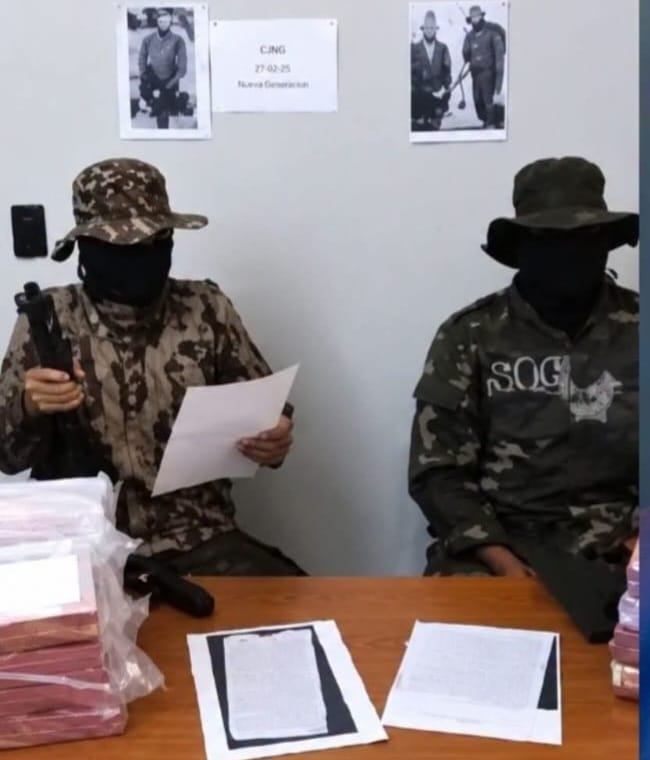
A video purporting to show members of a Colombian drug trafficking cartel claiming ownership of a large cocaine shipment seized in Liberia has sparked a political and security scandal, with the group threatening to “hunt down” President Joseph Boakai’s son unless its demands are met.
The episode effectively overshadowed the country’s 179th independence anniversary as the nation and its 5.5 million people struggle under the scourge weight of narcotics.
University of Liberia students clashed with police on Monday when a sporadic anti narcotic demonstration ended in chaos.
The clip of the drugs gang video, which circulated widely on social media on the eve of July26, alleges that Liberian authorities and associates of Joseph Boakai Jr., also known as “Jojo,” diverted six tons of cocaine from an original 10-ton shipment the group says it sent into the country. The cartel claims only four tons were publicly acknowledged after the seizure and says the remainder was stolen and is being withheld from them.
The gang also alleges it paid $2 million to facilitate the shipment and to secure the release of two network members in Liberia. It demanded the immediate return of the narcotics and the release of the two men, warning of retaliation if its demands were not met.
Liberian officials have not publicly commented on the authenticity of the video, but multiple experts cited in local reporting said they assessed the footage as genuine. Boakai Jr. has denied any involvement with the cartel or its claims.
The allegations come as Liberia’s authorities investigate a major cocaine seizure that the government says totals about 3,971 kilograms, with an estimated street value of $400 million.
Justice Minister Oswald Tweh said late Wednesday that two foreign nationals — a Serbian citizen and a man with dual Colombian and Spanish nationality — had been detained and were assisting investigators. He said their names were being withheld to protect the inquiry.
“The investigation remains active and is examining the origin, ownership, transportation method, and intended destination of the seized substances, as well as the identities and roles of all persons who may be connected to the operation,” Tweh said, according to the statement. He added that investigators were also probing “possible domestic and international networks, logistical arrangements, financial transactions, and any other forms of facilitation” linked to the suspected shipment.
Authorities said earlier evidence suggests the trafficking network may have been operating in Liberia for more than six years, pointing to what they described as a sophisticated, well-funded and organized criminal enterprise with possible links to senior security officials.
The video’s appearance has intensified scrutiny over Liberia’s security institutions, which are now under pressure to explain how such a large shipment may have moved through official corridors. The cartel’s claims that members of the security establishment were complicit have not been independently verified.
Also appearing in the video is Ibrahima Traore, a figure who in 2025 presented himself publicly as an investor.
Traore is believed to hold French citizenship and has extensive Spanish connections, those sources said. He has denied knowing the cartel operative featured in the allegations.
But associates of Traore have linked him to efforts to facilitate the trade at the request of contacts in Guinea-Bissau, helping the cartel navigate Liberia’s official and security corridors, according to sources. One source said Traore took Boakai Jr. to the Bahamas, though the purpose of the trip remains unclear.
Traore and Boakai Jr. have both acknowledged traveling to Madrid, Spain, saying the trip was sports-related and involved a meeting with the Real Madrid Foundation.
In the video, the speaker addresses Boakai Jr. directly and accuses him of collaborating with Liberian security officials to steal six tons of cocaine from the shipment.
“This message is to Joseph Boakai Junior, a.k.a. Jo-Jo,” the speaker says. “This message is of your former partners from Colombia. You dirty motherfucker, after how many times we worked together. You have decided now to steal from us after all these years. We had 10 tons in Liberia, and you only put on the news 4 tons. You and the head of NDLEA stole the 6 tons and now want to resell it.”
The video also claims that $2 million was paid to a middleman to secure the release of two associates and accuses a senior police official and a defense ministry figure of helping manage the cartel’s access.
The speaker warns that if the group’s property is not returned, it will publish photographs and “hunt you down.”
The allegations have not been independently verified, and the identities of the persons named in the video remain unclear. It is also not known whether the cartel is in fact Colombian, as claimed.
Still, the emergence of the clip has added a new and volatile dimension to Liberia’s anti-narcotics probe, already one of the largest in the country’s history. The case threatens to expose deeper vulnerabilities in law enforcement, border security and political accountability at the highest levels.
Liberia’s government has yet to issue a formal response to the video or address the accusations involving the president’s son. The investigation remains ongoing.

