

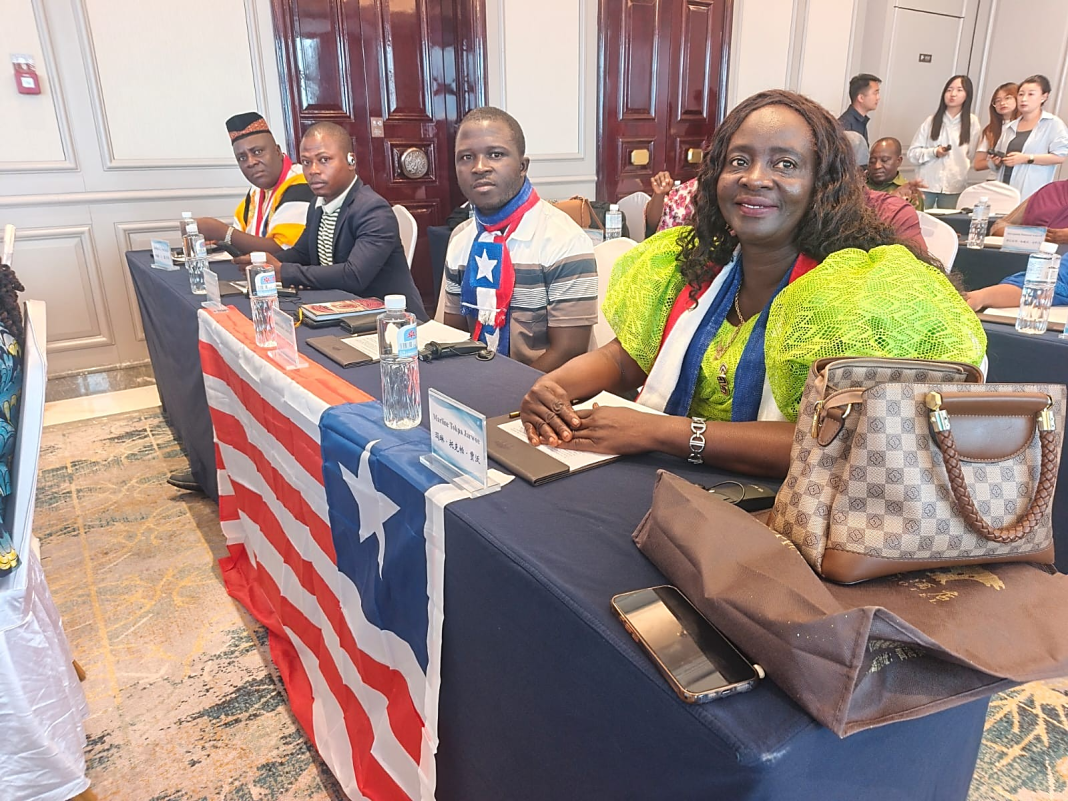
A four-member Liberian delegation has returned from Qinghai Province, China, armed with fresh ideas to transform agriculture, rural infrastructure, and youth entrepreneurship. The team participated in the 2026 Training Program for African Grassroots Cadres on Poverty Alleviation, gaining firsthand exposure to China’s strategies for rural revitalization, agricultural modernization, and sustainable development.
Led by James Kollie Galakpai, CEO and Founder of the Liberia Feed Yourself Agriculture Initiative Inc. (LIFAI-Inc.), the delegation toured agricultural demonstration centers, solar-energy facilities, industrial companies, emergency-management hubs, and the Qinghai Lake National Nature Reserve.
Galakpai emphasized that the visit was not merely observational but a mission to learn how development is systematically organized. “We now return to Liberia with the responsibility to transform what we learned into action,” he declared.
The delegation highlighted China’s emphasis on sustained support for communities even after they emerge from poverty, stressing that Liberia must adopt similar long-term strategies. Key lessons included the importance of strengthening rural roads, electricity, safe drinking water, healthcare, education, digital connectivity, and climate-resilient infrastructure.
Visits to the Tala Breach Photovoltaic Industrial Park, Qianziyuan Agriculture Science and Technology Expo Park, and Qinghai Hoh Xil Food Co., Ltd. showcased renewable energy, advanced agricultural technology, and food-processing innovations.
Inspired by these models, the Liberian team urged the government to establish agricultural science and technology demonstration parks, expand agro-processing, and promote solar energy in rural communities.
Galakpai underscored the need for complete agricultural value chains—from production and mechanization to storage, processing, packaging, transportation, and marketing. He argued that such systems would create jobs and empower young people to become active drivers of economic transformation rather than passive beneficiaries.
The delegation also drew lessons from China’s disaster preparedness and climate-resilient agriculture programs. Their visit to the Xining Emergency Command Center and a post-disaster relocation community reinforced the importance of early-warning systems and proactive planning.
In their recommendations, the delegates called for improved access to financing and technical support for youth-led agricultural businesses. Galakpai insisted that Liberia’s future depends on empowering young entrepreneurs to lead innovation in farming, energy, and rural development.
The delegation expressed gratitude to the Ministry of Agriculture, Minister Dr. J. Alexander Nuetah, the Embassy of the People’s Republic of China in Monrovia, the Foreign Affairs Office of Qinghai Province, Chinese hosts and trainers, and fellow African participants.
Alongside Galakpai, the team included John Selma, CEO of Selma Agriculture Development Cooperation; Marline Tokpah Jarwoe, Human Resource Officer at the Ministry of Local Government, Bong County; and Abel Papalom Varney, CEO of Agro Links Enterprise Inc.
Returning home, the delegates pledged to translate lessons from China into practical initiatives that will reshape Liberia’s agricultural landscape. Their vision: a nation where rural communities thrive through modern farming, renewable energy, and youth-led innovation.

