

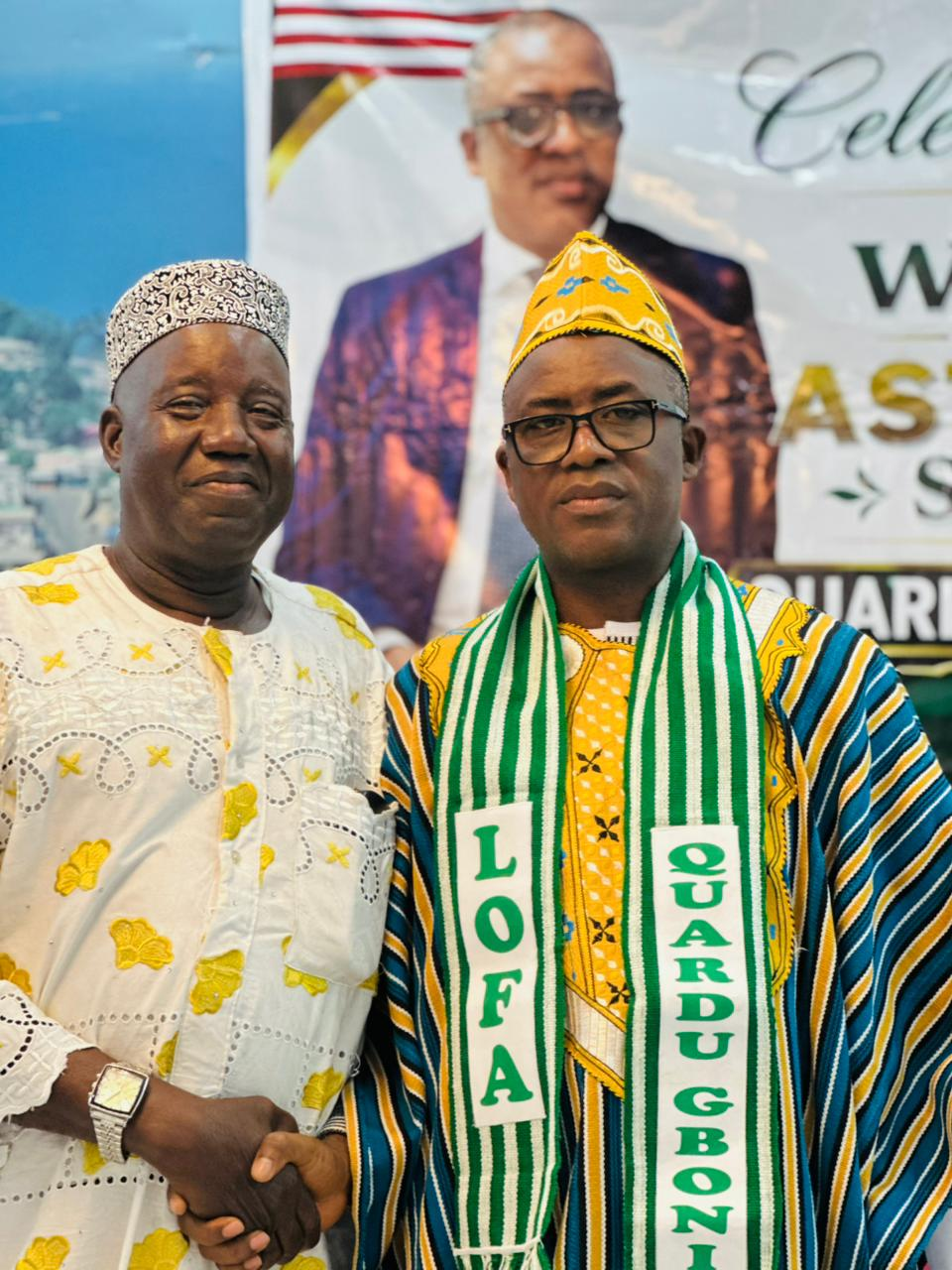
In a moment steeped in symbolism and charged with emotion, the people of Quardu-Gboni District have formally honored and gowned Abdullah L. Kamara, former Chairperson of the Liberia Telecommunications Authority (LTA), celebrated technology entrepreneur, philanthropist, and educator.
The ceremony marked not only a cultural milestone but also a dramatic public vindication following Kamara’s acquittal in one of Liberia’s most closely watched corruption trials.
The event, staged in the heart of Quardu-Gboni, transcended ritual. It was a resounding declaration of resilience, unity, and restored honor. For Kamara, whose name had been dragged through months of legal turbulence, the gowning was more than fabric draped across his shoulders—it was the weight of trust, the embrace of community, and the rebirth of reputation.
Kamara’s acquittal in June 2026 at the Second Judicial Circuit Court in Buchanan, Grand Bassa County, ended a saga that had gripped national attention. Prosecutors had accused him of misappropriating funds tied to Liberia’s Digital Transformation Project, but a unanimous jury verdict cleared him of all charges. The ruling restored his standing and opened the door for renewed recognition by his people.
The trial’s conclusion was not merely a legal victory; it was a turning point in public perception. Elders and stakeholders at the ceremony spoke passionately of their unwavering confidence in Kamara. “We never doubted him,” one elder declared, underscoring that their faith was rooted in his character and the values instilled by his family and community.

The traditional gown bestowed upon Kamara carried significance far beyond its material. It symbolized collective reaffirmation—a visible declaration that Quardu-Gboni stood firmly behind its son during one of the most difficult chapters of his life.
Speakers hailed him as “the face of Quardu-Gboni District,” a leader whose influence now extends beyond technology and philanthropy into the very fabric of community identity.
In his remarks, Kamara turned the spotlight away from himself, using the occasion to issue a powerful appeal to the district’s youth. He cautioned against allowing political differences or personal ambitions to fracture the community. “We can hold different views and pursue different ambitions without becoming enemies,” he said, stressing that collective interest must always outweigh individual differences.
His words resonated as both warning and rallying cry. Kamara urged young people to seek more reasons to unite than divide, reminding them that the district’s future depends on preserving peace, strengthening unity, and working collectively toward development. His message transformed the gowning ceremony into a broader call for reconciliation and shared responsibility.
For Kamara, the honor was not the end of responsibility but the beginning of greater accountability. “Honor does not end responsibility; it increases it,” he reminded the audience, turning the cultural recognition into a mandate for action. The gown, though destined to be folded and stored, will endure as a symbol of resilience, integrity, and leadership.
What began as a local cultural ritual evolved into a national affirmation of resilience and leadership. Kamara’s journey—from courtroom battles to community coronation—underscored a broader truth: even in the face of trials, honor and responsibility can emerge stronger than ever. His triumph is not only personal but emblematic of Liberia’s ongoing struggle to balance justice, accountability, and reconciliation.

