

By Festus Poquie
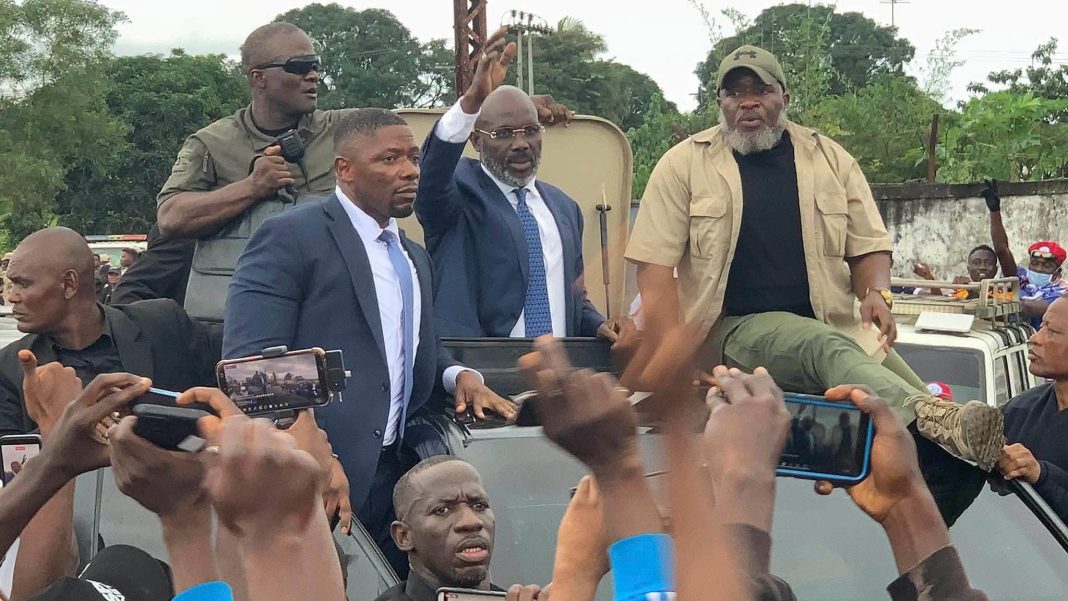
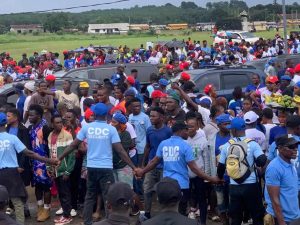
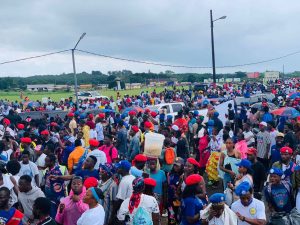
Tens of thousands of Liberians gathered at Roberts International Airport and across Monrovia to welcome former President George Weah, voicing frustration at the current state of the economy, nearly three years after he narrowly lost Liberia’s presidency to Joseph Boakai.
Chanting “Our Pa, sorry, we made a mistake,” supporters expressed regret over their 2023 vote as Weah returned to Liberia after about three months abroad.
The reception underscored his enduring popularity among the grassroots voters and could strengthen his position ahead of the 2029 presidential election.
Weah, a former international soccer star, lost the 2023 runoff to Boakai by 50.64% to 49.36%, according to final results. The margin was about 20,000 votes. Weah conceded quickly, helping preserve Liberia’s post-election stability while retaining the support of almost half the electorate.
Renewed enthusiasm for Weah comes as many Liberians contend with rising living costs despite improvements in economic growth, iron-ore exports and government revenue under Boakai.
While Boakai’s administration has overseen gains in key macroeconomic indicators, critics say the benefits have yet to translate into enough jobs, infrastructure or improved household incomes.
The government has also pursued investigations and prosecutions involving officials from the Weah administration. Those efforts, including allegations surrounding the detention of former Vice President Jewel Howard-Taylor in a drug-trafficking case, have further intensified political tensions.
The Robert Lansing Institute, a US-based nonprofit research organization, said in an August assessment that Weah has about a 50% chance of winning the 2029 election if economic conditions deteriorate and Boakai’s government fails to deliver visible improvements in living standards.
The institute said Weah’s decision to seek the presidency transforms the race from an open succession contest into a referendum on the records of the two administrations. Weah is constitutionally eligible to run again because Liberia’s Constitution limits presidents to two six-year terms and he has served only one.
In the absence of reliable national polling, the institute estimated Weah’s chances of reaching a runoff at between 65% and 75%, while placing his probability of winning the presidency at between 35% and 45%.
It said his prospects could rise above 50% if the government fails to convert economic growth into improvements in employment, infrastructure and household welfare, or if the governing coalition fractures.

Weah’s chances would weaken if Boakai delivered tangible economic gains and the opposition remains divided, according to the assessment.

The former president is expected to consolidate much of the opposition around the Coalition for Democratic Change. His narrow defeat, combined with the continued strength of his grassroots network, gives him a substantial base as Liberia’s next presidential contest begins to take shape.

