

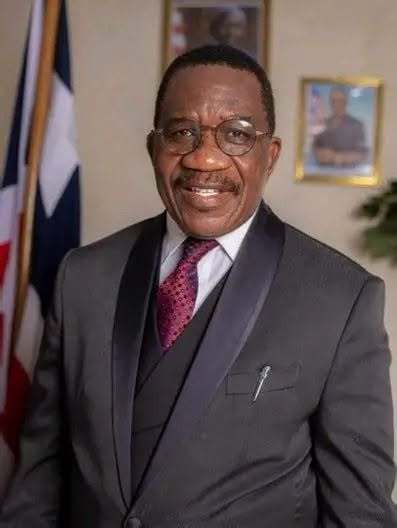
In a landmark ruling that reverberates across Liberia’s legal and political landscape, the Supreme Court of Liberia has dismissed longstanding allegations of professional misconduct against Labor Minister Cllr. Cooper W. Kruah Sr., ending a bitter dispute that has shadowed his career for more than a decade.
The case stemmed from accusations lodged in 2014 by businessman Mr. Edgar Sydney, Chief Executive Officer of the Mano River Agricultural Rehabilitation Development Corporation (MARDCO). Sydney alleged that Kruah violated Rule 15 of the Code of Moral and Professional Ethics in handling litigation over rubber sales proceeds. The matter was referred to the Court’s Grievance and Ethics Committee, sparking years of investigation and public speculation.
Records show that in 2009, Sydney retained the Henries Law Firm, with Kruah as counsel, to pursue claims against Edmond Trombetta for allegedly converting rubber proceeds. The Civil Law Court awarded MARDCO US$601,306.73, but Kruah insisted his client owed him US$120,000 in legal fees—20 percent of the judgment. Sydney countered with charges of misconduct, igniting a protracted battle that spilled into the public domain.
The Grievance and Ethics Committee later required Kruah to furnish a detailed accounting of funds expended. He complied, submitting financial records through the Civil Law Court. In its opinion, the Supreme Court acknowledged Kruah’s duty to promptly inform his client but concluded that the audit conducted by the Civil Law Court provided sufficient accountability.
The full bench declared: “This court sees no ethical transgression committed by Cllr. Cooper Kruah. Wherefore, the complaint is hereby dismissed.” The ruling ordered the Clerk of Court to notify all parties, effectively clearing Kruah of any professional wrongdoing.
For Kruah, the decision represents vindication after years of reputational strain. For Liberia’s judiciary, it underscores the weight of due process and the importance of thorough investigation before tarnishing a lawyer’s career.
Legal analysts say the ruling sends a strong message: allegations of misconduct must be backed by evidence, and the nation’s highest court will not hesitate to dismiss claims that fail to meet ethical thresholds.
As the gavel fell, Kruah emerged not only cleared but emboldened, his position as Labor Minister now shielded from the shadows of controversy. The verdict closes one of Liberia’s most closely watched professional ethics disputes, reaffirming the Supreme Court’s role as the ultimate arbiter of justice.

