

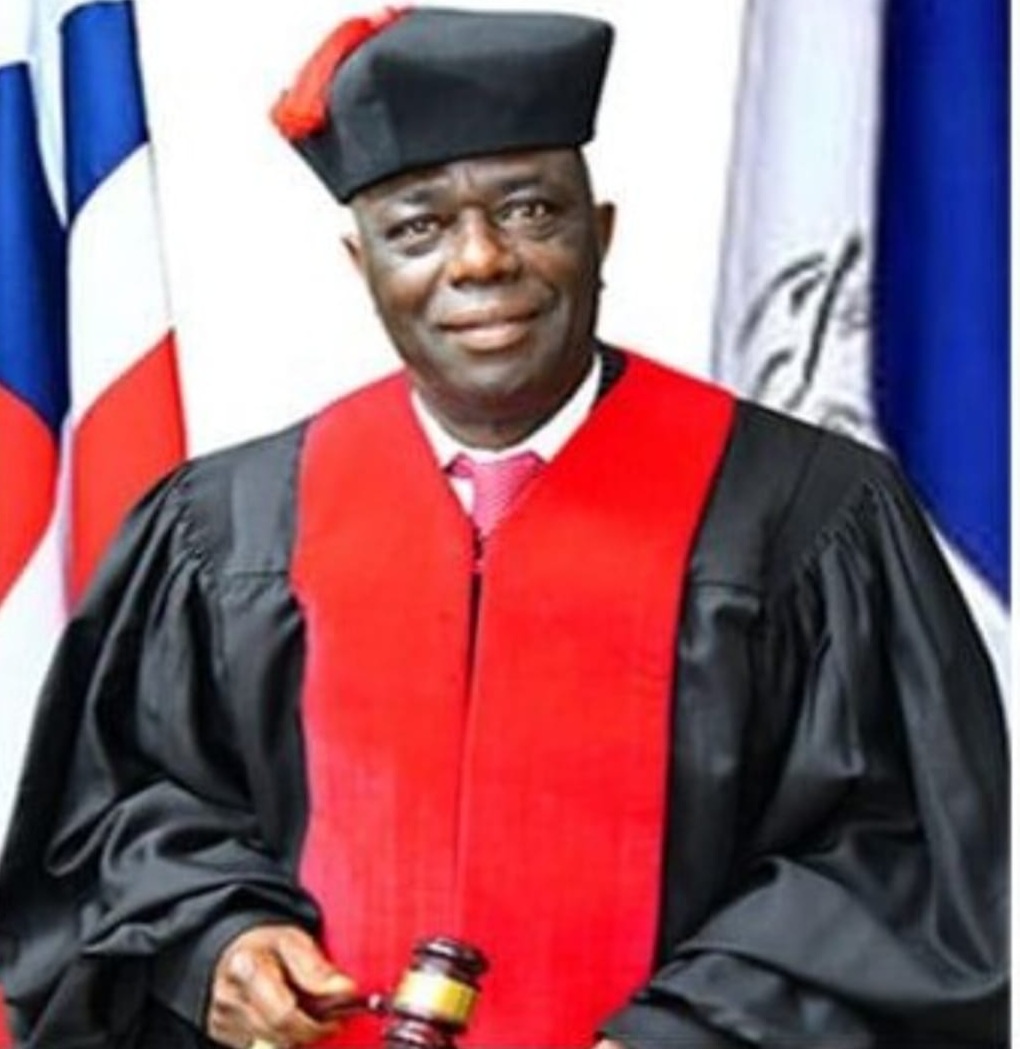
Liberia’s Judiciary said Chief Justice Yamie Quiqui Gbeisay played no role in a contempt ruling by the Gompa City Magisterial Court that sentenced former Gompa City Mayor Amos Suah to 30 days in prison.
The case was decided by the magisterial court under its own judicial authority and that the ruling was based on contempt of court, rather than tribal considerations, Caesar N. Slapeh,
Public Information Officer at the Judiciary said in a statement Thursday.
The Judiciary specifically sought to distance the country’s top judge from the outcome, saying the Chief Justice did not interfere in the proceedings or direct the magistrate’s decision.
“The decision rested squarely on the principles of contempt, with no interference from His Honor Chief Justice Yamie Quiqui Gbeisay,” the statement said.
The Judiciary cited a 1974 Supreme Court opinion in which the court held that courts possess inherent authority to punish contempt and determine what conduct constitutes contempt.
It said the power of contempt extends to courts throughout Liberia and argued that the Gompa City magistrate exercised that authority independently.
The statement also said no appeal was taken from the judgment of the main case, which the ex-mayor has been challenging and that, under Liberian law, a final judgment of a competent court remains binding and enforceable unless a lawful procedure is used to set it aside.
The controversy is connected to a land dispute involving the Kalefa Turay family and squatters in Gompa City, Nimba County. According to the Judiciary, the magistrate was informed that the Turay family had acquired the property in 1951 through a public land sale deed signed by then-President William V.S. Tubman.
A building was subsequently constructed on the property and leased to tenants, including the Liberian government, before the civil crisis.
The Judiciary said an action was filed over the property, and judgment was entered in favor of Turay, but that the judgment was not appealed. It said attempts to prevent its execution had subsequently invoked tribal considerations and arguments involving eminent domain.
The statement rejected any suggestion that the court’s judgment was based on ethnicity.
“Courts base their rulings only on evidence,” the Judiciary said, adding that court proceedings should not be framed around the ethnic identities of the parties.
Gbeisay’s constitutional oath, the Judiciary said, requires him to administer justice without fear or favor and to provide equal rights and justice to all persons. His judicial obligation, it said, is to the Constitution and laws of Liberia rather than to a tribe, county, political party or litigant.
The Judiciary acknowledged that land disputes can carry significant economic, cultural and emotional consequences, particularly because land can represent livelihood, identity and inheritance. But it said such disputes must be resolved through judicial proceedings based on evidence and law rather than through public pressure or social-media campaigns.
It also said citizens retain the right to criticize judicial decisions and that parties who believe a proceeding was improperly conducted can pursue remedies provided under Liberian law, including review by the appropriate court and established judicial complaint mechanisms.
The Judiciary warned that framing the dispute as an ethnic contest could deepen divisions in a country still dealing with the legacy of civil conflict.

