

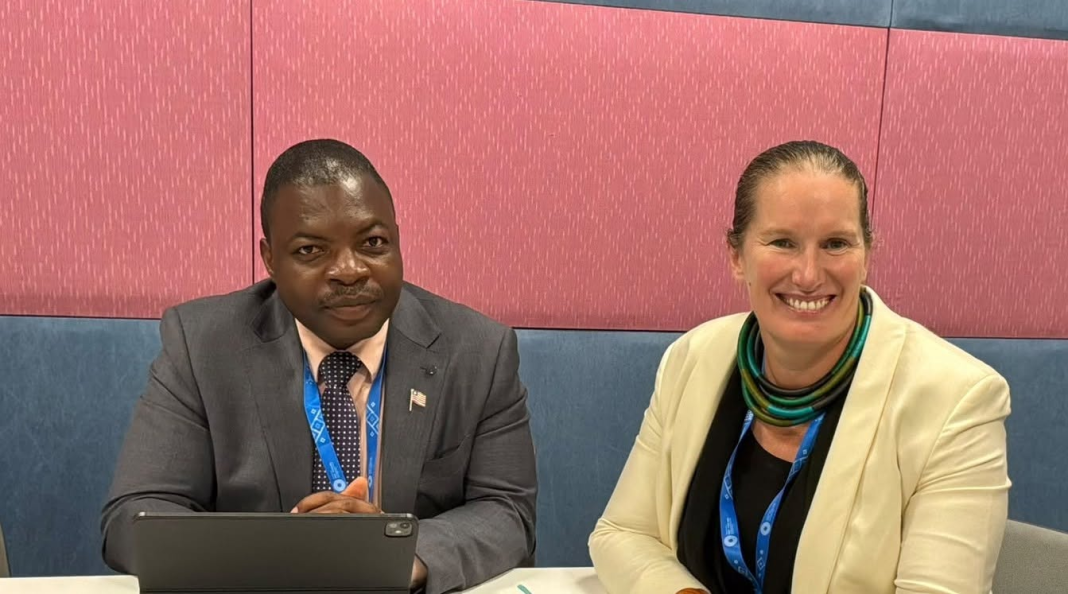
Liberia’s fisheries sector could see increased private investment and expanded employment opportunities following high-level discussions between the National Fisheries and Aquaculture Authority (NaFAA) and the World Bank Group during the 2026 Annual Meetings of the International Monetary Fund and the World Bank in Bangkok.
NaFAA Director General J. Cyrus Saygbe Sr. met with Valerie Hickey, the World Bank Group’s Director for Environment and Blue Economy, to discuss strategies for attracting investment, strengthening fisheries infrastructure, and accelerating job creation across Liberia’s fisheries and aquaculture sectors.
The meeting focused on progress made under the Liberia Sustainable Management of Fisheries Project (LSMFP) and the need for sustained investment to transform recent achievements into long-term economic opportunities.
During the discussions, Director General Saygbe highlighted significant gains recorded under the World Bank-supported project, including improvements in fisheries management, aquaculture development, livelihood support programs, and preparations for key infrastructure investments.
He noted that project implementation has reached a critical stage, with disbursement exceeding 80 percent, underscoring the importance of maintaining momentum to ensure the project’s long-term success.
According to Saygbe, continued investment in infrastructure, productive capacity, and fisheries value chains is essential to consolidating existing gains and creating an enabling environment for greater private-sector participation.
He identified several promising areas for investment, including commercial aquaculture, fish processing, cold storage facilities, transportation services, fisheries infrastructure, and other related businesses.
“Addressing infrastructure challenges and strengthening the business environment will encourage investors to establish and expand operations in Liberia while ensuring that more value from the fisheries sector remains within the country,” Saygbe emphasized.
The NaFAA Director General stressed that investment in the sector must translate into tangible benefits for ordinary Liberians, particularly women and young people who depend heavily on fisheries-related activities for income and employment.
He said increased investment has the potential to generate jobs, support entrepreneurship, improve productivity, and raise incomes in fishing communities across the country.
Saygbe also highlighted the sector’s broader contribution to national development, noting that sustainable fisheries management and expanded aquaculture production can strengthen food and nutrition security, support economic diversification, and drive inclusive economic growth.
For her part, Hickey praised the progress achieved under the Liberia Sustainable Management of Fisheries Project, describing its implementation as a significant turnaround and a positive example of effective project delivery.
She emphasized the need to sustain current gains through continued collaboration, strategic investment, and policy measures that encourage private-sector participation.
Hickey further underscored the critical role of private enterprise in driving economic growth and employment, stressing the importance of creating conditions that allow businesses to invest, innovate, expand production, and create jobs.
Both sides agreed that strategic public investment and private-sector engagement are mutually reinforcing factors in the sustainable development of Liberia’s fisheries sector. They noted that investments in infrastructure, institutional capacity, natural resource management, and value addition would help strengthen investor confidence and improve competitiveness.
The engagement reaffirmed the growing partnership between the Government of Liberia and the World Bank Group in advancing sustainable fisheries development.
According to a NaFAA press release, the Authority remains committed to unlocking Liberia’s fisheries and aquaculture potential by promoting sustainable businesses, creating employment opportunities, improving livelihoods, and safeguarding the marine resources that support thousands of fishing-dependent communities nationwide.

