

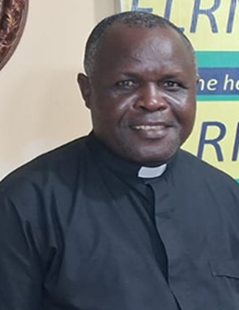
By Rev. Gideon Nma Scott, Jr.
In a constitutional democracy, the rule of law must prevail over personal interests, political affiliations, and the authority of individual officeholders. No public official, regardless of their appointment, should consider themselves above the law or beyond the reach of judicial authority.
The ongoing controversy surrounding the Independent National Commission on Human Rights (INCHR), Cllr. Mohammed Fahnbulleh, and the suspension of Cllr. T. Dempster Brown raises critical questions about constitutional governance, judicial independence, and respect for the rule of law in Liberia.
The heart of the matter hinges on a straightforward yet profound question: Can a public official disregard an order issued by the Supreme Court simply because they were appointed by the President? This query transcends individual personalities; it touches upon the very foundation of the judiciary’s authority, the limits of executive power, and the principles underpinning Liberia’s constitutional democracy.
On September 17, 2026, the Justice in Chambers of the Supreme Court of Liberia, Ceaineh D. Clinton Johnson, issued a writ of prohibition concerning the INCHR. The directive mandated that the matter “return to status quo ante,” a legal term indicating a reversal to the conditions that existed before the disputed actions occurred.
The importance of such a directive is twofold: it aims to preserve or restore the relevant position while the court considers the legality of the contested action, and it underscores the necessity for all parties involved to comply with judicial orders, irrespective of personal convictions or political affiliations.
However, Cllr. Mohammed Fahnbulleh has reportedly refused to comply with the court’s order, claiming that he operates under the authority of the President, not that of the Supreme Court. This stance raises a critical constitutional question: Does appointment by the President exonerate a public official from abiding by the nation’s highest court’s rulings? The answer, anchored in constitutional law, is a resounding no.
Presidential appointment does not, in itself, grant immunity from judicial orders. The President’s exercise of executive authority must always be consistent with the Constitution. Individuals appointed to public office are equally bound by applicable laws and judicial processes. The very essence of an appointment is to establish the source of an official’s authority, not to exempt that official from legitimate judicial scrutiny.
The controversy intensified on June 24, 2026, when President Joseph Nyuma Boakai suspended Cllr. T. Dempster Brown, Chairperson of the INCHR, amid serious allegations of fraud, withholding of colleagues’ salaries and failure to convene board meetings.
Such allegations warrant thorough investigation; institutions responsible for promoting and protecting human rights must adhere to the highest standards of transparency, accountability, and integrity. Nevertheless, it is essential to remember that allegations are not synonymous with guilt. Cllr. Brown is entitled to due process and the fundamental protections afforded by law.
In July 2026, Cllr. Brown challenged his suspension, asserting that the Executive Mansion’s action taken against him was unlawful. To that end, he sought a writ of prohibition from the Supreme Court, thus placing the legality of the Executive Mansion action directly within the judiciary’s purview.
By choosing to escalate the dispute to the Supreme Court, both parties have acknowledged the judiciary’s crucial role in interpreting the law and resolving the matter at hand.
The order issued on September 17, however, raises important questions about the obligation of the parties to respect the court’s directive while the legal dispute remains unresolved. Reports suggest Cllr. Brown subsequently filed a bill of information with the Supreme Court, addressing Cllr. Fahnbulleh’s reported refusal to comply with the court’s order.
This situation brings the issue of judicial compliance into sharper focus, demanding a clear and definitive answer from the judiciary regarding its directives.
While the President undoubtedly possesses constitutional powers— including the authority to appoint officials—the exercise of this authority must never be at odds with the constitutional principles that govern Liberia.
The framework of Liberian governance is founded on the doctrine of separation of powers, which delineates distinct functions for the executive, legislative, and judicial branches. Each branch is charged with specific responsibilities and must operate within the constitutional parameters established by law.
The executive branch administers the government; the legislature engages in lawmaking and oversight; and the judiciary interprets the law and resolves disputes. While disagreements over the interpretation and application of the law may arise between these branches, such conflicts must be addressed through established procedures rather than through unilateral actions that undermine judicial authority.
The expectation of compliance with judicial orders remains paramount. When a court issues a lawful order, those affected are generally required to abide by that directive unless the order itself is stayed, overturned, or duly modified. Thus, Cllr. Fahnbulleh’s argument that his appointment exempts him from adhering to the court’s directive is neither valid nor definitive.
The legality of appointments, as well as the extent of an official’s powers and the applicability of judicial directives, are questions that must be answered through the constitutional framework and relevant legal provisions.
Should the premise that a presidential appointment justifies noncompliance with judicial orders prevail, it would set a dangerous precedent. The risk is that it could effectively weaken the judiciary’s crucial role within the constitutional system.
The implication is clear: If one public official can invoke their appointment to circumvent judicial directives, this sets an alarming precedent. Other officials might similarly invoke alternative justifications, leading to chaos and unpredictability within the legal system.
Such a scenario threatens to erode public confidence in the judiciary, raising doubts about the enforceability of court decisions. When compliance with lawful orders becomes negotiable based on individual preferences, the judiciary’s ability to function effectively and fairly is compromised.
This concern is particularly troubling in Liberia, where public faith in democratic institutions relies heavily on the consistent application of the law. Citizens must trust that disputes involving powerful figures and institutions will be resolved through established legal processes, not through political maneuvering or the exertion of influence.
The significance of this controversy is compounded by the INCHR’s mandate to protect and promote human rights. An institution entrusted with safeguarding citizens from abuses of power must itself uphold the law and respect the constitutional institutions dedicated to resolving disputes.
Allegations against Cllr. Brown must be treated with fairness and transparency. While accountability is crucial, it must occur within the framework of due process, ensuring that no one is subjected to unwarranted prejudice or bias.
Cllr. Brown’s bill of information to the Supreme Court presents an opportunity for vital clarification. It calls upon the Highest Court to elucidate the scope and implications of its prior directive while also addressing the growing concerns about compliance. Ultimately, this matter should be settled based on the Constitution, relevant statutes, the specific wording of the September 17 order, and the established facts before the court.
If there is ambiguity surrounding the directive’s meaning, the Supreme Court is the appropriate entity to provide clarification. Any perceived overreach or unlawfulness in the court’s order should properly be contested through established legal procedures, as no party should unilaterally assert that their interpretation supersedes the court’s authority.
Likewise, accusations of noncompliance must be evaluated judiciously, and any findings of contempt or legal violations must adhere to lawful protocols.
Respect for judicial independence necessitates allowing the court to fulfill its constitutional mandate free from coercion, political interference, or unilateral resistance. The ongoing dispute involving Cllr. Brown, Cllr. Fahnbulleh, and the executive authorities presents Liberia with a pivotal constitutional challenge.
The question at hand is not whether Cllr. Brown should be exempt from legitimate investigation nor whether the President holds authority over appointment or suspension as prescribed by law. Rather, the immediate concern is whether the authority of the judiciary and the legal processes established for dispute resolution will be upheld.
Liberia’s democratic integrity hinges on public officials acknowledging judicial authority, regardless of whether it aligns with their interests. The rule of law must apply equally to all—be it the President, presidential appointees, legislators, judicial officers, or ordinary citizens.
No appointment holds greater weight than the Constitution, no public office supersedes the law, and no individual should believe themselves exempt from a lawful court order. If a court order is perceived as flawed, the lawful course is to challenge it through proper channels; if it is unclear, one should seek clarification; if there is a belief in its illegitimacy, appropriate legal remedies should be pursued. Personal convictions or political appointments do not confer the right to disregard judicial authority.
The ongoing dispute surrounding the INCHR must be resolved through constitutional mechanisms rather than competing claims of personal or political dominion. The future of Liberia’s democracy depends not just on the statutes enshrined in its Constitution, but on the willingness of those in positions of public authority to honor the institutions that interpret and enforce those laws.
The Supreme Court must be empowered to resolve the dispute according to legal principles, while every party involved must be afforded due process. The overarching principle that must not be forgotten is that public office entails responsibility, not immunity.
When court orders are defied, it is a litmus test of our commitment to the rule of law. Liberia must face this challenge firmly, ensuring that the resolution comes through constitutional justice, unwavering judicial independence, and steadfast respect for the rule of law. In Liberia, no one should be above the law.

