

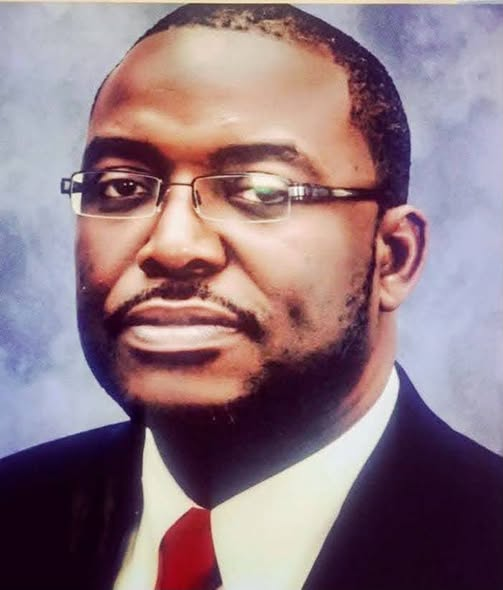
By George K. Werner (former education minister)
There is a saying in southeastern Liberia: Sallay-Polly—exchange one for the other yet get the same result.
It speaks to Liberia’s presidential politics. Since the 2005 postwar election, every presidential runoff has pitted the Unity Party against the Coalition for Democratic Change. The parties have changed places, the candidates have changed, and the margins have shifted. But when Liberia chooses a president, the contest keeps narrowing to the same two political forces.
The legislative elections tell a different story. The presidency is dominated by the UP and CDC. The Legislature is more politically diverse—and that diversity may hold the opening for a third way. But the opening matters only if a third way can organize that diversity into political power and hold the President accountable.
The presidential numbers leave little doubt about the dominance of the two parties. In 2005, George Weah’s CDC led the first round with 28.3 percent, ahead of Ellen Johnson Sirleaf’s UP at 19.8 percent. Charles Brumskine’s Liberty Party placed third with 13.9 percent. In the runoff, Sirleaf defeated Weah, 59.4 to 40.6 percent.
In 2011, Sirleaf received 43.9 percent in the first round and the CDC’s Winston Tubman received 32.7 percent. Prince Johnson’s NUDP won 11.6 percent. Sirleaf went on to win the runoff with 90.7 percent, but that figure needs its context: the CDC boycotted the runoff, and turnout fell to 38.6 percent.
In 2017, Weah won 38.4 percent in the first round and Joseph Boakai received 28.8 percent. Weah then defeated Boakai in the runoff, 61.5 to 38.5 percent. In 2023, the first-round contest was almost evenly divided: Weah received 43.83 percent and Boakai 43.44 percent, separated by just 7,126 votes. Boakai won the runoff with 50.64 percent to Weah’s 49.36 percent. The runoff margin was 20,567 votes. Four election cycles, four UP–CDC runoffs.
But the Legislature has never mirrored that same two-party concentration. In 2005, the CDC won 15 of the House’s 64 seats and the UP won eight. The other parties and independents took 41. In 2011, the UP won 24 of 73 seats and the CDC 11; independents and smaller parties won the remaining 38.
The 2023 House election makes the contrast especially sharp. The CDC won 25 seats and the UP 11. Independents won 19, and other parties won 18. The representatives elected outside the two dominant presidential parties numbered 37—one more than the CDC and UP combined, and exactly the number needed for a House majority. In the 15 Senate contests that year, CDC candidates won six seats, independents six, and the UP, MDR, and LRP one apiece.
These figures do not mean that 37 representatives already formed a third force. Independents are not a party. Smaller parties have their own leaders, interests, and ambitions. The numbers show electoral space for an alternative; they do not show that its potential members share a program or will act together.
That is where the third-way argument must go further. A coalition may bridge that gap—but only if it can organize and hold together beyond the campaign. Winning the presidency is not enough. A third way must build a Legislature capable of scrutinizing the President, including a President from its own ranks. Without that, it may win office and still reproduce the old imbalance of power.
The Constitution gives the Legislature important tools. It makes appropriations and grants it authority over taxation; revenue bills must originate in the House. The Senate must consent to key presidential appointments.
The House alone prepares a bill of impeachment, and the Senate tries it. A presidential veto can be overridden by a two-thirds vote in each House. These powers do not guarantee accountability. Legislators must be willing and organized enough to use them.
The advocates are right that presidential politics has become a CDC – UP contest, and Liberians may reasonably want another choice. But assembling smaller parties and independent politicians will not, by itself, create a different politics.
If a coalition has no common policy commitments and cannot hold its own leaders accountable, it may exchange one set of political actors for another and leave the public with the same results.
A credible third way must set transparent rules for choosing candidates, agree on measurable priorities, explain the cost of its promises, coordinate votes on the budget and legislation, and report publicly on its members’ performance. Its legislators must be prepared to serve the public program, not simply protect their own President.
The third way should begin in the Legislature, where Liberia’s political diversity is already visible. In 2023, 37 House seats went to independents and parties outside the UP and CDC—including 19 independents. That is a foundation on which to build a disciplined, policy-based coalition capable of holding any President accountable. If it cannot do that in the Legislature, a third way will not succeed. Period.

